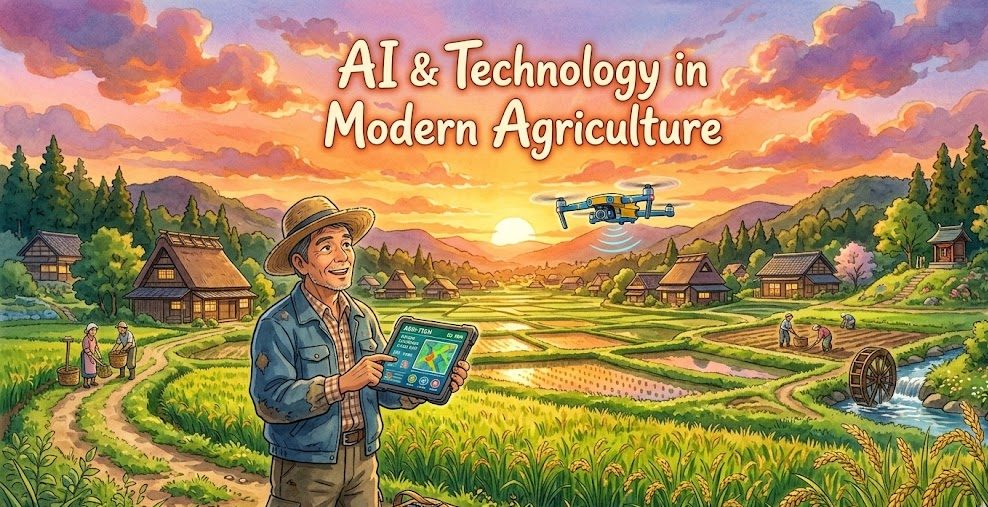
Here is your comprehensive, high-quality, and SEO-optimized article on agricultural technology, crafted to provide massive value to your readers while naturally integrating m
Did you know that by the year 2050, the global agricultural sector must produce 70% more food to feed an estimated 9.7 billion people, even as our available arable land continues to shrink?
For generations, farming has been a grueling game of chance. Traditional agricultural professionals face a constant, stressful battle against unpredictable weather patterns, sudden pest infestations, and invisible soil degradation. Relying entirely on historical almanacs, manual labor, and “gut feeling” creates a massive operational pain point. A single miscalculation in irrigation or a late response to a crop disease can wipe out an entire season’s profit margin, leaving farmers financially devastated. Operating in the dark is no longer a sustainable business model.
The ultimate solution to this global crisis is the integration of AI & Technology in Modern Agriculture. By transforming the farm into a highly connected, data-driven ecosystem, growers can eliminate the guesswork and turn crop production into a precise, predictive, and highly profitable science.
In this comprehensive guide, we will explore the core fundamentals of agricultural technology (AgTech), break down its immense economic and environmental benefits, provide a step-by-step implementation guide for your agribusiness, and look at the highly automated future of digital farming.
Understanding AI & Technology in Modern Agriculture: Key Concepts and Importance
At its core, agricultural technology—often referred to as Precision Agriculture—involves the use of Artificial Intelligence (AI), the Internet of Things (IoT), and advanced IT services to optimize every single aspect of farming. Historically, the invention of the mechanical tractor revolutionized the physical labor of farming. Today, the integration of data science and AI algorithms is revolutionizing the decision-making process. Modern farms are now complex IT environments where sensors, drones, and satellites constantly communicate with cloud-based software to monitor crop health.
Think of a traditional farm like driving a massive commercial truck blindfolded, relying only on the sounds of the road to steer. You might stay on the path for a while, but a crash is inevitable. Integrating AI and SaaS (Software as a Service) platforms into your farm is like equipping that truck with a high-tech GPS, radar, and a self-driving autopilot system. The technology sees the hidden obstacles—like microscopic diseases or incoming droughts—long before you do, and automatically adjusts the course (such as altering irrigation or fertilization rates) to ensure a perfect, safe arrival at harvest time.
Why It Matters: The Top Benefits of Precision Farming
Upgrading your agricultural operation with modern technology is not just about buying flashy gadgets; it is a fundamental upgrade to your bottom line. Here is why prioritizing AI and AgTech matters for your business:
- Data-Driven Decision Making: AI eliminates costly human error. Advanced machine learning algorithms analyze decades of weather data, soil topography, and seed genetics to tell you the exact week you should plant your crops for maximum yield.
- Maximized Resource Efficiency: Precision agriculture means applying water, fertilizer, and pesticides only where they are actually needed. This micro-targeted approach slashes your input costs drastically and prevents excess chemicals from polluting local groundwater.
- Proactive Disease Prevention: Multispectral cameras mounted on agricultural drones can detect the subtle color changes of a fungal infection in your crops weeks before it becomes visible to the human eye, allowing you to quarantine the area immediately.
- Streamlined Centralized Operations: Cloud-based agricultural SaaS platforms allow farm managers to monitor soil moisture, track tractor fuel levels, and manage employee workflows across thousands of acres directly from a smartphone screen.
Pro Fact: AI-driven smart sprayers utilizing real-time computer vision can distinguish between a crop and a weed in milliseconds, spraying only the weed. This technology has been proven to reduce herbicide usage by up to 80%!
How to Get Started: A Practical Guide for Beginners
Transforming a traditional farm into a smart farm does not have to happen overnight. It requires a strategic, phased approach. Follow this 5-step actionable plan to begin digitizing your agricultural business.
1. Adopt Farm Management Software (SaaS)
Your first step isn’t hardware; it is software. Subscribe to an agricultural IT service platform. These SaaS tools allow you to digitally map your fields, record historical crop rotation, and track your daily expenses in the cloud, replacing messy paper ledgers with actionable digital dashboards.
2. Install Basic IoT Soil Sensors
Stop guessing when to water. Install a network of connected IoT (Internet of Things) moisture and temperature probes directly into your topsoil. These sensors transmit real-time data to your smartphone, alerting you the exact moment a specific zone in your field reaches a critical drought threshold.
3. Utilize Drone Mapping Imagery
Partner with an agricultural drone service or purchase a commercial drone equipped with NDVI (Normalized Difference Vegetation Index) cameras. Fly these drones over your fields bi-weekly to generate high-resolution thermal and vegetative health maps, instantly spotting underperforming zones.
4. Upgrade to Variable Rate Technology (VRT)
Once you have the data, you must act on it. Equip your existing tractors with Variable Rate Technology controllers. When connected to your field maps, VRT automatically adjusts the flow rate of your fertilizer spreader in real-time, applying more nutrients to weak soil and less to fertile areas.
5. Analyze and Adapt with AI
At the end of the harvest, do not just file the data away. Feed your yield results, weather logs, and sensor data back into your farm management AI. The machine learning model will process this information to generate a highly optimized, custom planting strategy for your next season.
Beginner’s Tip: Do not overwhelm yourself by buying a massive fleet of drones and autonomous tractors on day one. Start small by subscribing to a basic agricultural SaaS tool and installing a few soil moisture sensors. Get comfortable reading the data before making major hardware investments.
To execute this properly, you will need a subscription to a cloud-based farm management platform, digital soil moisture probes, access to drone mapping services, and basic IT connectivity in your farm office.
Overcoming Challenges and Looking into the Future
Implementing cutting-edge technology in rural areas comes with distinct logistical hurdles. The most common challenge is the lack of reliable rural broadband internet. IoT sensors and cloud platforms cannot function without connectivity. However, this is rapidly being solved by the deployment of low-earth orbit satellite internet networks, bringing high-speed data to the most remote farms on earth. Another hurdle is the steep learning curve. Modern farmers must now act as IT managers; this is mitigated by partnering directly with agricultural tech consultants who handle the digital onboarding and troubleshooting.
Looking into the future, the agricultural sector is undergoing an incredible technological renaissance. Because modern farms generate terabytes of unstructured data every single day—from drone imagery to live weather feeds—the industry is rapidly adopting highly scalable NoSQL databases to process this massive influx of information in real-time. We are also witnessing the deployment of fully autonomous, AI-driven robotic swarms that can navigate fields, pick delicate fruits, and autonomously prune vines 24 hours a day without human intervention.
Conclusion
The integration of AI and technology in modern agriculture is no longer an optional luxury; it is the definitive future of global food production. By understanding the core mechanics of data-driven farming, leveraging the massive economic benefits of precision resource management, and following a step-by-step digital implementation plan, you can completely future-proof your agribusiness.
Your Next Step: Research and download a free trial of a top-rated agricultural farm management app today. Spend one hour digitally mapping the boundaries of your most problematic field to see the power of digital organization firsthand.
Embrace the digital revolution, let data guide your tractor, and watch your agribusiness reach unprecedented heights!
Frequently Asked Questions (FAQs)
1. Is AI in agriculture only meant for massive corporate farms? Not at all. While large farms scale the technology widely, small and medium-sized farms benefit immensely from scalable SaaS solutions. A small 10-acre organic farm can use a single IoT sensor and a smartphone app to save thousands of dollars in water and fertilizer costs.
2. Will AI and robots completely replace human farmers? No. AI is designed to augment human intelligence, not replace it. Technology takes over the repetitive, back-breaking labor and complex data analysis, freeing up the farmer to make high-level strategic business decisions.
3. What exactly is Variable Rate Technology (VRT)? VRT is a system integrated into farming equipment (like seeders and sprayers) that allows the machine to apply different rates of inputs (seeds, water, fertilizer) across a single field based on a pre-loaded digital map, rather than applying a flat, uniform rate everywhere.
4. How do IoT sensors communicate if there is no Wi-Fi in the field? Most modern agricultural IoT sensors do not rely on standard Wi-Fi. They use low-power, wide-area networks (like LoRaWAN or specialized cellular networks) that can transmit small packets of data over several miles back to a central hub located at the main farm office.