Did you know that a single, unexpected spring frost can wipe out an entire year’s harvest overnight, causing billions of dollars in agricultural losses globally?
For farmers, orchardists, and passionate homesteaders, checking the weather forecast during the delicate shoulder seasons of spring and autumn is a highly stressful daily ritual. A sudden, unpredicted plunge in nighttime temperatures can freeze the moisture inside plant tissues. This rapid freezing ruptures delicate cell walls, turning vibrant, healthy green foliage into blackened, necrotic mush by the time the sun rises. Watching months of hard work, expensive seeds, and careful cultivation die in a single cold night is a devastating reality for unprotected farms.
The ultimate solution is implementing proactive, engineered frost protection strategies. By understanding exactly how frost forms and utilizing strategic physical and thermal barriers, you can successfully manipulate the microclimate immediately surrounding your plants.
In this comprehensive guide, we will explore the fundamental science behind agricultural frost damage, highlight the immense financial and operational benefits of protective strategies, provide a practical step-by-step implementation guide for beginners, and discuss the future innovations in climate-resilient farming.
Understanding Frost Protection: Key Concepts and Importance
At its core, frost damage occurs when the ambient air temperature drops below the freezing point (32°F or 0°C), causing ice crystals to form on and inside the plant structure. There are two primary types of frost: radiation frost, which happens on clear, calm nights when heat escapes rapidly from the soil into the atmosphere, and advection frost, which is caused by a massive front of freezing wind moving into the area.
Historically, ancient agricultural societies used “smudge pots” and controlled, smoky fires to create an artificial cloud cover over their orchards, trapping the earth’s heat to keep the blossoms alive. Today, modern agriculture relies on a much cleaner and more sophisticated blend of thermodynamics, advanced insulating materials, and precise water management to fight the cold.
Think of a tender plant cell like a sealed glass bottle filled entirely to the brim with water. If you place that bottle into a deep freezer, the water naturally expands as it transforms into solid ice. This expansion creates massive internal pressure, ultimately shattering the glass. A freezing night does the exact same mechanical damage to the delicate, microscopic cell walls of your crops. Effective frost protection simply prevents that internal water from ever reaching the freezing point.
Why It Matters: The Top Benefits of Frost Protection
Investing time and resources into a solid frost mitigation strategy is essentially taking out a highly effective insurance policy on your harvest. Focusing on cold weather protection offers incredible advantages that directly impact your agricultural success. Here is why it matters:
- Secures Financial Stability: The most obvious benefit is preventing catastrophic, total-crop losses. Protecting your fields ensures that you actually have a viable product to take to the market, protecting your annual revenue.
- Significantly Extends the Growing Season: By protecting your crops from early spring and late autumn frosts, you artificially extend your growing window by several weeks. This allows you to harvest much earlier or much later than competitors who rely entirely on the weather.
- Protects Long-Term Investments: For orchard growers, a late spring frost doesn’t just kill the leaves; it kills the delicate fruit blossoms. Protecting those blossoms guarantees the development of apples, peaches, and cherries for the upcoming season.
- Drastically Reduces Replanting Costs: If a frost kills your newly transplanted spring seedlings, you lose the cost of the seeds, the potting soil, the greenhouse heating, and the massive amount of labor required to plant them all over again.
Pro Fact: Water actually releases a small amount of latent heat energy as it turns into ice! Commercial farmers often use overhead sprinklers to constantly spray crops during a freeze. As the water freezes on the plant, it releases heat, keeping the internal plant tissue safely locked at exactly 32°F (0°C) and preventing it from dropping colder and dying.
How to Get Started: A Practical Guide for Beginners
Protecting your farm or garden from the cold doesn’t require a massive budget right out of the gate. Follow this 5-step actionable plan to ensure your plants survive unexpected temperature drops.
1. Monitor Your Local Microclimates
Cold air is heavier than warm air, meaning it flows downhill like water and settles in the lowest areas of your property. Walk your land and use a digital thermometer to identify these low-lying “frost pockets.” Never plant your most tender, expensive crops in these vulnerable, sinking zones.
2. Deeply Water the Soil Before the Freeze
Dry soil loses its heat instantly. Wet soil, however, acts like a giant thermal battery. It absorbs massive amounts of heat from the sun during the day and radiates it slowly upward throughout the cold night. Always water your fields deeply the afternoon before a forecasted frost to trap that crucial solar energy.
3. Utilize Floating Row Covers
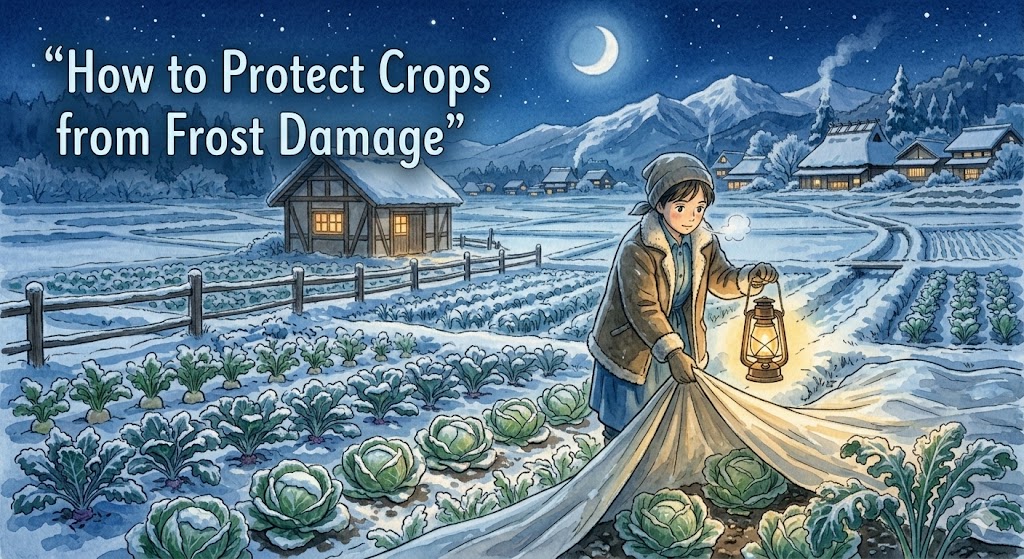
The most effective physical defense for low-growing crops is the use of spun-bonded polyester row covers (often called agricultural fleece). Drape these lightweight, breathable fabrics directly over your vulnerable rows to trap the radiant heat rising from the soil.
4. Apply Heavy Organic Mulch
For root crops (like carrots and beets) and dormant perennials, pile on a thick, 4-inch layer of organic mulch, such as clean straw or shredded wood chips. This acts like a heavy winter blanket, insulating the soil and protecting the vital root crowns from freezing solid.
5. Implement Temporary Windbreaks
If you are facing an advection freeze (driven by freezing, biting winds), row covers alone might not be enough. Erect temporary windbreaks using tall wooden fencing, closely planted evergreen hedges, or securely anchored heavy-duty plastic sheeting on the windward side of your fields to deflect the freezing gusts over and away from your crops.
Beginner’s Tip: Never cover your plants with standard plastic tarps so that the plastic directly touches the leaves! Plastic transfers freezing temperatures instantly, and any leaf touching it will suffer severe “frost burn.” Always use breathable fabric, or use wire hoops to suspend the plastic high above the foliage.
To execute this properly, you will need a reliable digital weather station with an alarm, heavy-duty agricultural fleece, wire hoops for tunneling, and access to plenty of organic mulch.
Overcoming Challenges and Looking into the Future
Navigating extreme weather fluctuations comes with unique operational hurdles. The most common challenge is the sheer physical labor required to deploy and remove hundreds of feet of row covers every single day during a volatile spring week. You can solve this by investing in mechanized, low-tunnel retraction systems that roll the fabric up automatically using a simple hand-crank or small electric motor.
Another major hurdle is accurately predicting when the frost will actually hit, as regional weather apps are often inaccurate for highly specific, localized farm topographies.
Looking into the future, the technology surrounding frost protection is becoming incredibly precise. We are seeing a massive adoption of AI-driven, hyper-local field temperature sensors. These smart devices are placed directly at crop level and can automatically trigger overhead sprinkler systems or massive wind machines the exact second the ambient air drops to a dangerous 34°F. Furthermore, ongoing agricultural biotechnology is actively developing new “super-strains” of staple crops that naturally contain biological antifreeze proteins, rendering them completely immune to standard frost events.
Conclusion
Protecting your crops from frost damage is not about being paranoid; it is about being intelligently prepared. By understanding the physics of how cold air moves, leveraging the massive economic benefits of season extension, and utilizing strategic watering and thermal row covers, you can completely neutralize the threat of freezing temperatures.
Your Next Step: Look up the historical “last frost date” for your specific zip code tonight. Then, go ahead and order your protective agricultural row covers a full month in advance so you are ready the moment the weather turns.
Don’t let a single, unseasonably cold night steal your harvest and your hard work; take absolute control of your farm’s microclimate and watch your crops thrive through the freeze!
Frequently Asked Questions (FAQs)
1. At what exact temperature does frost damage occur? While water freezes at 32°F (0°C), frost damage can actually happen when the air temperature reads 36°F (2°C). This is because the cold air settles on the ground, making the physical surface of the plant much colder than the air temperature measured by a standard weather station.
2. Can a plant fully recover from severe frostbite? It depends on the severity. If only the outer, topmost leaves are blackened and wilted, the plant can often push out new growth and survive. However, if the main central stem or the root crown freezes solid and turns mushy, the plant is dead and must be replaced.
3. Will a regular household bedsheet work to protect my plants? Yes! If you are caught off guard by a sudden frost warning, a standard cotton bedsheet or light blanket provides excellent temporary insulation for a light overnight freeze. Just remember to remove it the next morning so the plant can get sunlight.
4. Why does watering the ground help prevent frost? Water has a very high “heat capacity.” When you deeply water the soil during the day, the water absorbs the sun’s warmth. At night, that wet soil releases the heat much slower than dry soil, creating a micro-bubble of warmer air just above the ground that protects the plants.