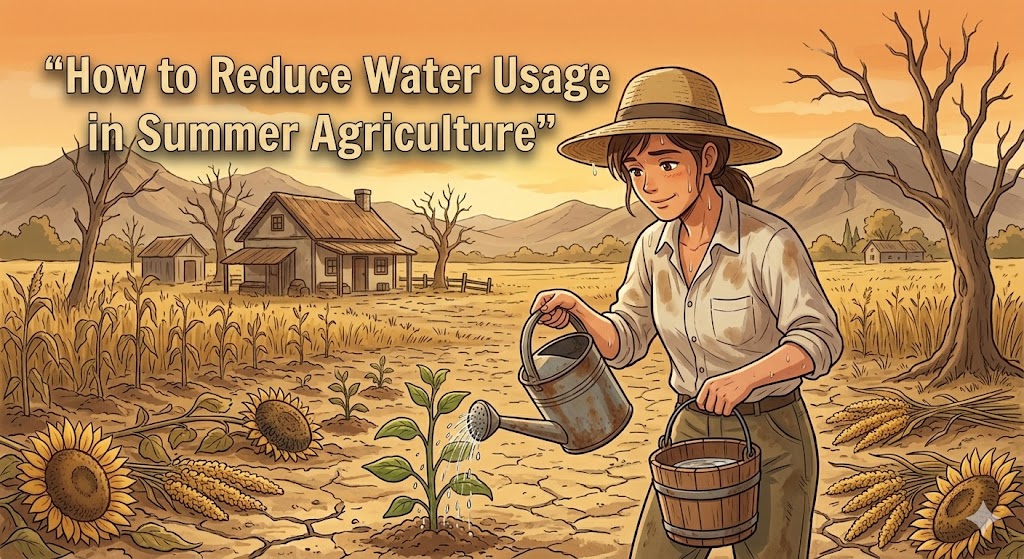
Did you know that agriculture accounts for roughly 70% of all global freshwater withdrawals, yet nearly half of that water is lost to evaporation, runoff, and inefficient irrigation during the hot summer months?
For modern farmers and agricultural businesses, the summer season presents a massive, high-stakes challenge. As temperatures soar and rainfall plummets, crops demand more hydration just to survive. Simultaneously, regional droughts, strict water usage regulations, and skyrocketing utility costs create a severe financial “Pain Point.” Pumping thousands of gallons of expensive water onto a field, only to watch it evaporate instantly under the blazing sun, is an unsustainable practice that drains both local aquifers and your annual profit margins.
The ultimate solution is implementing water-efficient agricultural practices. By transitioning from outdated, traditional watering methods to precision moisture management, growers can drastically cut their water consumption while actually improving crop yields.
In this comprehensive guide, we will explore the core fundamentals of agricultural water conservation, outline the powerful economic and environmental benefits, provide a practical 5-step implementation plan for your farm, and examine the high-tech future of drought-resilient farming.
Understanding Agricultural Water Conservation: Key Concepts and Importance
At its core, reducing water usage in summer agriculture is about mastering evapotranspiration—the combined process of water evaporating from the soil surface and transpiring (sweating) from the plant leaves. The goal of water conservation is to ensure that every single drop of water delivered to the field is utilized directly by the plant’s root system, rather than being lost to the hot summer air or running off into local ditches.
Historically, flood irrigation and massive overhead sprinklers were the industry standard, simply because fresh water was viewed as an infinite, cheap resource. Today, with climate change driving severe, multi-year droughts globally, optimizing every gallon is a critical matter of agricultural survival and modern relevance.
Think of traditional summer watering like trying to cool down a house by running a massive air conditioner with all the doors and windows wide open. You are spending a fortune on energy, but most of the cold air is just escaping outside. Precision water management is like closing the windows, sealing the drafts, and directing the AC vents exactly where you are sitting. It uses a fraction of the resources to achieve a far superior, highly targeted result.
Why It Matters: The Top Benefits of Water-Efficient Farming
Optimizing your irrigation strategy does much more than just save water; it completely transforms the financial and biological health of your farming operation. Here is why prioritizing water reduction matters:
- Massive Cost Reductions: Pumping water requires immense amounts of electricity or diesel fuel. By reducing your water usage by 30% to 50%, you instantly slash your monthly utility and fuel bills, keeping that capital securely in your business.
- Enhanced Crop Quality and Yield: Overwatering washes vital nutrients deep past the root zone (leaching) and creates waterlogged soil that breeds fungal diseases. Precision watering delivers the perfect balance of oxygen and moisture, leading to stronger, healthier, and higher-yielding plants.
- Drought Resilience and Compliance: As municipalities impose strict summer water restrictions, farms with highly efficient systems can continue to operate at full capacity without facing heavy fines or forced shutdowns.
- Soil Health Preservation: Heavy overhead watering and flood irrigation cause severe topsoil erosion and destroy the delicate soil structure. Gentle, targeted watering preserves the topsoil and protects the beneficial microbial ecosystems living just beneath the surface.
Pro Fact: Switching from traditional overhead sprinkler systems to a commercial drip irrigation network can increase your overall water use efficiency by up to 90%, virtually eliminating all evaporation and wind drift losses!
How to Get Started: A Practical Guide for Beginners
Transitioning your fields to a highly efficient water management system requires strategic planning and the right tools. Follow this 5-step actionable plan to dramatically reduce your summer water consumption.
1. Upgrade to Drip Irrigation
Abandon overhead sprinklers immediately. Install a drip irrigation system or soaker hoses. These systems utilize flexible tubing with evenly spaced emitters to deliver water slowly and directly to the base of each plant.
This precise delivery method ensures the water penetrates deeply into the root zone before the hot sun can evaporate it.
2. Apply Heavy Organic Mulching
Bare soil in the summer is a recipe for instant evaporation. Apply a thick, 3 to 4-inch layer of organic mulch (like clean straw, shredded bark, or dry grass clippings) across your planting beds.
Mulch acts as a heavy thermal blanket, shading the topsoil from the sun, lowering the ground temperature, and locking the vital moisture in the earth for days at a time.
3. Optimize Your Watering Schedule
Timing is everything. Never water your crops during the blazing mid-day heat, as up to 30% of the water will evaporate before it even touches the roots. Schedule your irrigation systems to run in the early morning (between 4:00 AM and 7:00 AM). The soil is coolest at this time, allowing for maximum absorption, and the rising sun will dry the foliage, preventing fungal diseases.
4. Improve Soil Organic Matter
Sand drains instantly; heavy clay pools and evaporates. By actively tilling high-quality organic compost into your fields, you create a sponge-like soil structure. Soil rich in organic matter can hold up to 20,000 gallons of additional water per acre, drastically reducing how often you need to turn the pumps on.
5. Utilize Soil Moisture Sensors
Stop guessing when your plants are thirsty. Invest in a digital soil moisture meter. Often, the top inch of soil looks bone dry and dusty, but the root zone six inches below is still perfectly saturated. Testing the soil prevents accidental overwatering and trains plant roots to grow deeper in search of moisture.
Beginner’s Tip: Do not panic and overwater if you see large-leafed plants (like squash or cucumbers) wilting in the late afternoon. This temporary wilting is a natural defense mechanism to reduce sun exposure. If they perk back up by sunset, the soil moisture is perfectly fine!
To execute this properly, you will need a reliable drip irrigation kit (tubing, emitters, and pressure regulators), a bulk supply of organic mulch, and a digital soil moisture probe.
Overcoming Challenges and Looking into the Future
Implementing water-saving infrastructure does come with operational hurdles. The most common challenge is clogged irrigation lines. Because drip emitters have tiny holes, microscopic algae or mineral buildup (like calcium) can block the water flow. You can solve this by installing a high-mesh commercial water filter at the source and occasionally flushing the lines with a mild, agricultural-grade acidic solution to dissolve mineral deposits.
Another challenge is the high upfront capital cost of installing commercial drip tape across dozens of acres. However, this is easily mitigated by applying for government agricultural grants, which frequently subsidize water-conservation infrastructure for modern farmers.
Looking into the future, the agricultural sector is rapidly embracing the “Internet of Things” (IoT). We are seeing the widespread adoption of AI-driven smart irrigation controllers. These systems connect wireless soil moisture sensors directly to localized weather forecasting data. The AI calculates the exact evapotranspiration rate for the day and automatically delivers the precise millimeter of water required by the crops—completely eliminating human error and maximizing every single drop.
Conclusion
Reducing water usage in summer agriculture is no longer just an environmental ideal; it is an absolute economic necessity for survival in modern farming. By understanding the mechanics of evaporation, leveraging the massive financial benefits of precision irrigation, and actively protecting your soil with mulch and compost, you can maintain a lush, highly profitable harvest through the most severe heat waves.
Your Next Step: Purchase a simple, inexpensive soil moisture meter today. Before you turn on your irrigation system this week, push the probe six inches into the ground—you might be surprised to find you can skip watering entirely for another day!
Take control of your water management today, and watch your agricultural business thrive while conserving our most precious natural resource.
Frequently Asked Questions (FAQs)
1. Does reducing water usage mean my crop yield will be smaller? Not at all. When done correctly through precision methods like drip irrigation, reducing overall water usage actually increases crop yield. It prevents the roots from drowning, stops the leaching of expensive fertilizers, and reduces the stress associated with waterlogged soil.
2. Can I reuse gray water for summer agriculture? Yes, properly filtered and treated gray water (recycled water from sinks and showers, free of harsh chemicals) can be an excellent source of irrigation for ornamental plants and fruit trees. However, check your local agricultural regulations before using gray water on root vegetables or leafy greens meant for direct commercial consumption.
3. What are the best drought-resistant crops to plant in the summer? If you want to drastically cut your water usage, pivot your crop selection. Cowpeas (black-eyed peas), okra, sorghum, amaranth, and sweet potatoes are incredibly drought-resilient and require a fraction of the water needed by traditional summer vegetables like tomatoes or sweet corn.
4. How long should I run my drip irrigation system during a heatwave? The frequency depends on your specific soil type (sandy vs. clay), but the golden rule is deep and infrequent watering. Instead of running the system for 15 minutes every day, run it for 45 to 60 minutes every 2 to 3 days. This forces the plant roots to grow deep into the earth, making them vastly more resilient to surface heat.