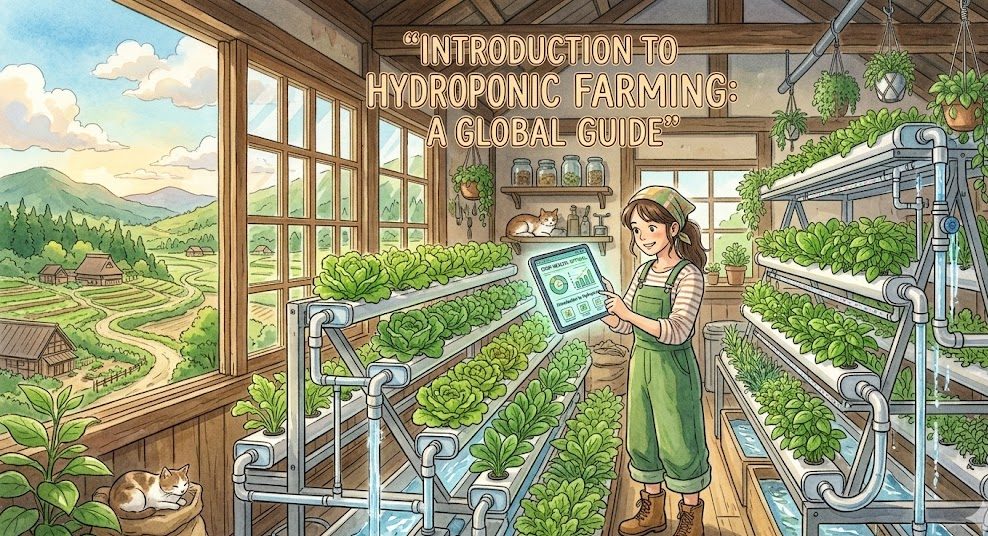
Did you know that by the year 2050, the global population will demand 70% more food, yet the Earth has lost a third of its arable farming land over the past 40 years due to severe degradation?
For modern agricultural entrepreneurs and eco-conscious individuals, relying entirely on traditional soil-based farming presents a massive, existential challenge. Conventional agriculture is incredibly vulnerable to unpredictable climate change, devastating droughts, and severe topsoil erosion. Furthermore, it requires vast expanses of land and consumes millions of gallons of fresh water—resources that are rapidly depleting. Attempting to scale a profitable, sustainable farming business while fighting depleted earth and extreme weather is a highly stressful “Pain Point” for the global supply chain.
The ultimate, high-tech solution to this looming crisis is hydroponic farming. By completely eliminating soil from the equation and growing crops in highly controlled, nutrient-rich water environments, growers can bypass the limitations of nature entirely.
In this comprehensive global guide, we will explore the core concepts of soil-less agriculture, outline the massive economic and environmental benefits, provide a practical step-by-step implementation guide for beginners, and discuss the technological future of resilient farming.
Understanding Hydroponic Farming: Key Concepts and Importance
At its core, hydroponic farming is the science of growing plants without the use of traditional soil. Instead, the plant’s roots are suspended directly into, or continuously flushed with, an oxygenated, highly optimized water-based nutrient solution. While it sounds like futuristic science fiction, the history of soil-less growing dates back thousands of years to the Hanging Gardens of Babylon and the floating Chinampas of the ancient Aztecs. Today, with rapid urbanization and climate instability, this ancient concept has evolved into a hyper-efficient, modern agricultural necessity.
Think of traditional soil farming like a massive, chaotic buffet. A plant has to expend tremendous amounts of energy growing a massive root system just to desperately search the dirt for the scattered nutrients and water it needs to survive. Hydroponics, on the other hand, is like an IV drip for plants. You are delivering the exact, perfect balance of food and hydration directly to the root zone with zero effort required from the plant. Because the plant doesn’t have to search for food, it redirects 100% of its energy into rapid, explosive top-growth and high-quality fruit production.
Why It Matters: The Top Benefits of Hydroponic Farming
Transitioning from soil to water completely revolutionizes the speed, scale, and profitability of agricultural production. Here is why prioritizing hydroponic systems matters for the future of global food security:
- Massive Water Conservation: Traditional farming wastes water through deep soil runoff and surface evaporation. Hydroponic systems recirculate the exact same water continuously, using up to 90% less water than conventional field agriculture.
- Maximized Space Utilization: Because roots do not need to spread out to find food, plants can be packed much closer together. When combined with vertical farming racks, you can produce up to 10 times the yield per square foot of real estate.
- Accelerated Growth Rates: With direct access to optimized oxygen and nutrition, hydroponically grown crops mature up to 30% to 50% faster than their soil-grown counterparts, allowing for multiple rapid harvest cycles per year.
- Zero Soil-Borne Diseases or Weeds: Eliminating the dirt eliminates the weeds, drastically reducing physical labor. It also entirely removes the threat of soil-dwelling pests and fungal pathogens, effectively ending the need for harsh, toxic chemical herbicides.
- Total Location Independence: You are no longer restricted by poor local climates or toxic regional soil. You can build a thriving hydroponic farm inside a bustling city warehouse, a shipping container, or even a freezing desert landscape.
Pro Fact: A commercial hydroponic greenhouse can produce a fully mature, harvest-ready head of butterhead lettuce in just 28 to 30 days, compared to the 60+ days it typically takes in an outdoor soil farm!
How to Get Started: A Practical Guide for Beginners
Launching a successful hydroponic garden requires precision, cleanliness, and the right introductory equipment. Follow this 5-step actionable plan to get your first soil-less harvest off the ground.
1. Choose a Beginner-Friendly System
There are many types of hydroponics, but beginners should start with either a Deep Water Culture (DWC) system or a Nutrient Film Technique (NFT) system. In DWC, the roots dangle continuously in an oxygenated bucket of water. In NFT, a very shallow stream of water constantly flows over the root tips in a PVC pipe.
2. Set Up the Reservoir and Aeration
Water without oxygen is a death sentence for plant roots. You must purchase an opaque, light-blocking container to serve as your water reservoir (light causes toxic algae blooms). Place a commercial air stone attached to an air pump at the bottom of the reservoir to constantly infuse the water with microscopic oxygen bubbles.
3. Select an Inert Growing Medium
Since you aren’t using dirt, you need something physically stable to hold the plant upright. Use inert, pH-neutral growing media like Rockwool cubes, Coco Coir, or expanded clay pebbles (often called Hydroton). Place your seedlings into small, slotted plastic net-pots filled with this medium.
4. Mix the Perfect Nutrient Solution
Plants need more than just tap water to survive. Purchase a high-quality, pre-mixed liquid hydroponic nutrient blend. These professional formulas contain the exact ratios of Nitrogen, Phosphorus, Potassium, and vital micro-nutrients (like calcium and magnesium) that a plant needs for every stage of its life cycle.
5. Monitor pH and EC Levels Daily
This is the most critical step. You must regularly test your water using a digital meter. The pH level must be kept slightly acidic (usually between 5.5 and 6.5) so the plant can successfully absorb the minerals. You must also monitor the Electrical Conductivity (EC), which tells you exactly how much “food” is currently concentrated in the water.
Beginner’s Tip: Do not attempt to grow demanding, fruiting crops like tomatoes, strawberries, or heavy melons on your very first try. Master the delicate balance of your water chemistry by growing fast, highly forgiving leafy greens like spinach, basil, and lettuce first!
To execute this properly, you will need a digital pH/EC meter, a reliable air pump with air stones, net pots, an inert growing medium, and liquid hydroponic nutrients.
Overcoming Challenges and Looking into the Future
Operating a high-tech hydroponic farm comes with unique operational hurdles. The most devastating challenge is power dependency. Because hydroponics relies on electric water pumps and air aerators, a sudden power outage can quickly suffocate or dry out a massive root system, killing the crop within hours. You can mitigate this massive financial risk by ensuring your commercial farm is equipped with automated backup generators and battery-powered emergency air pumps.
Another major hurdle is waterborne pathogens. If a disease like Pythium (root rot) enters the central water reservoir, it will rapidly circulate and infect every single plant in the system. Maintaining strict bio-security, keeping the water temperature cool (below 72°F/22°C), and occasionally using beneficial bacteria inoculants will prevent destructive outbreaks.
Looking to the future, the soil-less agriculture industry is undergoing a massive technological revolution. We are seeing widespread commercial integration of AI-driven automation. Smart sensors now monitor nutrient levels in real-time, automatically dosing the exact micro-milliliter of calcium or nitrogen needed without any human intervention. Furthermore, the rise of fully automated indoor vertical mega-farms in urban centers promises to drastically reduce the carbon footprint of global food transportation, growing fresh food exactly where the consumers live.
Conclusion
Hydroponic farming represents a monumental, necessary shift in how humanity cultivates its food. By understanding the core science of soil-less growth, leveraging the immense water-saving and yield-boosting benefits, and strictly managing your water chemistry, you can bypass the unpredictable threats of traditional agriculture and guarantee a perfect harvest.
Your Next Step: You do not need a massive commercial greenhouse to start. Order a basic, 5-gallon Deep Water Culture (DWC) bucket kit online today, buy some basic lettuce seeds, and commit to growing your first head of soil-less greens right in your living room or balcony.
Leave the dirt behind, take absolute control of your crop’s environment, and step confidently into the hyper-efficient future of global agriculture!
Frequently Asked Questions (FAQs)
1. Is hydroponically grown food considered organic? This is a highly debated topic. While hydroponic crops can be grown 100% free of chemical pesticides and herbicides, true “Organic Certification” in many countries specifically requires the cultivation of natural soil biology. Therefore, many incredibly clean and healthy hydroponic farms legally cannot label their food as “certified organic.”
2. Does hydroponic produce taste different from soil-grown produce? When done correctly, hydroponic produce often tastes significantly better, crisper, and more vibrant! Because the plants receive the absolute perfect balance of essential minerals and are never subjected to drought stress, they reach their maximum genetic potential for both flavor and nutritional density.
3. Can I grow root vegetables like carrots or potatoes hydroponically? While it is technically possible using specialized aeroponic or deep-sand systems, it is generally highly impractical and rarely profitable. Hydroponics is best suited for fast-growing leafy greens, vibrant herbs, and above-ground fruiting vines like tomatoes, cucumbers, and peppers.
4. How much electricity does a basic hydroponic system use? If you are growing outdoors or in a sunlit greenhouse, the electricity usage is incredibly low, as you are only running a small water pump or air pump (similar to a fish tank). However, if you are growing entirely indoors, the high-intensity LED grow lights required to simulate the sun will significantly increase your monthly power consumption.