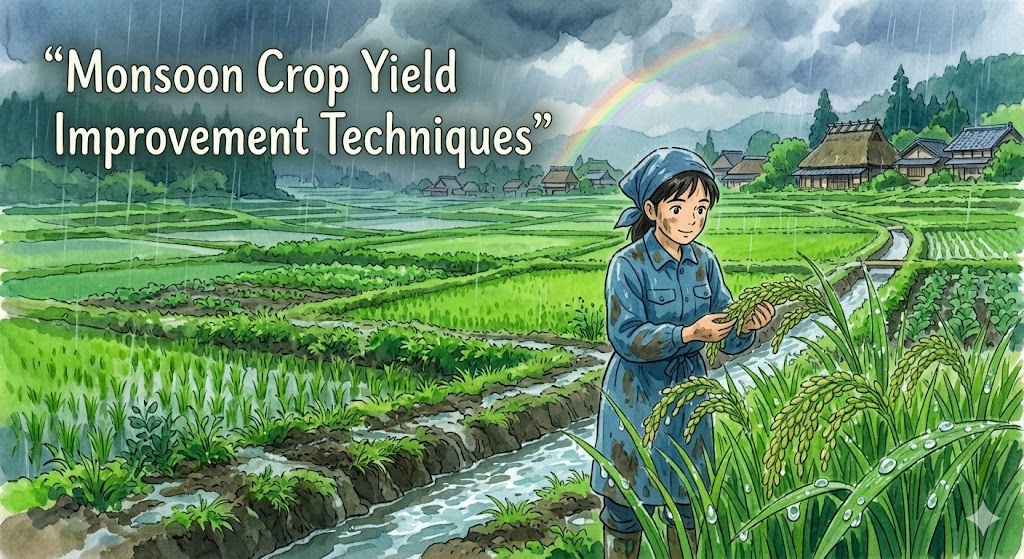
Did you know that erratic monsoon patterns account for nearly half of all seasonal crop failures in rain-dependent agricultural zones?
The monsoon season is a massive double-edged sword for agricultural professionals. On one hand, it provides the massive volume of free water absolutely crucial for plant growth. On the other hand, heavy, unpredictable downpours can brutally wash away fertile topsoil, drown delicate root systems, and leach expensive, vital fertilizers deep out of reach. Farmers who rely entirely on traditional methods are left incredibly vulnerable, often watching their potential profits literally wash away in the mud.
The ultimate solution is adopting targeted monsoon crop yield improvement techniques. By shifting from a passive reliance on the weather to actively engineering your fields for climate resilience, you can completely protect your crops and significantly boost your seasonal harvest.
In this comprehensive step-by-step guide, we will explore the core fundamentals of monsoon agriculture optimization, highlight the massive economic benefits of these practices, provide a practical implementation guide for beginners, and look at the technological future of rain-fed farming.
Understanding Monsoon Yield Optimization: Key Concepts and Importance
At its core, monsoon crop yield improvement involves a strategic combination of advanced agronomy, soil hydrology, and precise timing. It means selecting the right plant genetics, engineering the physical layout of your fields to manage massive water volumes, and timing your nutrient applications to perfectly synchronize with heavy rainfall.
Historically, farmers simply planted their seeds at the first sign of rain and hoped for the best. Today, modern agricultural science has proven that we do not have to be victims of the weather. By proactively managing how water interacts with our soil, we can turn a terrifying torrential downpour into a highly controlled, productive asset.
Think of your farm’s topsoil like a giant kitchen sponge. A dry, neglected sponge becomes hard and repels water, causing it to run rapidly off the sides (just like degraded soil causes flash floods and erosion). However, a properly conditioned, porous sponge absorbs exactly what it needs, holding the moisture safely while letting the excess drain away. Yield improvement techniques condition your “farm sponge” to handle the monsoon perfectly.
Why It Matters: The Top Benefits of Yield Improvement Techniques
Why should you invest your time, labor, and money into upgrading your monsoon farming techniques? Focusing on proactive yield optimization offers incredible advantages that directly impact your agricultural success:
- Maximized Profitability: Higher yields per acre directly translate to increased revenue. Maximizing your harvest during the wet season creates a powerful financial buffer against future unpredictable weather events.
- Reduced Resource Wastage: Optimizing fertilizer application techniques means your expensive nutrients stay locked in the root zone rather than washing away into local rivers and streams.
- Enhanced Soil Health: Implementing physical techniques like contour farming and cover cropping prevents severe soil erosion, preserving your land’s natural fertility and structure for future generations.
- Improved Disease Resistance: Properly managed fields drastically reduce stagnant waterlogging. This directly lowers the risk of devastating fungal infections, root rot, and pest infestations that thrive in swampy conditions.
Pro Fact: Implementing basic raised-bed planting techniques during the heavy monsoon can increase overall crop yields by up to 25% simply by keeping the root crowns aerated and safe from standing water!
How to Get Started: A Practical Guide for Beginners
Upgrading your farming strategy for the rainy season requires practical, actionable planning. Follow this 5-step actionable plan to ensure your crops thrive in the heavy rains.
1. Select Climate-Resilient Seeds
Your first line of defense is genetics. Always choose High-Yielding Varieties (HYVs) or seeds specifically bred for monsoon conditions. Look for flood-tolerant strains or early-maturing varieties that can complete their growth cycle before the heaviest end-of-season storms arrive.
2. Implement Raised Bed Planting
Never plant on completely flat ground if you expect heavy rain. Construct elevated earthen ridges or raised beds. This incredibly simple technique physically lifts the plant’s root crown directly out of the danger zone, ensuring they stay well above any temporary puddles.
3. Optimize Field Drainage Networks
Standing water is the enemy of high yields. Dig shallow surface trenches following the natural downward slope of your land. Fast, efficient water removal is critical to prevent root asphyxiation. Ensure these ditches lead to a safe outlet like a farm pond or municipal canal.
4. Apply Split-Dose Fertilization
Never apply all your seasonal fertilizer at once during the monsoon. Use a split-dose method. Apply small amounts of nutrients specifically during brief dry, sunny spells so the plants have time to absorb them before the next heavy rain washes the chemicals away.
5. Utilize Heavy Organic Mulching
Cover the exposed soil around your plants with organic mulch, such as dry straw, leaves, or crop residue. This mulch acts as a protective physical shield against the heavy, pounding impact of raindrops, preventing topsoil erosion and stopping the surface from turning into a hard, compacted crust.
Beginner’s Tip: Always dig and clear your drainage ditches before the first major monsoon shower hits. Trying to dig a proper, evenly sloped trench in the middle of a torrential mudstorm is nearly impossible and highly dangerous.
To execute this properly, you will need basic ditching tools (like a backhoe or tractor blade), high-quality resilient seeds, access to organic mulch, and slow-release granular fertilizers.
Overcoming Challenges and Looking into the Future
Even with perfect preparation, the monsoon presents unique hurdles. One major challenge is nutrient leaching, where constant rain washes nitrogen deep below the root zone. You can solve this by switching to slow-release fertilizers, like neem-coated urea, which break down gradually and resist washing away. Another common hurdle is sudden, unexpected dry spells during the rainy season. Farmers can mitigate this by digging small rainwater harvesting pits at the lowest point of their farm to capture runoff, saving it for emergency irrigation during dry weeks.
Looking into the future, precision agriculture is completely revolutionizing rain-fed farming. We are currently seeing the rise of AI-powered micro-weather forecasting apps that can tell farmers exactly which hour to apply fertilizers to avoid rain washouts. Furthermore, drone-assisted crop monitoring is becoming a standard tool, allowing farmers to instantly spot invisible waterlogged zones and fungal outbreaks in massive fields without ever stepping foot in the mud.
Conclusion
Maximizing your monsoon harvest isn’t about fighting the rain; it is about intelligent, proactive adaptation. By upgrading your seed selection, mastering your land’s drainage hydrology, and protecting your soil health with strategic mulching and fertilization, you can turn the unpredictable monsoon into your greatest agricultural asset.
Your Next Step: Walk your fields today and identify the lowest-lying areas that consistently flood every year. Plan your new layout and dig your first preventative drainage trench in that exact spot before the season begins.
Equip your farm with the right strategies today, and watch the heavy rains nourish your success rather than wash it away!
Frequently Asked Questions (FAQs)
1. What is the best type of fertilizer to use during the heavy monsoon? Avoid highly water-soluble fertilizers that wash away instantly. Instead, use slow-release granular fertilizers, neem-coated urea, or deep-placed organic compost briquettes that release nutrients slowly over time, regardless of the rain.
2. How do I protect very small seedlings from heavy, pounding rain? If you are starting a nursery, use temporary low tunnels made of clear plastic sheeting to deflect the heavy rain while letting light in. If they are already in the field, a thick layer of straw mulch around the base will prevent the soil from splashing up and burying them.
3. Why are my crop leaves suddenly turning yellow after a week of heavy rain? Yellowing leaves after heavy rain is almost always a sign of nitrogen deficiency caused by leaching (the rain washed the nutrients away) or root suffocation (the roots are drowning and cannot absorb nutrients). You must immediately improve drainage and apply a foliar (leaf) nitrogen spray once the sun comes out.
4. Can I still plant my crops if the monsoon arrives completely late? Yes, but you must adapt. If the rains are severely delayed, immediately switch to planting short-duration or early-maturing crop varieties. These plants require less overall time in the field, ensuring they reach harvest before the dry winter season begins