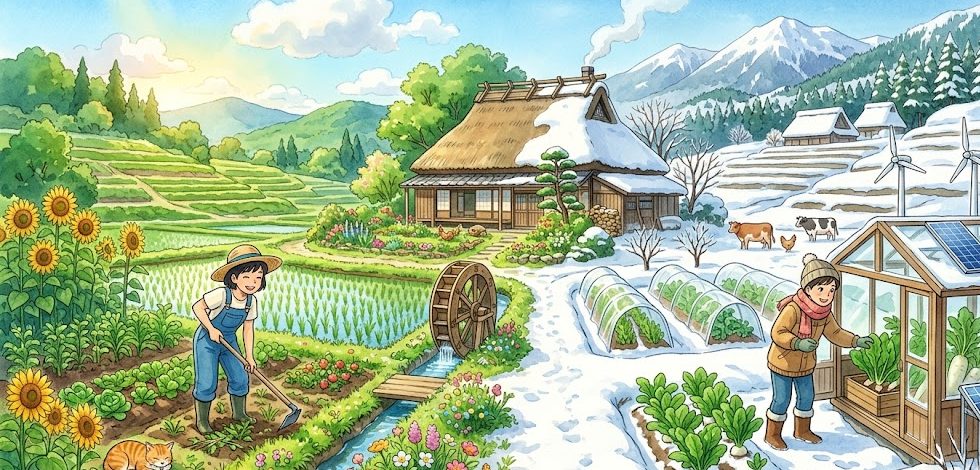
In the traditional agricultural calendar, seasons were often seen as obstacles. Summer brought the threat of scorched earth and water scarcity, while winter arrived with the “dormant phase,” effectively shutting down production for months. For the modern farmer, however, these seasons are no longer limitations—they are opportunities for specialized production.
Through the integration of Smart Farming Technologies, we have reached a point of Seasonal Mastery. By using data-driven insights, automated climate control, and innovative biological strategies, we can now maximize yields in the heat of July and the frost of January.
This comprehensive guide explores the strategies that allow eco-conscious farmers to thrive year-round, regardless of the thermometer.
1. Summer Strategy: Precision Cooling and Water Intelligence
Summer farming in the modern era is a battle against Evapotranspiration. When temperatures soar, plants lose moisture faster than they can absorb it, leading to “heat stress” that stunts growth and kills yields.
A. Smart Irrigation & AI Hydration
Traditional “flood” or “sprinkler” irrigation is highly inefficient in summer, as up to 40% of the water evaporates before it even reaches the roots.
- Subsurface Drip Irrigation (SDI): By placing drip lines 6-10 inches underground, water is delivered directly to the root zone, keeping the surface dry and cool.
- AI-Linked Moisture Probes: These sensors communicate with your irrigation controller. If the AI detects a 10% drop in soil moisture during a heatwave, it triggers a “pulse” of water to stabilize the plant’s internal temperature.
B. Evaporative Cooling & Shade Tech
Innovation isn’t just about water; it’s about light management.
- Automated Shade Cloths: Smart greenhouses now use sensors to deploy aluminized shade cloths that reflect infrared radiation (heat) while allowing photosynthetically active radiation (PAR) to pass through.
- Misting Systems: High-pressure fogging systems can lower greenhouse temperatures by 10–15°C through evaporative cooling without soaking the foliage, which prevents fungal issues.
C. Heat-Tolerant High-Value Crops
Seasonal mastery involves selecting “Summer Specialists.”
- Okra and Eggplant: Naturally heat-hardy crops that thrive when others wilt.
- Tropical Exotics: Utilizing summer heat to grow high-margin fruits like Dragon Fruit or Passion Fruit, which fetch premium prices in local markets.
2. Winter Strategy: Energy Harvesting and Thermal Management
Winter farming is the ultimate test of an innovator. The goal is to maintain a “growth-positive” environment while minimizing the high energy costs associated with heating.
A. The “Passive Solar” Revolution
Instead of burning fossil fuels for heat, smart winter farming focuses on Thermal Mass.
- Climate Batteries (GAHT Systems): Ground-to-Air Heat Exchangers pump hot air from the top of a greenhouse into the soil during the day. At night, when the air cools, the stored heat in the earth radiates back up, keeping the roots warm.
- Water Barrels: Painted black and filled with water, these act as “heat batteries,” absorbing solar energy all day and releasing it slowly through the night.
B. Supplemental Lighting (The LED “Sun”)
The primary challenge of winter isn’t just cold; it’s the lack of daylight.
- Full-Spectrum LEDs: Modern LEDs allow farmers to extend the “photoperiod.” By providing 4–6 hours of supplemental light, you can trick summer crops into growing through the winter or keep leafy greens from bolting.
- Far-Red Light Strategy: Using specific light spectrums at the end of the day can prevent plants from going into “dormancy,” ensuring consistent growth even in December.
C. Winter Cash Crops: The “Cold-Sweet” Advantage
Many crops actually improve in quality during the winter.
- Frost-Kissed Greens: Crops like Kale, Spinach, and Brussels Sprouts convert starches to sugars to act as a “natural antifreeze.” This results in a much sweeter, higher-quality product than summer versions.
- Micro-Farming: Winter is the perfect time to shift focus to high-density indoor production like Gourmet Mushrooms or Hydroponic Herbs, which require less space and can be managed in climate-controlled units.
3. The “Shoulder Season” Bridge: Transitioning with Ag-Tech
The most vulnerable time for any farm is the transition between seasons. Smart farming uses Predictive Analytics to manage these “Shoulder Seasons.”
- Early Starts: Using heated seed-starting mats and “Low Tunnels,” farmers can gain a 4-week head start on Spring.
- Season Extension: Utilizing heavy-duty row covers combined with soil temperature sensors allows for “Active Overwintering,” keeping root crops like carrots and leeks fresh in the ground for mid-winter harvests.
4. Comparison: Smart Summer vs. Smart Winter Management
| Feature | Summer Innovation | Winter Innovation |
|---|---|---|
| Primary Goal | Transpiration Management | Thermal Preservation |
| Key Technology | Subsurface Drip & Fogging | Climate Batteries & LEDs |
| Soil Strategy | Thick Mulching (Cooling) | Dark Mulching (Heat Absorption) |
| Risk Factor | Drought & Pests | Frost & Light Deficiency |
| Market Play | High-Volume Fresh Produce | High-Quality “Sweet” Greens |
Export to Sheets
5. Automation: The 365-Day Farmer
The “Mastery” comes from removing human error. In 2026, Integrated Farm Management Systems (IFMS) allow you to set seasonal “profiles.”
When the system detects the first frost, it automatically adjusts the ventilation logic, switches on the thermal curtains, and recalibrates the nutrient mix for slower winter metabolism. This ensures that the farm remains productive even when the farmer is resting.
6. The Economic Impact (Adsense & Revenue Insights)
Mastering the seasons is the fastest way to increase a farm’s Annual Recurring Revenue (ARR).
- Year-Round Supply: Restaurants and local markets prefer suppliers who can provide consistent quality 12 months a year. You can charge a “seasonal premium” for fresh tomatoes in winter or crisp lettuce in the height of summer.
- Digital Content Value: For creators, content focusing on “Off-Season Success” has a high click-through rate. People are always searching for “How to grow tomatoes in winter” or “Summer survival for lettuce.” These are high-intent keywords that drive valuable traffic.
7. Sustainable Synergy: Seasonal Integration
True mastery means using the seasons to help each other.
- Summer Waste for Winter Heat: Use the massive biomass of summer (prunings, dead vines) to create a Biomechanical Compost Heater (Jean Pain Method) that provides hot water and heat for your winter greenhouses.
- Winter Rest for Summer Soil: Use the “slow” winter months to apply deep compost and cover crops, allowing microbiology to build up undisturbed for the summer rush.
Conclusion: From Victim to Master
In the past, the seasons dictated what a farmer could do. Today, the farmer dictates how the seasons will be used. By synergizing Smart Tech with Biological Wisdom, we have moved beyond simply “surviving” the weather.
Seasonal Mastery is about creating a resilient, anti-fragile food system. It is the realization that with the right innovation, the “dormant season” can be just as profitable and productive as the peak of spring.
Mastery Tip: Always keep a “Digital Farm Log.” Compare your soil sensor data from last July to this July. The secret to seasonal innovation is realizing that every year is a lesson, and every data point is a seed for future growth.