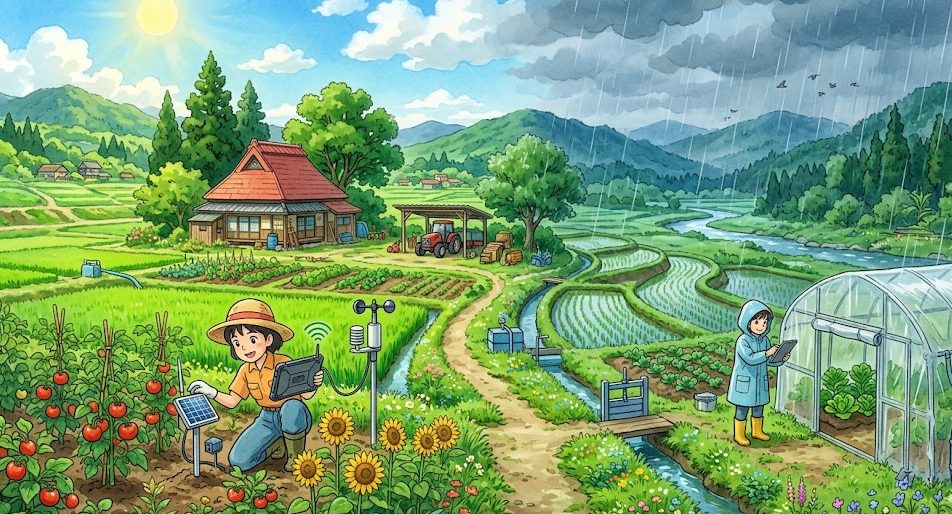
Climate change is no longer a distant threat; it is a reality affecting our fields and livelihoods. From extreme heatwaves in the summer to unseasonal floods and heavy downpours during the monsoon, modern farmers face unprecedented challenges. However, Smart Farming provides the tools not only to survive these shifts but to thrive by making crops resilient and profitable.
This guide explores how to leverage smart technology to adapt your farm for the harsh summer and unpredictable rainy seasons.
1. Summer Season: Battling Heatwaves and Water Scarcity
The primary challenges during summer are high evaporation rates, water shortages, and heat stress on plants. Smart farming focuses on Resource Optimization to keep plants cool and hydrated.
A. Precision Irrigation (IoT & Drip Systems)
Traditional flood irrigation loses nearly 60% of water to evaporation. Smart systems change the game:
- Soil Moisture Sensors: These IoT devices monitor the exact water level at the root zone. The system only triggers irrigation when the soil is actually dry, saving up to 40% more water.
- Automated Scheduling: By using real-time weather data, smart controllers avoid watering during the hottest part of the day, ensuring maximum absorption.
B. Climate-Controlled Growing Environments
For high-value exotic vegetables, open-field farming in peak summer can be risky.
- Smart Greenhouses & Net-houses: Using automated shade nets can reduce the internal temperature by 5°C to 10°C.
- Fogging & Misting Systems: These systems release a fine mist that lowers ambient temperature through evaporative cooling, preventing flower drop and fruit scorching.
C. Smart Mulching
Applying organic or plastic mulch creates a protective barrier. It reflects excess sunlight and traps moisture in the soil, significantly reducing the “thirst” of your crops.
2. Rainy Season: Managing Excess Water and Disease
The monsoon brings life, but it also brings risks like waterlogging, soil erosion, and rapid pest outbreaks due to high humidity.
A. Intelligent Drainage & Land Leveling
Stagnant water is the enemy of root health.
- Laser Land Leveling: Using laser-guided tractors ensures the field is perfectly graded, preventing “puddling” and ensuring uniform water distribution.
- Smart Sensors for Drainage: Automated pumps can be triggered by water-level sensors to clear excess water from low-lying areas before root rot sets in.
B. AI-Powered Pest and Disease Prediction
High humidity is the perfect breeding ground for fungi and bacteria.
- Predictive Analytics: Smart apps analyze local humidity and temperature trends to alert you before an outbreak happens. This allows for “preventative” rather than “curative” spraying, reducing chemical costs.
- Drone Monitoring: After heavy rains when fields are too muddy for tractors, drones can fly over to scan for yellowing leaves or pest clusters using multispectral cameras.
C. Rainwater Harvesting and Storage
Smart farming views excess rain as an asset. By diverting runoff into Smart Farm Ponds, you can store millions of liters of water to be used during the dry months, creating a self-sustaining cycle.
3. Year-Round Climate Resilience Strategies
To truly “climate-proof” your farm, consider these integrated solutions:
- Solar-Powered Infrastructure: Solar pumps ensure that even during summer power outages, your irrigation remains consistent.
- Agroforestry: Planting strategic rows of trees acts as a windbreak during monsoon storms and provides natural shade during the summer.
- Hydroponics: Growing crops in a controlled water-based system eliminates soil-borne diseases caused by heavy rain and allows for total temperature control in the heat.
4. Comparison: Smart Adaptation Strategies
5. Conclusion: Building a Future-Ready Farm
The climate is changing, but our farming methods don’t have to stay stuck in the past. By adopting smart technologies, you move from being a victim of the weather to being a master of your environment. Whether it’s the scorching June sun or the torrential August rains, a “Smart Farm” remains a productive farm.
Pro Tip: Start by installing a basic weather station and soil sensors. The data you collect this year will be your best weapon for planning a successful harvest next year.
Embrace the tech, protect your soil, and secure your success.