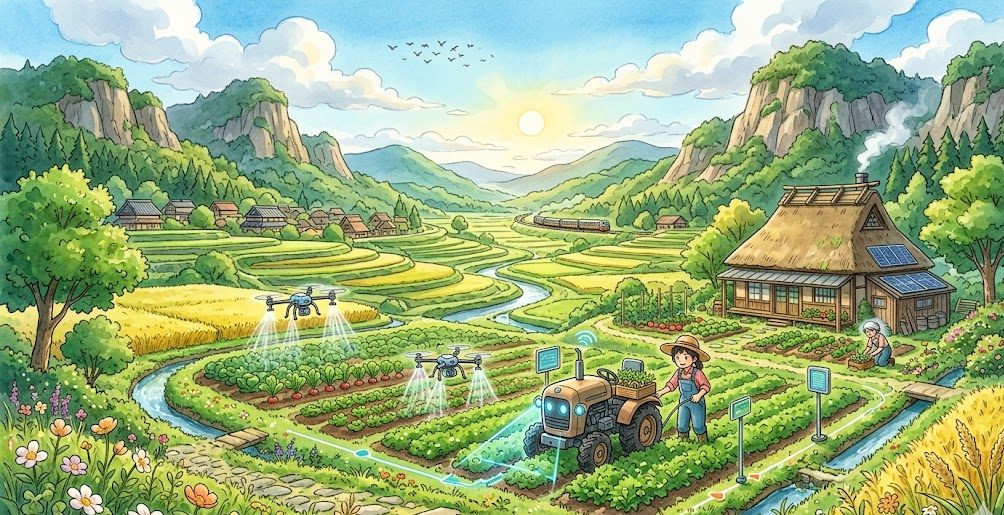
The agricultural landscape is undergoing a digital metamorphosis. For centuries, farming was a profession of intuition, physical labor, and prayers for good weather. Today, it is becoming a field of precision, data, and intelligent machines. This shift is known as Smart Farming, and for the modern agri-preneur, it is the key to unlocking unprecedented levels of profitability and sustainability.
By integrating Artificial Intelligence (AI) and automation into your operations, you can transform a traditional farm into a high-tech business enterprise. This guide explores the technologies driving this revolution and how you can implement them to stay competitive in 2026.
1. What is Smart Farming?
Smart Farming (also known as Precision Agriculture) is the application of modern Information and Communication Technologies (ICT) to agriculture. It involves using sensors, IoT (Internet of Things) devices, AI, and robotics to optimize every stage of the production cycle.
In a smart farm, decisions aren’t made based on “gut feelings.” Instead, they are driven by real-time data. This allows for the precise application of seeds, water, and fertilizers, ensuring that each plant gets exactly what it needs—no more, no less.
2. The Role of AI: The Brain of the Modern Farm
Artificial Intelligence acts as the central nervous system of a smart farm. It processes vast amounts of data that would be impossible for a human to analyze manually.
A. Predictive Analytics for Yield Forecasting
AI algorithms can analyze historical weather patterns, soil health data, and satellite imagery to predict crop yields months in advance. For a business owner, this means better financial planning and the ability to negotiate better prices with buyers before the harvest even begins.
B. Computer Vision for Pest and Disease Detection
Drones or field-mounted cameras equipped with AI “eyes” (computer vision) can scan thousands of plants per minute. They can identify the earliest signs of a fungal infection or a pest outbreak that is invisible to the naked eye. This allows for spot-treatment, where you only spray the affected plant rather than the entire field, saving thousands in chemical costs.
C. Autonomous Decision-Making
Advanced AI systems can now control irrigation systems. If the AI detects an upcoming rainstorm through weather APIs, it will automatically skip the morning irrigation cycle, conserving water and preventing soil erosion.
3. Automation: The Muscle of the Farm
While AI provides the intelligence, automation provides the physical labor. In an era where agricultural labor is becoming increasingly scarce and expensive, automation is a business necessity.
A. Autonomous Tractors and Robots
Self-driving tractors are no longer science fiction. These machines can operate 24/7 with centimeter-level precision, following GPS paths to plant seeds or till the land. Furthermore, specialized robots are now being used for high-labor tasks like:
- Fruit Picking: Robotic arms that can gently pick ripe strawberries or apples without bruising them.
- Weeding: Lasers or precision mechanical arms that kill weeds without using herbicides.
B. Automated Irrigation and Fertigation
Automation allows for “Fertigation”—the process of delivering fertilizers through the irrigation system. Sensors in the soil measure moisture and nutrient levels; when they drop below a certain threshold, the system automatically triggers a flow of water mixed with the exact ratio of nutrients required.
C. Drone Technology
Drones are the multi-tools of smart farming. They are used for:
- Multi-spectral Imaging: To see which parts of the field are stressed.
- Aerial Spraying: Covering large areas quickly and precisely, especially in hilly terrains where tractors cannot go.
4. The Business Benefits of Going “Smart”
Transitioning to AI and automation requires an initial investment, but the Return on Investment (ROI) is compelling:
- Reduced Input Costs: By applying chemicals and water only where needed, farmers often see a 20-30% reduction in input costs.
- Higher Quality Produce: Precision leads to uniformity. In the market, a batch of uniform, high-quality vegetables fetches a much higher price than a mixed-quality harvest.
- Labor Savings: Automation reduces the dependency on manual labor, which is often the highest recurring cost for any farm business.
- Environmental Stewardship: Smart farming is inherently “green.” Using fewer chemicals and less water is better for the soil and helps you qualify for “sustainable” or “organic” certifications.
5. Implementation Roadmap for Beginners
You don’t need to automate your entire farm overnight. A staged approach is often more effective:
Step 1: Data Collection (The Sensor Phase)
Start by installing basic IoT soil sensors and a weather station. This gives you the data needed to understand your farm’s baseline.
Step 2: Precision Application
Invest in equipment that allows for variable-rate application. This could be as simple as a smart irrigation controller that you can manage from your smartphone.
Step 3: Full Integration
Once you are comfortable with the data, integrate an AI-driven farm management software. This software will pull data from your sensors, drones, and machinery into a single dashboard.
6. Smart Farming Technology Comparison
| Technology | Business Function | Primary Benefit | Investment Level |
|---|---|---|---|
| IoT Soil Sensors | Monitoring | Prevents over/under watering | Low |
| Agricultural Drones | Scouting/Spraying | Fast aerial data & precision spray | Moderate |
| AI Software | Decision Making | Predictive analytics & yield growth | Moderate (SaaS) |
| Autonomous Robots | Labor | Reduces manual work (Picking/Weeding) | High |
| Smart Irrigation | Resource Mgmt | Saves up to 40% water | Moderate |
Export to Sheets
7. Overcoming the Barriers
The two biggest hurdles to smart farming are cost and connectivity.
- Cost: Many governments now offer subsidies and “AgTech” loans to help farmers modernize.
- Connectivity: As 5G and satellite internet (like Starlink) expand into rural areas, the “offline” farm is becoming a thing of the past. Ensure your farm has a robust Wi-Fi or cellular mesh network to allow devices to communicate.
8. Conclusion: The Future is Automated
Smart farming is the only way to meet the global food demand of the future while maintaining a profitable business. AI and automation are not here to replace the farmer; they are here to empower the farmer to become a high-level manager of a complex, efficient, and sustainable ecosystem.
By embracing these technologies today, you are ensuring that your business is not just surviving, but thriving in the digital age. The “Green Revolution” of the 1960s was about chemistry; the “Smart Revolution” of the 2020s is about data.
Is your farm ready for the upgrade?