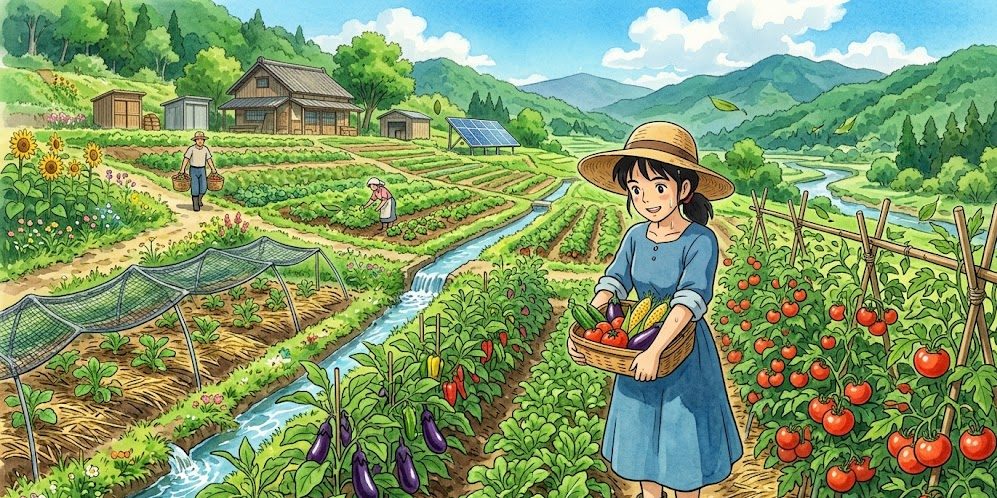
For many farmers, the arrival of summer brings anxiety. Rising temperatures, drying water sources, and the scorching sun can turn a lush green field into a barren landscape in a matter of weeks. However, in the world of modern agriculture, summer is not just a challenge—it is an opportunity.
With the right strategies, extreme heat can be harnessed to produce high-value crops that thrive when others fail. This guide explores the “science of heat,” offering realistic tips for crop selection, water management, and soil protection to ensure your farm remains profitable even when the thermometer hits record highs.
1. The Strategy of Selection: Choosing Heat-Tolerant Crops
The first step to a profitable summer is choosing crops that are biologically designed to handle high solar radiation.
- Vegetable Powerhouses:
- Okra (Ladyfinger): One of the most heat-resilient crops. Okra loves the sun and continues to produce high yields even in temperatures above 38°C.
- Cucumber and Melons: These crops have high water content and deep taproots. Varieties like Watermelon and Cantaloupe thrive in the heat, provided they have consistent root-zone moisture.
- Chili Peppers: Hot peppers actually increase their “heat” (capsaicin) during the summer, making them a high-value market crop.
- Summer Grains and Legumes:
- Millets (Bajra/Sorghum): Often called “Miracle Grains,” millets require significantly less water than wheat or rice and are naturally resistant to heat stress.
- Green Gram (Moong): A short-duration legume that enriches the soil with nitrogen while providing a quick harvest window of 60 to 70 days.
2. Precision Water Management: Beyond Traditional Irrigation
In extreme heat, it’s not about how much water you give, but how much the plant actually uses. Evaporation is the enemy.
- Night and Pre-Dawn Irrigation: Avoid watering during the peak sun hours (10 AM to 4 PM). Water applied during the heat of the day can evaporate before reaching the roots, and water droplets on leaves can act as magnifying glasses, causing “sun scald.”
- Drip Irrigation Systems: This is a non-negotiable for summer profitability. Drip systems deliver water directly to the root zone, reducing water waste by up to 70% compared to flood irrigation.
- Hydro-gels: For areas with extreme water scarcity, consider using potassium-based hydro-gels. These “water crystals” absorb hundreds of times their weight in water and release it slowly to the roots as the soil dries out.
3. Soil Protection: The “Skin” of the Farm
The sun doesn’t just dry the plants; it “cooks” the soil, killing beneficial microbes and evaporating stored moisture.
- Mulching (Live and Dead): Never leave your soil naked. Use organic mulch like wheat straw, dried grass, or even specialized plastic mulch. Mulching can lower the soil temperature by as much as 5°C to 10°C, preserving the delicate microbial life.
- Green Manure: Growing cover crops like Dhaincha or Sunn hemp during the early summer can shade the soil and, once tilled back in, provide massive amounts of organic matter for the next season.
- Biochar Integration: Adding biochar to your soil improves its water-holding capacity, acting like a sponge that keeps moisture available during heatwaves.
4. Advanced Cooling Techniques: Managing the Micro-Climate
Sometimes, the air temperature is simply too high for the plant’s biology to function. In these cases, you must manipulate the environment.
- Shade Netting: For high-value nurseries or delicate vegetables (like leafy greens), using 50% or 75% green shade nets can reduce light intensity and air temperature, preventing “blossom drop”—a common summer issue where heat causes plants to drop their flowers before they can fruit.
- Kaolin Clay Sprays: This is a natural “sunscreen” for plants. Spraying a thin layer of white kaolin clay on the leaves reflects harmful UV rays, reducing the plant’s internal temperature and decreasing transpiration (water loss).
- Windbreaks: Planting tall crops like maize or napier grass around the perimeter of your main field can block hot, drying winds (like the ‘Loo’ in South Asia), which can otherwise dehydrate a crop in hours.
5. Nutritional Adjustments for Heat Stress
A plant’s nutritional needs change when it is under heat stress.
- Potassium Power: Potassium helps regulate the “stomata” (the pores on the leaves). High levels of Potassium allow the plant to close these pores efficiently, preventing excessive water loss.
- Seaweed and Silicon: Foliar sprays containing seaweed extract or liquid silicon strengthen the plant’s cell walls, making them physically tougher and more resistant to wilting.
- Avoid Excess Nitrogen: High Nitrogen levels in summer can lead to weak, watery growth that is highly susceptible to heat damage and sap-sucking pests like aphids.
6. The Profitability Checklist: Summer Edition
| Strategy | Action Item | Expected Benefit |
| Crop Choice | Focus on Okra, Melons, and Millets | Guaranteed harvest in 40°C+ |
| Irrigation | Install Drip & water at 4 AM | Save 50% water; reduce fungus |
| Soil Cover | Apply 3 inches of organic mulch | 10°C lower soil temperature |
| Plant Health | Foliar spray with Silica/Seaweed | Reduced wilting and leaf burn |
7. Conclusion: Turning the Heat into Gold
Farming in extreme heat is a test of precision and patience. The traditional “flood and forget” methods will fail in a summer heatwave. Success belongs to the farmer who understands Evapotranspiration and Soil Thermoregulation.
By selecting heat-hardy varieties, protecting the soil’s surface, and using precision irrigation, you don’t just survive the summer—you dominate the market. When other farmers’ yields are dropping, your high-quality, heat-resilient produce will fetch premium prices, proving that with the right data and strategy, any climate can be a profitable one.