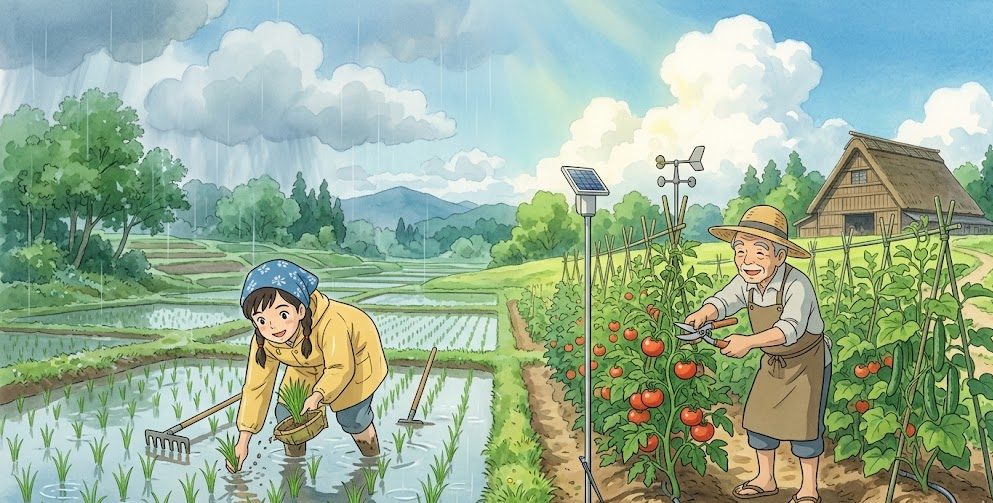
The agricultural landscape of 2026 demands more than just hard work; it requires Strategic Intelligence. With climate patterns becoming increasingly unpredictable, the “set it and forget it” method of traditional farming is a recipe for loss. To truly maximize your harvest, you must adopt a seasonal strategy that utilizes data, automation, and advanced biological techniques.
Whether you are battling the scorching 45°C sun or managing the torrential downpours of the monsoon, these smart farming innovations will keep your farm profitable and resilient.
1. Summer Strategy: Mastering Heat and Water Scarcity
The primary goal of summer farming is Thermal Regulation and Moisture Retention. When the sun is at its peak, your plants are in a constant state of stress.
A. AI-Driven Irrigation & Subsurface Tech
Surface watering in the summer is a waste of resources, as a significant percentage evaporates before it reaches the roots.
- Subsurface Drip Irrigation (SDI): By burying drip lines 4–6 inches underground, you deliver water directly to the root zone. This reduces water waste by 50% and prevents the soil surface from baking into a hard crust.
- IoT Moisture Sensors: Don’t guess when to water. Place sensors at varying depths. When the root zone hits a specific dryness threshold, your smartphone notifies you or triggers an automated pump.
B. Evaporation Shields: Beyond Basic Mulching
- Bio-Reflective Mulch: While organic mulch is great, innovative “reflective” plastic mulches can bounce sunlight back up, reducing soil temperature and increasing the light available for photosynthesis under the leaves.
- Hydrogels: These are potassium-based polymers that can absorb 400x their weight in water. Mixing them into the soil during sowing creates “mini-reservoirs” that sustain the plant during 2-3 days of power cuts or pump failures.
C. Shade House Innovation
For high-value crops like lettuce, bell peppers, or exotic herbs, a Smart Shade House is essential.
- Photosynthetic Active Radiation (PAR) Nets: Use nets that specifically filter out harmful UV rays while letting in the “growth light.” A 35%–50% shade net can reduce ambient temperature by up to 7°C, preventing flower drop and fruit burn.
2. Rainy Season Strategy: Defeating Excess and Infection
In the monsoon, the challenge flips. You have too much water, high humidity, and a massive surge in pest activity.
A. The Power of “Raised Bed” Engineering
Waterlogging is the #1 killer of rainy-season crops.
- Mechanical Bed Formers: Use machinery to create beds that are 10–12 inches high. This ensures that even during a 100mm rain event, the primary root mass remains above the water table, preventing “drowning” and root rot.
- Laser Land Leveling: Before the rains start, use a laser-guided leveler to ensure your field has a 1%–2% slope toward a drainage pond. This prevents stagnant water pockets.
B. Smart Pest & Disease Forecasting
High humidity is the “Golden Age” for fungi and bacteria.
- Predictive Analytics: Use apps that sync with local weather stations. If the humidity stays above 80% for more than 12 hours, the system can predict a “Late Blight” or “Powdery Mildew” outbreak.
- Drone-Based Spraying: When the ground is too muddy for tractors or manual labor, Ag-Drones are a lifesaver. They can spray 10 acres in 15 minutes with surgical precision, ensuring your crop is protected exactly when the “infection window” opens.
C. Foliar Nutrition
During heavy rains, nitrogen and other nutrients leach out of the soil very quickly.
- Foliar Feeding: Instead of putting fertilizer in the mud (where it washes away), spray nutrients directly onto the leaves. The plant absorbs these instantly, maintaining its strength despite the lack of sunshine.
3. High-Value Crop Selection for 2026
To maximize profit, you must grow what the market needs, adapted to the season.
| Season | Best Smart Crops | Market Advantage |
|---|---|---|
| Summer | Okra, Musk Melon, Cowpea, Amaranth | Heat tolerance; High demand in urban centers. |
| Rainy | Corn (Maize), Ginger, Turmeric, Ridge Gourd | High biomass; Ginger/Turmeric act as natural insurance (long shelf life). |
| Off-Season | Tomatoes (under rain shelter) | Massive price spikes due to open-field crop failures. |
Export to Sheets
4. Circular Resource Management
A smart farm is a closed loop.
- Rainwater Harvesting: Don’t let the monsoon runoff go to waste. Direct it into a farm pond. This water can be your lifeline during the following summer or used for Integrated Fish Farming to add another revenue stream.
- Solar Pumping: Summer is the best time for solar energy. Use solar-powered pumps to run your drip systems for free, reducing your operational costs to near zero.
5. Post-Harvest & Market Intelligence
A maximized harvest is only successful if it reaches the market in peak condition.
- Evaporative Cooling Chambers (Zero-Energy): For small farmers, a brick-and-sand cooling chamber can keep vegetables fresh for 3–5 days longer during the summer without using electricity.
- Real-Time Price Tracking: Use digital platforms to track which nearby city has the highest demand for your specific crop. Sometimes, driving 20km further can result in a 25% profit increase.
6. Conclusion: The Resilient Farmer’s Mindset
Maximizing your harvest in the summer and rainy seasons isn’t just about buying the most expensive machines; it’s about Timing and Data.
- In Summer, you are the “Protector,” guarding your soil and plants from the sun’s aggression.
- In Rainy Season, you are the “Engineer,” managing flow and preventing the spread of disease.
By integrating IoT sensors, drone technology, and smart structural designs like raised beds and shade nets, you remove the “gambling” aspect of agriculture. The future belongs to the farmer who works with a tablet in one hand and a spade in the other.
Final Pro-Tips for Maximum Yield:
- Test, Don’t Guess: Get a soil health card every 6 months to know exactly what nutrients are missing.
- Seed Quality: Always invest in “Climate-Resilient” or “Hybrid” seeds that are specifically bred for heat or moisture tolerance.
- Digital Records: Keep a log of your successes and failures. Your own farm’s data is your most valuable asset for the next year.
The sun and the rain are your greatest resources—if you have the smart tools to manage them!