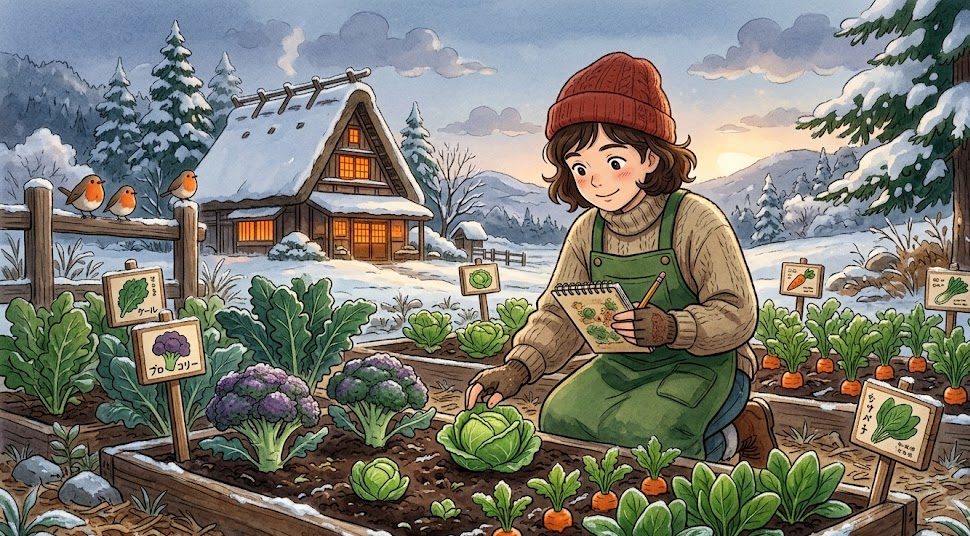
As the sweltering heat of summer fades and the soil cools, many farmers view the winter as a “down” season. This is a massive missed opportunity. In many regions, the winter months offer a unique growing climate that is not just productive, but potentially your most profitable time of the year.
Winter crops are often hardier, suffer from fewer pest pressures, and, crucially, hit the market when supply is low and demand is high. If you want to move beyond basic survival and start farming for profit, you need to transition your winter land into a high-value vegetable factory.
Why Winter is the “Hidden” Profit Season
In the heat of summer, everyone is growing tomatoes, peppers, and cucumbers. The market is saturated, and prices crash. Winter is different. Fewer farmers are active, and the crops that can thrive in the cold—leafy greens, roots, and cruciferous vegetables—are in constant, high-demand.
Additionally, cooler temperatures bring out the natural sugars in many vegetables, resulting in a superior flavor profile that discerning chefs and high-end grocery customers are willing to pay a premium for.
The Top High-Value Winter Crops
To maximize your profit, you must select crops that have high market demand and a relatively short “days-to-maturity” window.
1. Baby Leaf Greens (Arugula, Spinach, Mache)
These are the “cash kings” of the winter garden. Because they grow rapidly and can be harvested repeatedly (“cut-and-come-again”), they offer the highest return on investment per square foot.
- Profit Strategy: Target the high-end salad mix market. By blending your own unique combination of baby greens, you create a proprietary product that restaurants will order on a weekly subscription basis.
2. Heirloom Carrots and Specialty Roots
Supermarket carrots are cheap, watery, and bland. Your winter-grown, heirloom carrots—crisp, sweet, and vibrant in color—are an entirely different product.
- Profit Strategy: Sell them “bunched” with the tops still attached. The green tops act as a visual indicator of extreme freshness, allowing you to charge 50–100% more than “topped” carrots.
3. Kale and Asian Greens (Bok Choy, Tatsoi)
Cruciferous vegetables actually taste better after the first frost; the cold converts starches into sugars. These plants are tough, frost-tolerant, and grow steadily through the short days of winter.
- Profit Strategy: Asian greens like Tatsoi and Bok Choy have a very short growth cycle. You can rotate these crops three times during a standard winter season, maximizing your annual turnover.
4. Garlic and Shallots
While these require a longer season, they are one of the most profitable crops per acre. They are “set it and forget it” crops that occupy your soil through the winter and provide a high-value harvest in the early spring.
- Profit Strategy: Value-add processing. If you have excess, dehydrate your garlic to sell as artisanal garlic powder or black garlic. These products have a long shelf life and command premium prices.
Smart Strategies to Boost Winter Yields
Growing in the winter isn’t just about picking the right seeds; it’s about managing the environment to keep your plants happy.
1. The Power of “Low Tunnels”
You don’t need a massive, expensive greenhouse to extend your season. Simple “low tunnels”—wire hoops covered with clear agricultural plastic—can raise the internal temperature by 5–10 degrees. This is often the difference between a crop that just “survives” and a crop that “thrives.”
- The ROI: A low tunnel system is incredibly cheap to build and can literally double your growth rate during the coldest months.
2. Focus on “Cold-Hardy” Genetics
Work with varieties bred for winter performance. Look for terms like “winter-hardy,” “slow-bolting,” or “frost-tolerant” on your seed packets. These genetics have been selected for vigor in lower-light, lower-temperature conditions.
3. Soil Fertility is the Antifreeze
Plants grown in nutrient-dense soil are biologically tougher. Incorporate high-quality compost before you plant your winter crops. The microbial activity in a healthy soil actually generates a small amount of heat, which can help keep roots from freezing during an unexpected cold snap.
Marketing Your Winter Harvest
To turn these crops into maximum profit, you need to change your marketing approach:
- The “Seasonal/Artisanal” Narrative: Market your winter produce as “frost-kissed.” Explain to your customers that the cold weather has made the greens sweeter and more nutrient-dense. This is a scientific fact that adds perceived value to your product.
- Subscription Boxes (CSAs): Winter is the perfect time for a subscription model. Since local competition is low, you can secure your customers’ commitment for 8–12 weeks of produce. This guarantees your income, regardless of the weather.
- Chef Partnerships: High-end restaurants are always looking for reliable, year-round sources of fresh produce. If you can prove you have consistent baby arugula and heirloom carrots in the middle of January, you have a client for life.
The Reality of Winter Farming
Winter farming does come with challenges. You have to deal with shorter daylight hours, which means slower growth rates. You also have to be more diligent about moisture—too much water in the winter leads to rot, while too little can lead to dehydration.
However, the reward is a farm that never stops earning. By mastering the winter season, you flatten out your income curve. You avoid the “summer slump” where prices drop, and you establish yourself as the farmer who is there when everyone else has packed up and gone home.
In 2026, the most profitable farmers aren’t the ones who work the hardest in the summer—they are the ones who have figured out how to keep the soil working all year round.