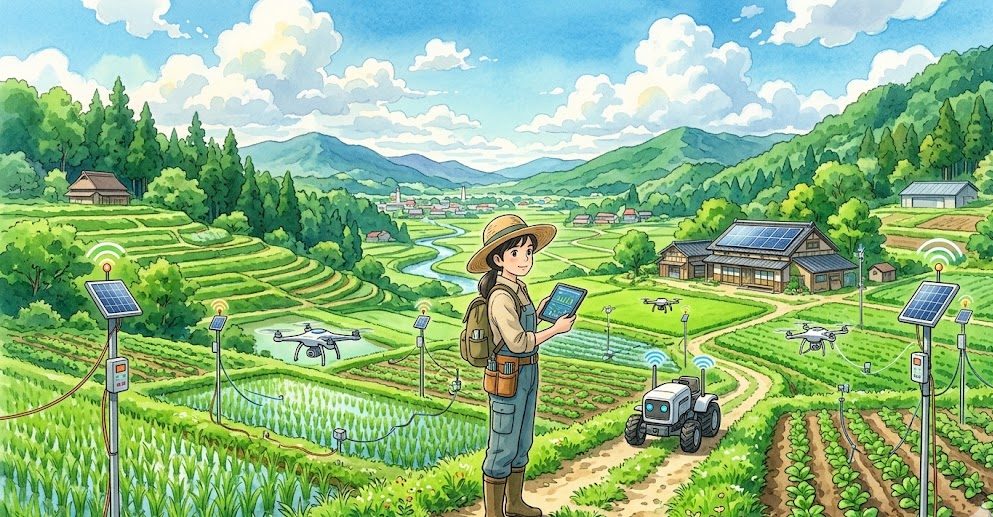
The global agricultural sector is currently standing at the threshold of a third green revolution, driven by digital technology. At the heart of this transformation is Precision Agriculture, a farming management concept based on observing, measuring, and responding to inter and intra-field variability in crops. By integrating the Internet of Things (IoT) into daily operations, traditional farms are evolving into “Smart Farms”—highly optimized, data-driven ecosystems that maximize efficiency while minimizing environmental impact.
This guide explores how the synergy between IoT sensors, cloud computing, and precision machinery is redefining modern cultivation, providing a blueprint for sustainable and profitable smart farming.
1. What is Precision Agriculture?
Precision agriculture (PA) is the opposite of the traditional “one-size-fits-all” farming approach. Instead of treating an entire field as a single unit, PA uses technology to identify specific areas that require more or less attention. The goal is to apply the right amount of input (water, fertilizer, or pesticides) at the right time and in the right location.
By integrating IoT, precision agriculture moves from simple observation to real-time action. IoT devices—ranging from ground-based sensors to satellite-linked controllers—collect massive amounts of data, which are then analyzed to make precise operational decisions.
2. Key IoT Components in Smart Farming
To build a functional smart farming environment, several layers of IoT technology must work in perfect synchronization:
A. Smart Soil & Crop Sensors
Ground sensors are the “eyes and ears” of the farm. These IoT devices are embedded in the soil to monitor critical parameters in real-time:
- Moisture Content: Prevents over-irrigation and ensures the plant is never under water stress.
- NPK Levels: Monitors Nitrogen, Phosphorus, and Potassium levels, allowing for “Variable Rate Fertilization.”
- pH and Temperature: Helps in selecting the right crop varieties and identifying potential disease risks.
B. Automated Weather Stations
Hyper-local weather stations provide atmospheric data that is far more accurate than general regional forecasts. These stations measure wind speed, humidity, solar radiation, and rainfall. When connected to a centralized IoT hub, this data can automatically trigger or pause irrigation systems, saving millions of liters of water annually.
C. Drone-Based Remote Sensing
Unmanned Aerial Vehicles (UAVs) equipped with multispectral cameras can scan vast areas of farmland in minutes. These drones create “Health Maps” using NDVI (Normalized Difference Vegetation Index) technology, highlighting areas where crops are struggling due to pests or nutrient deficiencies long before the damage is visible to the human eye.
3. The Architecture of an IoT-Enabled Farm
How does the data move from a sensor in the dirt to a dashboard on a farmer’s smartphone? The architecture typically follows four stages:
- Data Collection: Sensors and devices gather raw physical data from the field.
- Transmission: Using low-power wide-area networks (like LoRaWAN, NB-IoT, or 5G), the data is sent to a gateway.
- Data Processing: Cloud-based AI algorithms analyze the data, comparing it against historical trends and crop growth models.
- Actionable Insights: The system either alerts the farmer via a mobile app or takes autonomous action (e.g., turning on a specific drip irrigation valve).
4. Major Benefits of IoT Integration
The commercial and environmental benefits of integrating IoT into precision agriculture are profound:
- Drastic Cost Reduction: By applying chemicals and fertilizers only where needed, farmers can reduce their input costs by up to 30%.
- Water Conservation: IoT-driven “Smart Irrigation” ensures that water is used with surgical precision, which is critical in regions facing water scarcity.
- Enhanced Crop Quality: Consistent monitoring leads to more uniform crop growth, reducing the percentage of wasted or sub-par produce.
- Environmental Sustainability: Reduced chemical runoff protects local groundwater and biodiversity, helping farms meet strict global sustainability certifications.
5. Challenges and the Future of Smart Farming
While the potential of IoT in smart farming is immense, certain challenges remain:
- Connectivity in Remote Areas: High-speed internet is still a luxury in many rural farming regions. However, the rollout of Starlink and 5G is rapidly solving this bottleneck.
- Data Security: As farms become digital, they become vulnerable to cyber threats. Robust encryption and secure IoT protocols are essential.
- Initial Investment: The “CapEx” (Capital Expenditure) for smart sensors and autonomous machinery can be high for small-scale farmers. Fortunately, as technology scales, the cost of IoT hardware continues to drop.
The future of precision agriculture lies in Autonomous Farming. We are moving toward a reality where AI-driven robots handle weeding, drones handle pest control, and IoT networks manage the entire lifecycle of a crop with minimal human intervention.
6. Conclusion: The Digital Evolution of Agriculture
Integrating IoT into precision agriculture is no longer a futuristic concept; it is a current commercial necessity. For the modern agri-entrepreneur, data is just as important as seeds and soil. By leveraging IoT technology, we can build a farming system that is not only highly profitable but also capable of feeding a global population in a changing climate.
The “Smart Farming” revolution is here, and it is powered by the seamless integration of technology and nature.