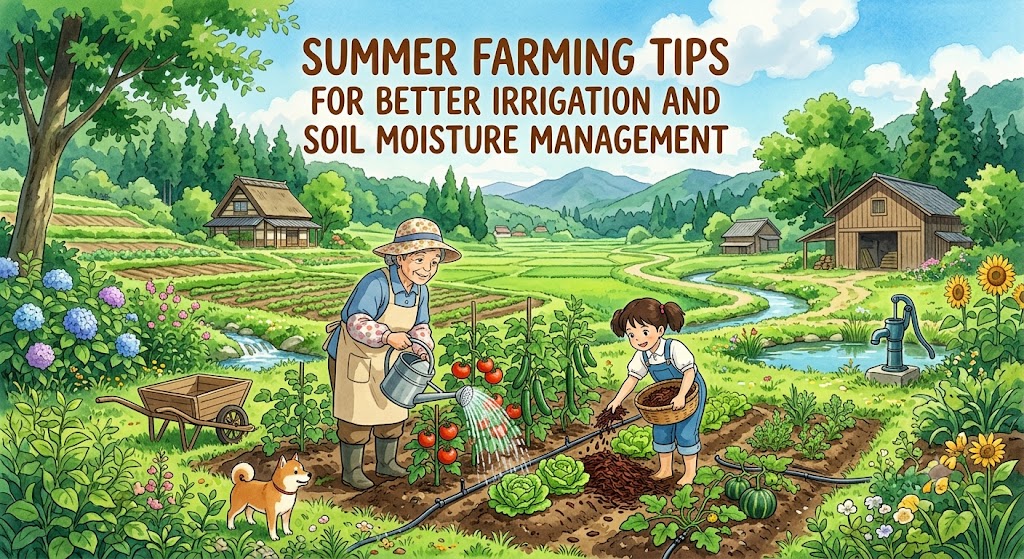
Summer is one of the most challenging seasons for farmers because high temperatures, strong sunlight, and increased evaporation can quickly reduce soil moisture. Without proper irrigation and water management, crops experience heat stress, slow growth, poor flowering, reduced fruit development, and lower yields. As climate conditions become more unpredictable, using water efficiently has become one of the most important aspects of successful farming.
Good irrigation management is not simply about applying more water. In many cases, overwatering can be just as harmful as underwatering. The key is to provide crops with the right amount of moisture at the right time while minimizing water loss through evaporation, runoff, and deep percolation. At the same time, maintaining healthy soil helps retain moisture for longer periods, reducing the need for frequent irrigation.
This guide explains practical summer farming techniques that improve irrigation efficiency, conserve soil moisture, and help farmers achieve healthier crops and higher yields.
Why Water Management Is Critical During Summer
As temperatures rise, crops lose water rapidly through transpiration, while the soil surface loses moisture through evaporation. If water loss exceeds the amount available in the root zone, plants begin to experience drought stress.
Poor water management during summer can lead to:
- Wilting plants
- Slow crop growth
- Flower and fruit drop
- Poor seed development
- Reduced nutrient uptake
- Lower crop quality
- Increased pest and disease pressure
- Reduced harvest yields
Efficient irrigation and healthy soil work together to reduce these risks.
1. Understand Your Crop’s Water Requirements
Different crops require different amounts of water throughout their growth cycle.
For example:
- Leafy vegetables usually require frequent irrigation.
- Fruiting crops need consistent moisture during flowering and fruit development.
- Cereals often require the most water during critical growth stages.
- Legumes generally use less water than many vegetable crops.
Knowing the specific water needs of each crop helps prevent both under-irrigation and over-irrigation.
2. Irrigate at the Right Time of Day
The timing of irrigation significantly affects water efficiency.
The best irrigation times are:
- Early morning
- Late evening
During these cooler periods:
- Evaporation is lower.
- More water reaches plant roots.
- Plants absorb moisture more effectively.
- Heat stress is reduced.
Avoid watering during the hottest part of the day because much of the water evaporates before reaching the root zone.
3. Install Drip Irrigation Systems
Drip irrigation is one of the most efficient watering methods available.
Instead of wetting the entire field, drip systems deliver water directly to the plant root zone.
Benefits include:
- Reduced evaporation
- Lower water consumption
- Improved nutrient efficiency
- Better weed control
- Healthier root systems
- Lower pumping costs
Drip irrigation is particularly valuable in areas where water availability is limited.
4. Monitor Soil Moisture Regularly
Many farmers irrigate according to fixed schedules rather than actual crop needs.
Regular soil moisture monitoring prevents unnecessary watering.
Methods include:
- Soil moisture sensors
- Hand soil testing
- Tensiometers
- Digital monitoring systems
Monitoring helps farmers irrigate only when crops truly require additional moisture.
5. Improve Soil Organic Matter
Healthy soil stores more water.
Adding organic matter increases the soil’s ability to retain moisture during hot weather.
Useful materials include:
- Compost
- Farmyard manure
- Vermicompost
- Crop residues
- Green manure
Organic matter also improves soil structure, aeration, and beneficial microbial activity.
Healthier soil allows crops to survive longer between irrigations.
6. Apply Organic Mulch
Mulching is one of the simplest ways to conserve soil moisture.
Suitable mulch materials include:
- Straw
- Dry leaves
- Grass clippings
- Sugarcane trash
- Crop residues
- Wood chips
Mulch provides several benefits:
- Reduces evaporation
- Keeps soil cooler
- Suppresses weeds
- Protects soil structure
- Gradually improves fertility
A properly mulched field often requires less frequent irrigation.
7. Reduce Unnecessary Tillage
Frequent tillage exposes moist soil to direct sunlight and increases evaporation.
Conservation tillage helps:
- Preserve soil moisture
- Protect soil organisms
- Reduce erosion
- Improve soil structure
Minimizing soil disturbance supports long-term water conservation.
8. Maintain Proper Drainage
Although summer is often associated with drought, sudden heavy rainfall can also occur.
Poor drainage causes:
- Waterlogging
- Root diseases
- Oxygen deficiency
- Nutrient loss
Balanced water management includes both efficient irrigation and effective drainage.
Healthy roots require moisture without prolonged standing water.
9. Eliminate Weeds Early
Weeds compete aggressively for available moisture.
During hot weather, weed competition becomes even more damaging.
Early weed removal helps:
- Conserve water
- Improve nutrient availability
- Increase crop growth
- Reduce pest habitat
Mulching and timely cultivation both support weed management.
10. Apply Balanced Fertilizers
Healthy plants use water more efficiently.
Balanced nutrition improves:
- Root development
- Water uptake
- Heat tolerance
- Overall plant health
Base fertilizer applications on soil testing whenever possible.
Avoid excessive nitrogen because overly lush growth often increases water demand.
11. Use Raised Beds for Vegetables
Raised beds improve water management in many vegetable farming systems.
Benefits include:
- Better drainage
- Improved root aeration
- Efficient irrigation
- Reduced soil compaction
Raised beds also simplify drip irrigation installation.
12. Protect Soil from Direct Sunlight
Bare soil heats rapidly during summer.
Exposed soil loses moisture much faster.
Keeping soil covered with:
- Mulch
- Cover crops
- Crop residues
helps reduce evaporation while protecting beneficial microorganisms.
13. Collect and Store Rainwater
Rainwater harvesting provides an additional irrigation source.
Farmers can collect water from:
- Farm buildings
- Greenhouses
- Storage tanks
- Small ponds
- Water reservoirs
Stored rainwater reduces dependence on groundwater during dry periods.
14. Improve Irrigation Scheduling
Avoid watering according to habit alone.
Instead, consider:
- Weather forecasts
- Soil moisture
- Crop growth stage
- Temperature
- Rainfall
Proper scheduling improves water-use efficiency while reducing operating costs.
15. Choose Drought-Tolerant Varieties
Many improved crop varieties tolerate periods of water stress better than traditional varieties.
Heat- and drought-tolerant seeds often produce more reliable harvests under challenging summer conditions.
Select varieties recommended for your local climate.
16. Use Smart Irrigation Technology
Modern irrigation systems can automatically adjust watering according to:
- Soil moisture
- Weather forecasts
- Crop requirements
- Temperature
These systems reduce water waste while maintaining optimal soil moisture.
Even simple moisture sensors can improve irrigation decisions.
17. Keep Farm Records
Recording irrigation activities helps improve future planning.
Useful records include:
- Irrigation dates
- Water volume
- Rainfall
- Soil moisture
- Crop growth
- Yield results
Comparing records over multiple seasons helps identify the most efficient irrigation strategies.
Benefits of Good Soil Moisture Management
Proper irrigation and moisture conservation provide many advantages.
Farmers often experience:
- Higher crop yields
- Better fruit quality
- Lower water consumption
- Reduced pumping costs
- Improved nutrient efficiency
- Healthier soil
- Stronger root development
- Better drought tolerance
- Increased profitability
- Greater environmental sustainability
Healthy soils make efficient irrigation even more effective.
Common Mistakes to Avoid
Many farmers unintentionally waste water through poor management.
Common mistakes include:
- Irrigating during midday
- Overwatering
- Ignoring soil moisture
- Poor drainage
- Leaving soil uncovered
- Delayed weed control
- Excessive tillage
- Applying fertilizer without soil testing
Correcting these mistakes improves both water efficiency and crop productivity.
Frequently Asked Questions
What is the best irrigation method for summer farming?
Drip irrigation is generally considered one of the most efficient methods because it delivers water directly to plant roots while minimizing evaporation.
Why is mulching important during summer?
Mulch reduces evaporation, lowers soil temperature, suppresses weeds, and improves soil moisture retention.
How often should crops be irrigated during summer?
The frequency depends on crop type, soil texture, weather conditions, and growth stage. Monitoring soil moisture provides the most reliable guidance.
Does organic matter improve water retention?
Yes. Organic matter increases the soil’s capacity to store moisture, improves structure, and supports healthier root systems.
Can smart irrigation reduce water use?
Yes. Automated irrigation systems and soil moisture sensors apply water only when necessary, improving efficiency and conserving valuable water resources.
Conclusion
Efficient irrigation and proper soil moisture management are essential for successful summer farming. High temperatures and rapid evaporation can place crops under severe stress, but practical techniques such as drip irrigation, mulching, improving soil organic matter, monitoring soil moisture, controlling weeds, and scheduling irrigation correctly help maintain healthy growing conditions. These strategies not only conserve water but also improve nutrient uptake, strengthen root systems, and support higher crop yields.
As water becomes an increasingly valuable agricultural resource, farmers who adopt smart irrigation practices and sustainable soil management will be better prepared to handle future climate challenges. By using every drop of water wisely and maintaining healthy soils, growers can protect their crops, reduce production costs, and achieve more profitable harvests throughout the summer season.