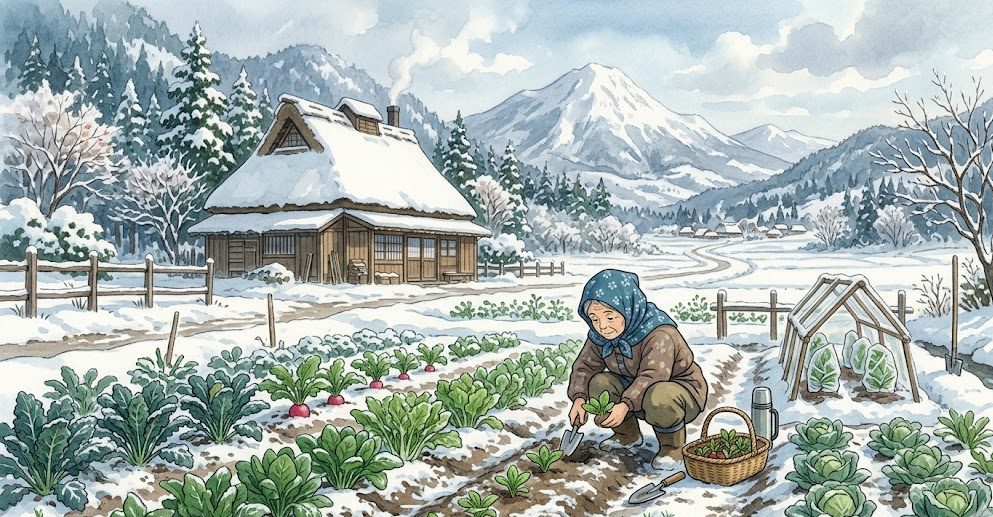
For many farmers, the arrival of winter traditionally signals a period of dormancy. However, as global food demand rises and agricultural technology advances, “Cold Climate Agriculture” has emerged as a highly profitable frontier. Farming in low temperatures isn’t just about survival; it’s about leveraging specific biological triggers and protective environments to produce high-quality, nutrient-dense crops when market prices are at their peak.
In this guide, we explore the specialized techniques and high-yield strategies required to turn the frost of winter into a season of abundance.
1. Understanding the Biology of Cold-Hardy Crops
The foundation of winter farming is selecting crops that are genetically predisposed to survive—and thrive—in the cold. Many winter vegetables, such as kale, carrots, and leeks, actually taste sweeter after a frost. This is because the plants convert starches into sugars to act as a natural “antifreeze” for their cells.
Top Winter Performers:
- Root Vegetables: Carrots, parsnips, and beets can be “stored” directly in the frozen ground and harvested as needed.
- Leafy Greens: Spinach, kale, Swiss chard, and mâche (lamb’s lettuce) can survive temperatures well below freezing if given minimal protection.
- Allium Family: Garlic and shallots are ideally planted in the fall to over-winter, allowing them to develop deep root systems for a massive spring explosion.
2. Protected Cultivation: Creating Microclimates
To maximize yields in cold climates, farmers must manipulate the environment to stay a few degrees above the “killing zone.” This is achieved through various layers of protection.
High Tunnels and Hoop Houses
Unlike expensive heated glass greenhouses, high tunnels are unheated structures covered in specialized greenhouse plastic. They act as “solar collectors,” trapping the sun’s heat during the day and shielding crops from freezing winds and heavy snow. On a sunny winter day, the interior of a hoop house can be $10$°C to $15$°C warmer than the outside air.
The “Double-Layer” Technique
For extreme cold, successful winter farmers use a “greenhouse within a greenhouse” approach. By placing floating row covers (lightweight polyester fabric) directly over the crops inside a high tunnel, you create an extra pocket of trapped air. This double insulation can keep the soil from freezing even when outside temperatures plummet to $-10$°C.
Cold Frames and Hot Beds
For small-scale or nursery operations, cold frames (low boxes with transparent lids) act as mini-greenhouses. To create a hot bed, farmers bury a layer of fresh manure beneath the soil; as the manure decomposes, it releases steady, natural heat that warms the root zone from below.
3. Soil Management in Cold Weather
Soil behaves differently in the winter. Biological activity slows down, and drainage becomes a critical issue.
- Raised Beds for Drainage: Cold soil is often wet soil. Raised beds allow excess moisture from melting snow to drain away, preventing “damping off” (fungal rot) and allowing the soil to warm up faster in the morning sun.
- Mulching for Insulation: A thick layer of straw, wood chips, or shredded leaves acts as a thermal blanket. This prevents the “freeze-thaw cycle”—where the soil expands and contracts rapidly—which can physically heave plants out of the ground and snap their roots.
- The Power of Mycorrhizae: Using cold-tolerant beneficial fungi (Mycorrhizae) helps plants absorb phosphorus more efficiently in cold temperatures, which is vital for root strength and stress resilience.
4. High-Yield Winter Strategies
Precision Planting Dates
In winter farming, the “Persephone Period” is the time of year when daylight falls below 10 hours per day (usually late autumn to early winter). During this time, plant growth almost stops. The secret to a high-yield winter harvest is to ensure your crops are $75\%$-$90\%$ mature before the Persephone Period begins. You aren’t “growing” them in the dead of winter; you are “holding” them in a giant, natural refrigerator for harvest.
Light Augmentation
In high-latitude regions, the lack of sunlight is a bigger hurdle than the cold. Using supplemental LED grow lights for just 2–4 hours a day can trick the plants into staying in their active growth phase, significantly increasing the volume of leafy green harvests.
Winter Irrigation Secrets
Plants still need water in winter, but over-watering is a death sentence. It is best to water deeply but infrequently, and always in the morning. This ensures that the plant’s foliage is dry before the sun goes down, reducing the risk of ice crystals forming on the leaves and causing cellular damage.
5. The Economic Advantage of Winter Farming
Why bother with the cold? The answer lies in the Supply and Demand curve.
- Premium Pricing: Local, fresh produce is nearly non-existent in winter. Farmers who can bring fresh spinach or “candy carrots” to a winter market can often charge 2x to 3x the summer price.
- Zero Pest Pressure: Most harmful insects are dormant or dead in the winter. This allows for $100\%$ organic production without the need for expensive natural pesticides.
- Labor Distribution: Winter farming allows year-round staff retention, preventing the “seasonal scramble” for labor that many farms face in the spring.
Conclusion
Cold Climate Agriculture is a testament to human and plant resilience. By understanding microclimates, mastering the timing of the sun, and selecting the right genetics, farmers can turn the “off-season” into a highly productive and profitable venture. As technology like smart sensors and high-insulation plastics becomes more affordable, the ability to harvest fresh, local food in the middle of a blizzard is becoming a reality for farmers everywhere. Winter is no longer a barrier; it is an opportunity for those bold enough