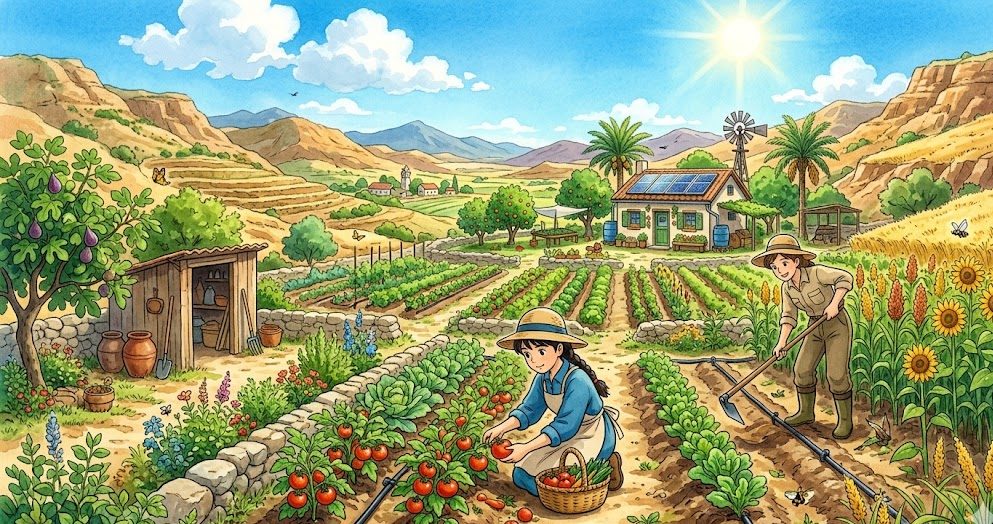
The escalating realities of global warming, unpredictable weather shifts, and dwindling water reserves have placed modern agriculture at a critical crossroads. For farmers and commercial agricultural enterprises, managing crops during the scorching summer months is no longer just a seasonal routine—it has become a battle against environmental extremes.
To maintain high yields and secure food supply chains, the global agricultural sector is rapidly shifting toward Climate-Smart Agriculture (CSA). This comprehensive guide explores actionable Summer Crop Cultivation techniques, advanced Heat-Resilient Farming methodologies, and proven Arid Land Strategies designed to help your farm thrive under high-temperature stress and limited water availability.
1. The Core of Summer Crop Cultivation: Strategic Crop & Variety Selection
The foundation of any successful summer harvest lies in selecting the right crops. Planting water-intensive crops in peak summer or in drought-prone areas is a recipe for economic loss. Instead, modern farming demands a strategic shift toward crops that naturally possess high water-use efficiency (WUE) and thermal tolerance.
High-Value, Climate-Resilient Crops
- Climate-Smart Millets: Sorghum (Jwar), Pearl Millet (Bajra), and Finger Millet (Ragi) are leading the charge in heat-resilient agriculture. These crops can withstand temperatures well above 35°C and require minimal water compared to traditional staples like rice or wheat.
- Short-Duration Pulses: Crops like green gram (moong), black gram (urad), and cowpeas are ideal for summer cycles. They have short growth windows, meaning they escape the peak intensity of late-summer droughts while naturally fixing nitrogen into the soil to boost fertility.
- Heat-Tolerant Oilseeds: Sesame and sunflower are excellent options for arid and semi-arid regions due to their deep root systems, which tap into subsurface moisture reserves.
Selecting Certified Heat & Drought Tolerant Varieties (CRVS)
Beyond choosing the right crop species, utilizing Climate-Resilient Variety Selection (CRVS) is vital. Agricultural research centers have developed hybrid and genetically resilient seeds specifically engineered to:
- Maintain cellular stability during extreme heatwaves.
- Prevent flower-drop and ensure successful pollination even at high temperatures.
- Shorten the vegetative cycle to avoid late-summer moisture deficits.
2. Heat-Resilient Farming: Protecting Crops from Thermal Stress
When ambient temperatures cross optimal thresholds, plants experience oxidative stress, reduced photosynthetic capacity, and rapid moisture loss through transpiration. Implementing defensive field management practices is essential to buffer your crops against these extreme conditions.
                  ┌──────────────────────────────────────────┐
                  │   Defensive Field Management Practices   │
                  └────────────────────┬─────────────────────┘
                                       │
         ┌─────────────────────────────┼─────────────────────────────┐
         ▼                             ▼                             ▼
┌─────────────────┐           ┌─────────────────┐           ┌─────────────────┐
│    Mulching     │           │  Laser Leveling │           │ Agroforestry &  │
│   Techniques    │           │ for Uniformity  │           │   Windbreaks    │
└─────────────────┘           └─────────────────┘           └─────────────────┘
Advanced Mulching Techniques
Leaving the soil bare under the blazing summer sun accelerates water evaporation and destroys microbial life in the topsoil. Mulching acts as a protective blanket over your fields.
- Organic Mulch: Spreading crop residues, straw, or wood shavings over the soil surface significantly lowers soil temperature, retains moisture, and gradually decomposes into organic matter.
- Plastic/Inorganic Mulch: Utilizing reflective plastic mulch sheets reflects excess solar radiation away from the plants, suppresses weed growth, and reduces evaporation by up to 50%.
Laser Land Leveling for Micro-Irrigation Efficiency
Uneven fields lead to unequal water distribution, causing some areas to drown while others dry out. Utilizing Laser Land Levelers before the cultivation cycle ensures a perfectly flat topography. This results in:
- Uniform Moisture Distribution: Every plant receives an equal share of water.
- Input Cost Reduction: Reduces water usage by 20-30% and improves fertilizer application efficiency.
Shading, Microclimates, and Net-Houses
For high-value horticultural crops like tomatoes, peppers, and leafy greens, open-field cultivation during peak summer can lead to sunscald. Implementing temporary shade nets (30% to 50% shading capacity) or using agro-textiles protects fragile crops from direct UV damage while reducing ambient temperatures by several degrees.
3. Arid Land Strategies: Maximizing Efficiency in Water-Scarce Zones
In arid and semi-arid zones, water is the most valuable resource. Sustainable farming in these regions requires shifting away from traditional flood irrigation toward high-efficiency fluid dynamics and conservation techniques.
| Strategy | Operational Mechanism | Primary Agricultural Benefit |
| Precision Drip Irrigation | Delivers water directly to the plant’s root zone via low-pressure emitters. | Reduces water wastage by 60-70% and prevents weed growth between rows. |
| Conservation Tillage (Zero-Till) | Planting seeds directly into untilled soil, leaving previous crop residues intact. | Preserves subterranean soil structure and drastically cuts down evaporation. |
| On-Farm Water Harvesting | Constructing lined farm ponds to capture runoff from early showers or monsoon cycles. | Provides an emergency backup irrigation source during peak drought weeks. |
| Subsurface Irrigation Systems | Placing porous pipes deep within the soil matrix to bypass the surface entirely. | Eliminates surface evaporation completely and encourages deeper root networks. |
The Power of Agroforestry and Windbreaks
Arid lands are highly susceptible to hot, dry winds (such as the ‘Loo’ in South Asia) that can dehydrate a crop within hours. Planting multi-tier windbreaks—consisting of deep-rooted, drought-hardy trees like Neem, Acacia, or Khejri along field borders—breaks wind velocity, reduces transpiration rates, and creates a cooler microclimate across the cultivated acreage.
4. Enhancing Soil Health and Organic Amendments
A plant’s ability to survive a heatwave is directly tied to the quality of the soil it grows in. Sandy and degraded arid soils have poor water-holding capacity. Upgrading your soil matrix is critical to building long-term drought resilience.
Boosting Soil Organic Carbon (SOC)
Incorporate generous amounts of well-rotted Farmyard Manure (FYM) or vermicompost prior to planting. Organic matter acts like a sponge within the soil profile, absorbing water during irrigation and releasing it slowly to the roots over extended dry spells.
Integrating Biochar Technology
Biochar—a carbon-rich product obtained through the pyrolysis of agricultural waste—is proving to be a game-changer for arid land management. When mixed into the soil, biochar:
- Permanently improves soil porosity and structure.
- Retains moisture and essential nutrients, preventing them from leaching away.
- Provides a stable habitat for beneficial mycorrhizal fungi, which help plant roots absorb water from deeper soil layers.
Conclusion: The Path to Sustainable Summer Yields
Successfully navigating Summer Crop Cultivation requires transitioning from reactive farming to proactive, climate-smart resource management. By combining Heat-Resilient Farming practices—like selecting drought-tolerant crop varieties and utilizing protective mulches—with structural Arid Land Strategies like drip irrigation and agroforestry, farmers can secure consistent yields despite harsh weather conditions.
Embracing these sustainable, data-driven techniques not only protects your current financial investments but also ensures the long-term viability and fertility of your land for generations to come.