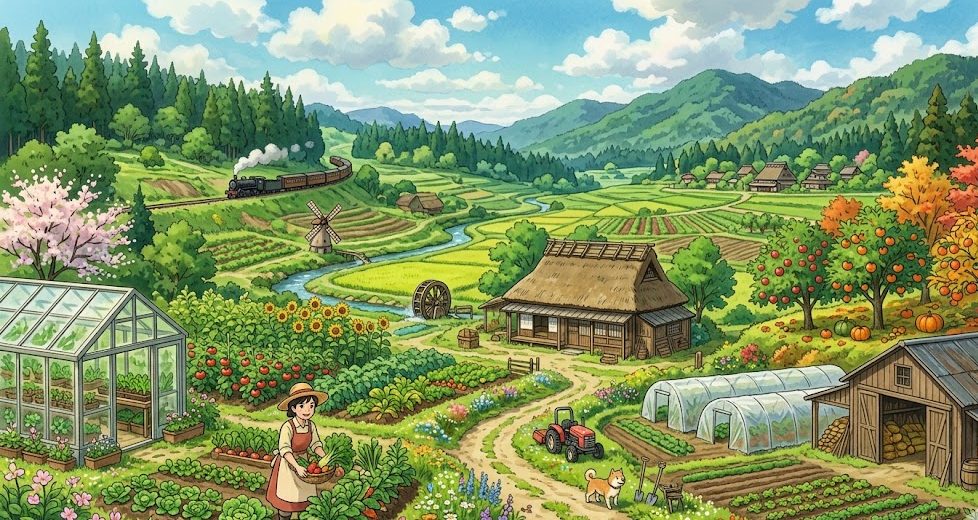
The traditional farming calendar has always been at the mercy of the seasons. For generations, a harsh winter or an unexpected summer drought could wipe out an entire year’s income. However, the intersection of modern technology and innovative agricultural practices has given rise to Smart Seasonal Agriculture—a strategic approach that allows growers to achieve year-round cultivation, optimize resource efficiency, and maximize profitability regardless of external weather conditions.
For modern agricultural entrepreneurs and commercial growers, shifting to a year-round production model isn’t just about food security; it’s about establishing a consistent, predictable revenue stream. This comprehensive guide explores the core strategies, technologies, and methodologies required to master continuous, smart cultivation across all four seasons.
1. The Core Pillars of Smart Year-Round Growth
To break free from seasonal limitations, farmers must transition from open-field dependency to controlled environments and data-driven resource management. Achieving a continuous harvest relies on three fundamental pillars:
Controlled Environment Agriculture (CEA)
CEA is the bedrock of non-seasonal farming. By utilizing structures ranging from high-tech automated greenhouses to indoor vertical farms, growers can completely isolate crops from external climate shocks. Advanced CEA systems use sensor networks to maintain the ideal microclimate for specific plants, adjusting variables like ambient temperature, relative humidity, and carbon dioxide (CO2) levels in real-time.
Precision Resource Management
Smart agriculture treats inputs—water, nutrients, and energy—as precise variables rather than approximations. Automated fertigation systems (delivering liquid nutrients directly through irrigation lines) ensure that plants receive the exact macronutrient ratios required for their specific growth stage, minimizing waste and accelerating crop cycles.
Crop Rotation and Succession Planting
Continuous growth requires meticulous scheduling. Succession planting involves seeding new batches of crops at specific intervals (e.g., every 7 to 14 days) rather than planting an entire facility at once. This ensures a steady, weekly harvest and prevents market flooding or sudden supply drops.
2. Advanced Cultivation Methodologies
Moving away from traditional soil-based cultivation often yields higher efficiency and faster growth rates. The following three soil-less methodologies form the backbone of high-yield, smart seasonal farms:
| Methodology | Core Mechanism | Best Suited For | Key Financial Advantage |
|---|---|---|---|
| Hydroponics | Growing plants in a nutrient-rich, water-based solution using inert media like rockwool or perlite. | Leafy greens, herbs, tomatoes, and strawberries. | Uses up to 90% less water than traditional soil farming; accelerates growth cycles by 25%. |
| Aeroponics | Suspending plant roots in the air and misting them at timed intervals with a nutrient solution. | Root crops, leafy greens, and high-value medicinal plants. | Maximum root oxygenation leads to rapid nutrient absorption and hyper-fast maturity. |
| Aquaponics | A closed-loop symbiotic system combining aquaculture (fish farming) with hydroponics. | Tilapia/Carp paired with watercress, lettuce, and mint. | Eliminates the ongoing cost of chemical fertilizers by converting organic fish waste into plant nutrients. |
3. Seasonal Transitions: A Checklist for Smart Infrastructure
Operating 365 days a year means your infrastructure must rapidly adapt to extreme weather shifts. Below is a seasonal operational blueprint designed to maintain peak production capacity throughout the year:
Spring: The Optimization Phase
- Sensor Calibration: Calibrate soil moisture, EC (electrical conductivity), and pH sensors after winter operations.
- Pest Exclusion: Inspect and replace integrated pest management (IPM) physical barriers and netting before insect populations spike.
- Shade Net Deployment: Prepare external shading systems to mitigate sudden late-spring heatwaves.
Summer: Heat Mitigation and Cooling Strategies
- Evaporative Cooling: Run automated cooling pads and exhaust fan systems to maintain indoor temperatures below critical thresholds (typically 25°C–28°C for most commercial crops).
- UV Protection: Utilize smart shade cloths (30% to 50% opacity) to protect sensitive crops from solar scorching.
- Dissolved Oxygen Monitoring: Warm water holds less oxygen. Monitor hydroponic reservoir oxygen levels closely to prevent root rot (Pythium).
Autumn: Transition and Thermal Preparation
- Insulation Audit: Inspect greenhouse glazing, polycarbonate panels, and thermal screens to prevent heat loss.
- Biomass Setup: If utilizing organic heating loops, stock up on fuel sources well ahead of the first frost.
- Photoperiod Planning: As natural daylight hours decline, configure automated supplemental lighting schedules.
Winter: Microclimate Maintenance and Energy Efficiency
- Supplemental Lighting: Deploy high-efficiency LED grow lights to maintain a consistent 14-to-16-hour photoperiod.
- Root-Zone Heating: Heat the nutrient reservoir or use bench heating cables. Keeping root zones warm is far more energy-efficient than heating the entire air mass of a greenhouse.
- Dehumidification Control: Closed winter structures easily trap humidity, creating a breeding ground for powdery mildew. Run automated dehumidifiers to keep relative humidity strictly between 50% and 60%.
4. High-Value Crop Selection for Continuous Revenue
Maximizing the return on investment (ROI) of a smart farm requires selecting crops that offer high profit margins, rapid turnover, and steady market demand.
- Microgreens: Rocket, radish, broccoli, and mustard microgreens can be harvested just 7 to 14 days after germination. They command premium prices from local restaurants and boutique grocery stores, making them highly profitable per square foot.
- Gourmet Mushrooms: Species like Oyster, Shiitake, and Lion’s Mane grow exceptionally well in climate-controlled indoor environments using agricultural waste (like sawdust or straw) as substrate. They require minimal light, making them perfect for vertical setups or dark facility corners.
- Exotic Herbs: Basil, cilantro, rosemary, and mint are in constant demand year-round. Hydroponically grown herbs boast a significantly longer shelf life than field-grown equivalents, giving growers a distinct competitive edge in supply chains.
5. Integrating Automation and Smart IoT Technology
The “smart” in modern seasonal agriculture comes down to Internet of Things (IoT) integration. A network of connected devices minimizes human error and protects crops against system failures:
[IoT Sensors] ----> [Central Cloud Controller] ----> [Automated Actuators]
  - Temperature          - Data Analysis                - Heaters / Chiller
  - Humidity             - Threshold Triggers           - Vent Openers
  - pH / EC Levels       - Mobile Alerts                - Water Pumps
By utilizing automated micro-controllers (such as Arduino or Raspberry Pi setups linked to industrial-grade sensors), a farm can run entirely on predefined algorithmic loops. For instance, if a temperature sensor registers a reading above 28°C, the central controller automatically triggers the exhaust fans and opens the ceiling vents.
Furthermore, cloud-connected dashboards allow operators to monitor and adjust nutrient delivery, pH balancing, and lighting schedules remotely from a smartphone. This level of automation reduces labor overhead by up to 40% and ensures that the cultivation environment remains perfectly optimized every single hour of the year.
6. The Bottom Line: Sustainability Meets Profitability
Smart seasonal agriculture is transforming farming from a volatile, weather-dependent gamble into a highly precise, industrial-scale business model. While the initial capital expenditure for controlled environment infrastructure, automation sensors, and lighting systems is higher than traditional farming, the long-term economic advantages are undeniable.
By eliminating weather risks, slashing water consumption, maximizing vertical space, and securing a reliable 52-week supply chain for buyers, smart growers can achieve a significantly faster path to profitability. In an era marked by climate unpredictability, the future of farming belongs to those who control the environment, optimize their data, and grow smart all year round.