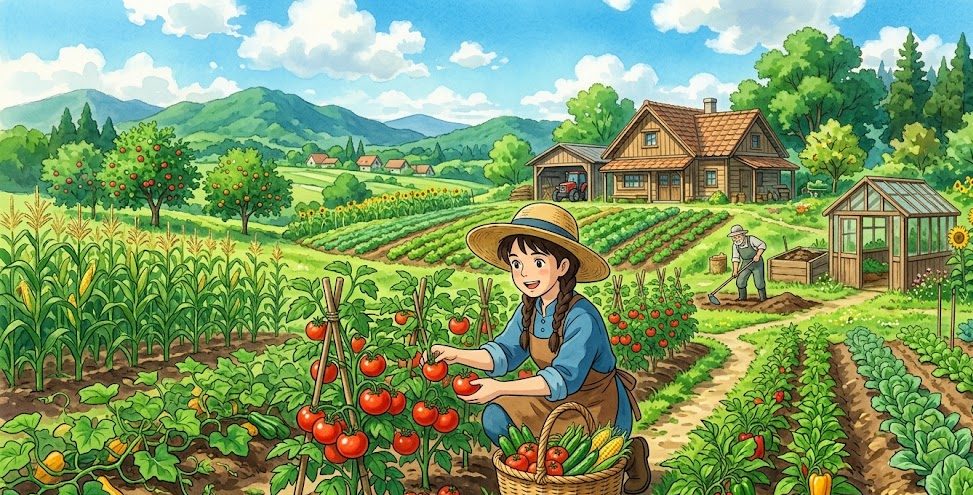
Summer farming presents a unique set of challenges and opportunities for agricultural growers. On one hand, the abundance of sunlight provides a massive energy source to fuel rapid plant growth and fruit maturation. On the other hand, the intense heat, soaring temperatures, dry winds, and rapid water evaporation rates create a high-stress environment that can easily destroy crop quality and decimate harvest volumes.
Farming successfully during the scorching summer months requires moving past standard agricultural routines. Relying on traditional watering schedules or poorly timed soil management will lead to stunted plants, blossom drop, and financial losses.
To secure high yields when the thermostat spikes, you need an operational framework built on heat resilience, moisture conservation, and strategic plant protection.
Whether you manage an open field operation, a commercial market garden, or a high-tech greenhouse, implementing proven summer farming techniques will protect your crops from heat stress and unlock maximum productivity. This comprehensive guide breaks down the essential, actionable strategies required to outsmart the summer heat and achieve a bountiful, highly profitable harvest.
The Biological Impact of Extreme Summer Heat on Crops
To protect your yields, you must first understand how extreme summer weather affects plant biology. When ambient temperatures exceed a crop’s optimal growth threshold, its internal systems shift from progress to survival.
- The Transpiration Crisis: Plants cool themselves by pulling water from their roots and releasing it as vapor through tiny pores in their leaves called stomata. During severe summer heat, water evaporates faster than the roots can absorb it, causing the plant to lose turgor pressure, wilt, and experience cellular damage.
- Photosynthesis Shutdown: When temperatures climb too high (typically above 35°C or 95°F for many standard crops), plants close their stomata to conserve water. While this saves moisture, it stops the intake of carbon dioxide, effectively halting photosynthesis and stalling plant growth.
- Blossom Drop and Pollination Failure: Extreme heat dries out pollen grains, rendering them sterile. For fruiting crops like tomatoes, peppers, and beans, prolonged high temperatures cause flowers to dry up and drop off the vine before pollination can occur, directly reducing your final yield numbers.
1. Smart Water Management: Precision Over Volume
The most common mistake during summer farming is overcompensating for heat by dumping massive amounts of water onto fields via flood or overhead irrigation. This is not only incredibly wasteful, but it can also scald leaves, leach soil nutrients, and create a warm, humid microclimate that breeds destructive fungal diseases.
Transition to Deep Drip Irrigation
Drip irrigation is the gold standard for summer water management. By delivering water through low-pressure lines directly to the base of the plants, you ensure moisture reaches the root zone where it is actually needed. This precision cuts water waste from wind drift and surface evaporation by up to 90%.
Optimize Your Irrigation Timing
Never irrigate your crops during the peak heat of the day. Watering under a blazing afternoon sun causes a substantial amount of moisture to flash evaporate before soaking into the earth, and water droplets sitting on leaves can act as tiny magnifying glasses, causing leaf scorch.
Schedule your irrigation cycles for the early morning hours (between 4:00 AM and 7:00 AM) or late evening hours. Early morning watering is ideal because it fully hydrates the plant’s vascular system before the daily heat peaks, giving it the structural resilience to withstand midday stress.
2. Soil Shielding: The Power of Organic Mulching
In summer farming, exposed bare soil is your greatest enemy. Uncovered soil can bake under the summer sun, reaching surface temperatures that easily kill beneficial soil microbes, damage shallow roots, and cause rapid moisture loss.
Creating a Living Sponge with Mulch
Applying a thick, 3-to-4-inch layer of organic mulch—such as clean wheat straw, shredded leaves, grass clippings, or wood chips—completely transforms your field dynamics. Mulch acts as a physical barrier that blocks direct solar radiation, keeping underground soil temperatures up to 10°F cooler than exposed ground.
| Mulch Type | Core Practical Mechanism | Best Suited For | Expected Benefit |
| Clean Straw / Paddy Straw | Reflects sunlight, breaks down slowly, permits clean water infiltration. | Large vegetable beds, solanaceous crops (tomatoes, peppers). | Drastically lowers weed seed germination; retains deep root moisture. |
| Shredded Leaves / Compost | Adds organic matter as it decomposes, enriches soil microbiome. | High-value market garden rows, fruit trees, berry patches. | Delivers a steady release of trace nutrients while cooling the topsoil. |
| Reflective Plastic Films | Deflects intense solar rays, prevents all evaporation across the bed. | High-density commercial row crops, vine crops (melons, gourds). | Accelerates early crop growth while keeping soil completely weed-free. |
3. Strategic Shade and Microclimate Engineering
When the sun’s ultraviolet (UV) index reaches extreme levels, physical intervention is necessary to shield fragile varieties from sunburn and heat-induced shock.
Deploying Agro-Shade Nets
Utilizing shade cloth structures is a highly effective way to mitigate extreme summer radiation. For standard vegetable production, installing a 30% to 50% green or black UV-stabilized shade net blocks out harsh, burning rays while allowing ample diffuse light through to maintain healthy photosynthesis. This structural modification can reduce ambient plant temperatures by several degrees, preventing blossom drop in sensitive crops like bell peppers and tomatoes.
Leveraging Intercropping for Natural Shade
If investing in structural shade netting isn’t financially viable for your entire acreage, use nature’s architecture to your advantage. Implement an intercropping layout where tall, heat-tolerant, heavy-foliage crops provide natural, biological shade for low-growing, delicate plants. For example, planting rows of sweet corn, sorghum, or sunflowers to the west or south of your lettuce, spinach, or ginger beds provides critical relief from the punishing afternoon sun.
Step-by-Step Summer Cultivation Timeline for Maximum Yields
Executing summer management tasks in a logical, chronological order ensures your crops build up natural internal resistance before the season’s harshest weather arrives.
1.Select Heat-Tolerant Cultivars and Build Soil Organic Matter:Pre-Season Preparation.
Before the summer heat intensifies, source crop varieties specifically bred for heat tolerance and bolt resistance (e.g., heat-tolerant varieties of tomatoes, okra, melons, and cowpeas). Incorporate deep layers of well-rotted manure or compost into your beds; high organic matter acts like a biological sponge, maximizing the soil’s natural water-holding capacity.
2.Deep Sowing and Immediate Soil Armor:Early Summer Planting.
Sow seeds slightly deeper than you would during the spring to ensure they germinate in cooler, consistently moist soil layers. Immediately after planting or transplanting, apply your choice of organic mulch across the bare rows to lock in moisture and prevent the topsoil from forming a hard, impenetrable crust.
3.Implement Deep, Less Frequent Irrigation and Nutrient Micro-Dosing:Mid-Summer Maintenance.
Avoid short, shallow daily waterings, which encourage weak, surface-level root systems. Instead, run deep drip irrigation cycles fewer times a week to force plant roots to grow deep into the cooler earth. Apply liquid bio-stimulants, such as seaweed extracts or humic acid, during early morning waterings to boost plant cell wall strength and heat tolerance.
4.Scout for Pests and Apply Evaporative Cooling Techniques:Peak Heat Management.
Summer heat accelerates the life cycles of destructive pests like spider mites, thrips, and whiteflies. Scout the undersides of leaves daily. In extreme circumstances, use micro-sprinklers above the crop canopy for 5 to 10 minutes during the absolute hottest hour of the day; this rapid evaporative cooling drops canopy temperatures instantly without waterlogging the roots.
Common Pitfalls to Avoid in Summer Farming
To keep your summer farm highly profitable, ensure your team avoids these three common operational traps:
Pitfall 1: Applying High-Nitrogen Fertilizers During a Heatwave
Pumping your plants full of synthetic chemical nitrogen when temperatures are soaring forces them to produce rapid, lush, succulent green leaf growth. This tender new growth is incredibly vulnerable to heat scorch and serves as an open invitation for chewing pests. Stick to balanced potassium-rich inputs or seaweed extracts during extreme heat to focus on structural strength rather than rapid growth.
Pitfall 2: Over-Cultivating and Unnecessary Plowing
Pulling a tiller or mechanical plow through your fields during mid-summer exposes the moist, living interior of your soil directly to the baking sun and hot winds. It causes instant moisture loss and shatters the soil structure. Keep summer cultivation to an absolute minimum; focus instead on no-till or manual, shallow scraping for weed management.
Pitfall 3: Neglecting Greenhouse Ventilation Loops
Greenhouses can easily transform into solar cookers during July and August if airflow stalls. Relying solely on passive side vents is often insufficient during a severe heatwave. Install mechanical exhaust fans, horizontal airflow (HFA) fans, or evaporative cooling pad systems to keep air moving continuously, preventing stagnant heat pockets from destroying your indoor yields.
FAQs: Frequently Asked Questions
1. Which crops are best suited for high-yield summer farming?
Crops that thrive in warm temperatures and high sunlight include okra, eggplant, hot and sweet peppers, melons (watermelon, cantaloupe), cucumbers, sweet potatoes, cowpeas, sweet corn, and gourds (bottle gourd, bitter gourd).
2. How can I tell if my crops are wilting from a lack of water or pure heat stress?
Check your plants early in the morning before the sun comes up. If they look turgid, upright, and healthy in the morning but wilt slightly during the peak afternoon heat, they are experiencing temporary heat stress (transpiration is outpacing water uptake). If they are completely wilted in the morning, your soil is dry, and the plants are suffering from severe water deficiency.
3. Does overhead sprinkling damage crops during hot summer days?
If done improperly, yes. Continuous overhead watering during the hot afternoon can cause severe evaporation losses, leave hard mineral deposits on leaves, and create humid conditions that invite fungal pathogens. If you use overhead cooling, run it as a fine mist for short bursts only to cool the air, rather than soaking the soil.
4. How does seaweed extract help crops survive extreme summer temperatures?
Seaweed extract is rich in natural trace elements, amino acids, and plant hormones like cytokinins. When absorbed by the plant, it triggers internal osmotic adjustments, strengthening cell walls and helping the plant maintain internal water balance, which vastly improves its ability to recover from heat shock.
5. Can I grow leafy greens like lettuce and spinach during the summer?
Yes, but it requires careful management. Select specific “bolt-resistant” summer varieties, grow them under a 50% shade net to block harsh afternoon sun, and use the intercropping technique by planting them under the protective canopy of taller crops like sweet corn or trellised vining plants.
Conclusion
Achieving a highly successful, high-yield summer harvest does not require fighting against the elements; it requires implementing smart, adaptive ecological strategies. By shifting your farm setup to prioritize deep drip irrigation, applying heavy organic mulches to cool the earth, and utilizing strategic shading networks, you change the operational dynamic completely.
Instead of watching your crops struggle in survival mode, you create a protected, thriving microclimate where plants can efficiently harness summer sunlight to produce exceptional fruits and vegetables.