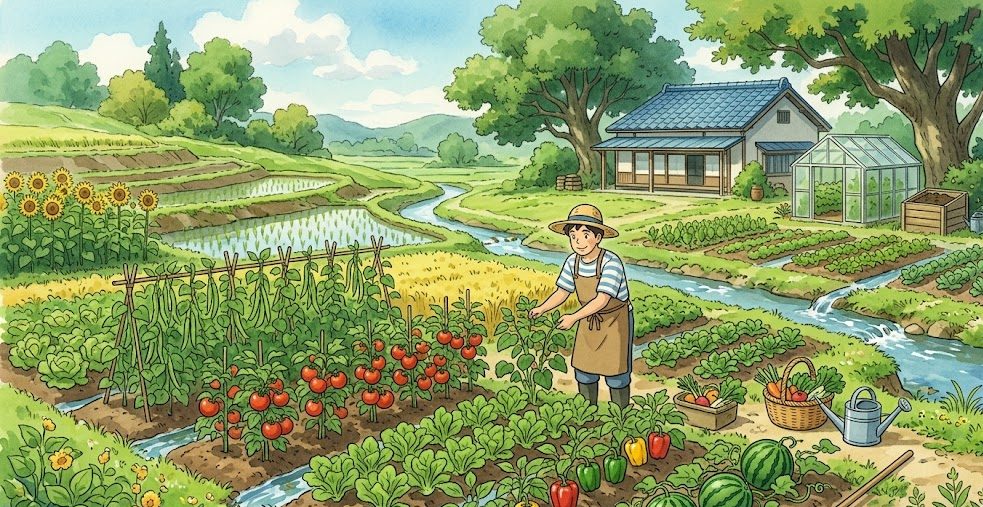
Summer farming has historically been a season of survival rather than profit for many growers. Searing temperatures, unpredictable rainfall, and rapid water evaporation turn traditional open-field agriculture into a massive gamble. However, as the agricultural industry evolves in 2026, the narrative has fundamentally changed. By adopting modern agronomy strategies—specifically controlled environment agriculture—farmers are turning the harsh summer months into their most profitable season.
When traditional open-field farmers experience lower yields due to severe heat stress, local market supply drops, and prices for premium vegetables naturally skyrocket. The secret to capturing these premium prices without risking your entire crop is transitioning from soil-based farming to water-based precision agriculture. In this comprehensive guide, we will explore the best crops for summer profitability, alongside a complete step-by-step guide to setting up a high-yield hydroponics system to beat the heat.
The Economics of Summer Farming
The core strategy for profitable summer farming relies on exploiting the supply-and-demand gap. During peak summer, the intense heat limits the production of traditional, water-intensive crops. Markets often face shortages of fresh, high-quality produce. If you can reliably produce premium vegetables during this window, you gain significant pricing power.
To achieve this, modern farmers are shifting away from long-duration, low-margin commodities. Instead, the focus is on short-duration crops that offer a rapid turnaround. Faster crop cycles mean quicker cash flow and lower exposure to prolonged weather risks. When combined with smart agricultural techniques, you can harvest four to six crop cycles per year, drastically increasing your revenue per square foot.
Krishibazaar
Top High-Yield Crops for Summer Profitability
Choosing the right crop is the foundation of your summer farming strategy. You need varieties that are heat-tolerant, fast-growing, and highly demanded by urban consumers, restaurants, and local markets.
1. English (Seedless) Cucumbers
Cucumbers are the ultimate summer cash crop. They grow incredibly fast, often reaching harvest maturity in just 45 to 50 days. English cucumbers, which are seedless and less bitter than traditional varieties, command a premium price in supermarkets. Because they grow vertically on trellises, they maximize vertical space, yielding enormous quantities in a very small footprint.
2. Colored Capsicum (Bell Peppers)
While green capsicum is a standard commodity, red and yellow bell peppers are high-value crops. The demand from the hospitality sector (hotels, catering, and restaurants) remains high year-round. Colored capsicum requires precise climate management, making it difficult for open-field farmers to grow in the summer. If you can produce crisp, vividly colored peppers in June and July, you will easily capture top-tier wholesale prices.
FarmAtma
3. Leafy Greens and Exotic Herbs
Crops like spinach, romaine lettuce, and sweet basil suffer heavily in summer heat when grown in soil. However, they are incredibly profitable if grown in a temperature-controlled environment. Leafy greens have a rapid 30-to-40-day growth cycle. Because they are highly perishable, local buyers are always willing to pay a premium for hyper-local, fresh greens that haven’t spent days wilting in the back of a transport truck.
Why Hydroponics Solves Summer Farming Challenges
The biggest enemies of summer farming are water scarcity and soil-borne diseases. Hydroponics—the science of growing plants without soil using a nutrient-rich water solution—solves both problems simultaneously.
Traditional open-field farming loses up to 60% of its applied irrigation water to wind evaporation and deep soil percolation. In contrast, hydroponic systems recirculate their water continuously, utilizing up to 90% less water than soil-based farming. Furthermore, because there is no soil, you completely eliminate the risk of soil-borne weeds and summer pests like nematodes. Hydroponics allows you to focus 100% of your resources on explosive plant growth rather than fighting the environment.
Complete Guide to Setting Up a High-Yield Hydroponics System
Setting up a commercial-grade or high-yield backyard hydroponic system requires an initial investment, but the return on investment (ROI) is exceptionally fast. Here is your step-by-step blueprint.
Step 1: Choose the Right Hydroponic System
Not all hydroponic systems are created equal. You must match the system to your chosen crop:
- Nutrient Film Technique (NFT): This involves pumping a thin film of nutrient water through enclosed PVC channels. The plant roots dangle into the flowing water, absorbing nutrients while receiving maximum oxygen. NFT is the absolute best system for fast-growing, lightweight crops like lettuce, spinach, and herbs. GROWTunnels
- Dutch Bucket System (Bato Buckets): For heavy, fruiting crops like tomatoes, cucumbers, and capsicum, NFT channels are too small. Dutch buckets utilize individual pots filled with a sterile medium (like perlite or clay pebbles). A drip line feeds nutrient water to each bucket, and the excess drains back into a central reservoir. University of Minnesota Extension
Step 2: Establish Climate Control
You cannot place a hydroponic system in the blazing summer sun and expect success. You must diffuse the light and control the ambient heat. Erect a simple polyhouse or use a 50% to 70% aluminet shade net over your system. Aluminet reflects the sun’s intense radiation while allowing adequate light for photosynthesis to pass through. Ensure there is ample cross-ventilation; stagnant hot air will quickly stress the plants.
Step 3: Manage Root Zone Temperatures
This is the most critical step for summer hydroponics. In hot weather, water loses its ability to hold dissolved oxygen. If your nutrient reservoir gets too hot (above 75°F or 24°C), the plant roots will suffocate, leading to a fatal disease called Pythium (root rot). To prevent this, either bury your main water reservoir underground where the earth naturally cools it, or invest in a commercial hydroponic water chiller. Keeping the root zone cool allows the plants to thrive, even if the air temperature above them is sweltering.
Step 4: Dial in Your Nutrients (EC and pH)
In hydroponics, you are the soil. You must provide every mineral the plant needs. You will need two critical digital tools: a pH meter and an Electrical Conductivity (EC) meter.
Instructables
- pH Levels: Most hydroponic plants absorb nutrients best when the water pH is slightly acidic, between 5.8 and 6.2. If the pH drifts too high or too low, the plants will experience “nutrient lockout” and starve.
- EC Levels: EC measures the total concentration of fertilizer in the water. Fast-growing summer crops like cucumbers require a higher EC to support their rapid fruit production. Check these metrics daily and adjust using commercial pH Up/Down solutions and hydroponic nutrient blends.
Maintaining Your Summer Hydroponic Farm
A hydroponic farm requires daily observation, but the physical labor is drastically reduced compared to soil farming. There is no digging, plowing, or weeding. Your daily routine should consist of:
- Checking the reservoir’s water level and topping it off with fresh water to combat evaporation.
- Testing the pH and EC levels every morning.
- Scouting the leaves for summer pests like spider mites, which thrive in dry, hot environments.
- Performing a complete system flush every two to three weeks. Dumping the old nutrient water and resetting it prevents toxic mineral buildup in the reservoir.
Conclusion
FarmAtma
Summer farming does not have to be a season of low yields and high stress. By stepping away from traditional methods and embracing high-yield hydroponics, you can turn the hottest months into a period of massive profitability. Focus on fast-growing, high-value crops like cucumbers, bell peppers, and leafy greens to meet the demand of a heat-stressed market.
By investing in the right infrastructure—shade netting, water chillers, and precision nutrient management—you can create a micro-climate where plants grow faster and healthier than ever before. With dedication and daily monitoring, a summer hydroponic system will consistently out-produce conventional agriculture, securing your revenue year-round.