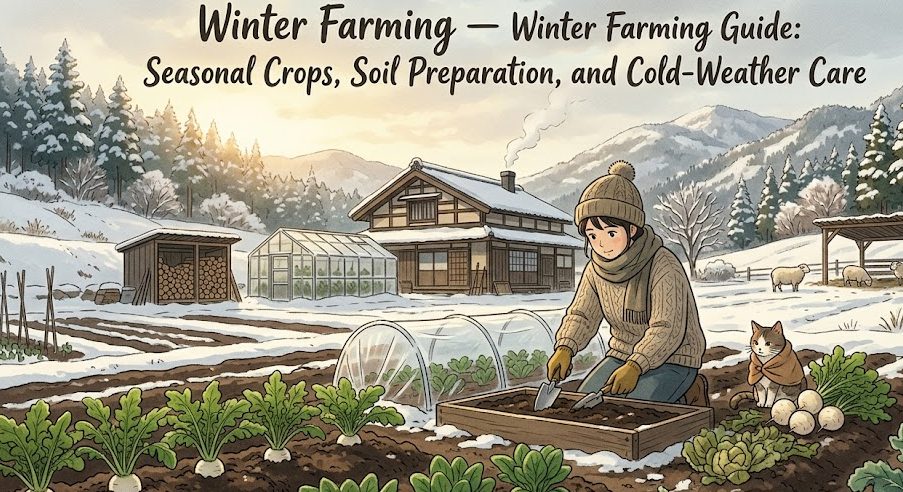
Winter farming can be highly productive when crops, planting dates, soil conditions, and protection methods are matched with the local climate. Unlike warm-season farming, winter production requires farmers to think carefully about shorter daylight hours, lower temperatures, frost, frozen soil, and changing moisture conditions.
Across the United States, winter farming looks different from one region to another. A grower in the Pacific Northwest may deal with cool, wet conditions, while a farmer in the Southeast may have relatively mild winters. In colder northern states, outdoor crop production may slow considerably or stop during the coldest part of the season. This makes winter planning more important than simply choosing crops that tolerate cold.
A successful winter farming system begins before temperatures drop. Soil should be prepared while conditions are workable, suitable crops should be selected for the local growing zone, and protection methods should be ready before a hard freeze arrives.
Understanding the Winter Growing Season
Winter does not have the same meaning for every farm. In some areas, farmers can grow vegetables outdoors throughout much of the season. In colder regions, winter may be mainly a preparation and protection period, with crops grown under tunnels, greenhouses, or other protected structures.
The first step is to understand the local winter pattern.
Farmers should consider:
- Average first and last frost dates
- Typical winter temperatures
- Length of daylight
- Frequency of freezing temperatures
- Snow and ice conditions
- Winter rainfall
- Soil drainage
- Wind exposure
- Availability of protected growing space
The goal is not necessarily to keep every crop growing at full speed throughout winter. Instead, winter farming is about selecting realistic production goals.
Some farms may harvest cold-tolerant vegetables, while others may focus on overwintering crops and preparing fields for spring.
Choosing Crops That Fit Cold Weather
Crop selection is one of the most important winter decisions.
Cool-season vegetables generally perform better in lower temperatures than crops that require warm soil and long periods of sunlight. Leafy greens and several root vegetables are common choices for winter production.
Depending on the region and growing system, farmers may consider:
- Kale
- Spinach
- Collard greens
- Lettuce
- Swiss chard
- Broccoli
- Brussels sprouts
- Cabbage
- Carrots
- Radishes
- Turnips
- Beets
- Peas
- Onions
- Garlic
However, choosing a crop simply because it is described as “cold tolerant” is not enough. Different varieties within the same crop can respond differently to cold and changing weather.
Seed suppliers often provide information about maturity time, temperature tolerance, and recommended planting periods. Farmers can use this information together with local climate data to select varieties that have a realistic chance of reaching harvest.
Prepare the Soil Before Winter Arrives
Good winter farming often starts with soil preparation during the previous season.
When soil is workable, farmers can test its condition and correct problems before planting. Soil testing can help identify nutrient levels and pH conditions, while physical observation can reveal compaction, poor drainage, or erosion problems.
Winter soil preparation may include:
- Removing unhealthy crop residue
- Adding suitable organic matter
- Correcting known nutrient deficiencies
- Improving drainage where necessary
- Reducing compaction
- Creating planting beds
- Applying appropriate mulch
- Establishing cover crops
Avoid working soil when it is excessively wet. Heavy equipment and repeated traffic on wet ground can create compaction that remains a problem long after winter ends.
In vegetable gardens and smaller farms, raised beds can be useful because they improve drainage and allow soil to warm more efficiently when temperatures begin rising.
Use Cover Crops for Winter Soil Protection
A field does not always need to remain bare after the main crop is harvested.
Cover crops can help protect soil during periods when production is reduced. Depending on the region and farming system, growers may use crops such as cereal rye, oats, winter wheat, clover, or other suitable species.
Cover crops can provide several benefits:
- Reducing erosion
- Protecting soil from heavy rain
- Supporting soil structure
- Capturing nutrients
- Adding organic material
- Providing habitat for beneficial organisms
The correct cover crop depends on climate, soil type, crop rotation, termination method, and the next crop planned for the field.
Farmers should also avoid selecting a cover crop without considering how difficult it will be to terminate before spring planting.
Protect Crops From Frost
Frost can damage plants even when winter temperatures do not remain extremely low for long periods.
Protection methods depend on crop type and farm size. Small growers may use floating row covers, low tunnels, cold frames, or frost cloth. Larger operations may use high tunnels, greenhouses, wind protection, or other controlled systems.
A useful winter strategy is to monitor weather forecasts closely. Protection is most effective when it is installed before damaging temperatures arrive.
For sensitive crops, farmers should know the difference between light frost and a more serious freeze. A short period of mild frost may cause limited damage, while prolonged freezing temperatures can injure leaves, stems, roots, and developing produce.
Make Good Use of Mulch
Mulch can be particularly useful during winter.
Organic materials such as straw, shredded leaves, or suitable plant residue can help moderate soil temperature and reduce moisture loss. Mulch can also protect exposed soil from heavy rain and reduce erosion.
However, mulch should be applied carefully.
Excessively thick or poorly managed mulch can retain too much moisture, interfere with air circulation, or create shelter for unwanted pests. Materials should also be reasonably clean and free from problematic weeds or contaminants.
For perennial crops, mulch around the root zone can provide additional protection from rapid temperature changes.
Managing Water During Winter
Winter irrigation requires a different approach from summer irrigation.
Cold weather usually reduces evaporation, and plants may use less water. Overwatering can therefore become a problem, particularly in poorly drained soils or protected structures.
Farmers should check actual soil moisture rather than automatically following a warm-season watering schedule.
In outdoor fields, natural precipitation may provide much of the required moisture. In greenhouses and tunnels, however, irrigation may still be necessary.
Good winter water management includes:
- Checking soil moisture regularly.
- Avoiding unnecessary irrigation.
- Improving drainage in wet areas.
- Watching for standing water.
- Adjusting irrigation as temperatures change.
- Protecting irrigation equipment from freezing conditions.
Waterlogged soil can damage roots and make plants more vulnerable to stress.
Winter Crop Nutrition
Cold temperatures can influence nutrient availability and plant growth.
A crop growing slowly in winter does not necessarily need large amounts of fertilizer. Applying excessive nutrients can create unnecessary costs and may contribute to nutrient loss.
A better approach is to base fertility decisions on soil tests, crop requirements, and expected growth.
For crops planted before winter, nutrients should ideally be managed as part of the overall production plan rather than relying on heavy fertilizer applications during cold weather.
Organic matter, compost, manure, and other soil amendments should also be used according to soil needs and appropriate agricultural practices.
Managing Pests and Diseases in Cold Weather
Winter does not completely eliminate pest and disease problems.
Some pests may become less active outdoors, but protected environments such as greenhouses and tunnels can provide favorable conditions for insects and diseases.
Regular inspection remains important.
Look for:
- Discolored leaves
- Leaf spots
- Wilting
- Mold
- Root problems
- Insect activity
- Damaged stems
- Unusual plant growth
Good airflow is especially important in protected structures. High humidity combined with limited ventilation can increase the risk of fungal and other disease problems.
Integrated pest management can help farmers avoid unnecessary treatments. Monitoring, sanitation, crop rotation, physical barriers, biological controls, and targeted treatments can all be part of a winter crop protection strategy.
Greenhouses and High Tunnels for Winter Production
Protected agriculture can significantly expand the winter growing season.
High tunnels and greenhouses allow farmers to create a more controlled environment by reducing exposure to wind, rain, snow, and extreme temperature changes.
They can be used for crops such as:
- Leafy greens
- Lettuce
- Herbs
- Spinach
- Radishes
- Carrots
- Other cool-season vegetables
A protected structure does not automatically solve every winter problem. Temperature, humidity, ventilation, irrigation, disease pressure, and crop spacing still need to be managed.
During sunny winter days, a greenhouse can become warmer than expected. Ventilation may therefore be necessary even when outdoor temperatures remain low.
Winter Farm Equipment and Infrastructure
Winter preparation should include more than crops.
Farmers should inspect equipment and infrastructure before severe weather arrives.
Important areas include:
- Irrigation lines
- Water pumps
- Greenhouse coverings
- Heating systems
- Ventilation equipment
- Fences
- Storage buildings
- Drainage channels
- Farm roads
- Tractors and other machinery
Water left inside exposed pipes can freeze and potentially damage equipment. Taking preventive steps before freezing weather arrives is generally easier than repairing a system during an extreme cold event.
Farm roads and access points should also be considered, especially in areas that experience snow, ice, or heavy winter rain.
Adjusting Farm Work to Shorter Days
Winter daylight is shorter, so farm work should be organized accordingly.
Crop growth may also slow because plants receive less sunlight and experience lower temperatures. Farmers should adjust expectations rather than comparing winter growth directly with summer production.
A winter schedule can include:
- Morning crop inspections
- Weather monitoring
- Irrigation checks
- Harvesting during suitable conditions
- Equipment maintenance
- Protected-structure ventilation
- Record keeping
- Soil and field planning
Good organization becomes especially valuable when weather changes quickly.
Harvesting Winter Crops
Harvest timing can influence both quality and storage life.
Many cool-season vegetables can tolerate light frost, and some may develop desirable characteristics after exposure to cool weather. However, harvesting should be planned around weather conditions.
Avoid unnecessary field work when soil is frozen, saturated, or extremely wet.
For leafy vegetables, harvesting during cooler parts of the day may help maintain quality. Root vegetables should be handled carefully to reduce physical damage.
After harvesting, crops should be sorted and stored according to their individual requirements. Good post-harvest handling can prevent a significant portion of winter crop losses.
Planning for Different U.S. Regions
Winter farming strategies should be adapted to regional conditions.
Northern States
Cold temperatures and frozen soil can limit outdoor production. Protected structures, overwintering crops, storage crops, and early spring planning can become especially important.
Pacific Northwest
Cool and wet winter conditions can make drainage, disease management, and soil protection important priorities.
Southern States
Milder winters may allow continued vegetable production, although occasional freezes can still create serious risks. Flexible frost protection can be valuable.
Southwest
Winter can provide favorable conditions for certain crops, but water management remains important. Irrigation should be based on crop needs and actual soil moisture.
Midwest
Farmers may use winter primarily for soil protection, cover crops, equipment maintenance, planning, and preparation for spring planting, while some cold-tolerant crops can be grown under protection.
The best approach is always based on local conditions rather than applying one winter-farming system everywhere.
Keep Winter Farm Records
Good records can make the next season easier to plan.
Farmers can record:
- Planting dates
- First and last frost events
- Crop varieties
- Harvest dates
- Weather conditions
- Irrigation amounts
- Pest problems
- Disease observations
- Frost damage
- Yield
- Labor requirements
- Crop losses
- Performance of protective methods
These records become especially valuable when comparing different varieties or planting dates.
For example, if one spinach variety survives several cold periods with minimal damage while another performs poorly, that information can guide the next winter’s seed selection.
A Simple Winter Farming Checklist
Before winter:
- Review local frost and temperature patterns.
- Select suitable cold-tolerant crops.
- Test and prepare soil.
- Improve drainage where necessary.
- Establish cover crops when appropriate.
- Prepare row covers or protected structures.
- Inspect irrigation systems.
- Check greenhouse ventilation.
- Protect vulnerable equipment.
- Plan harvesting and storage.
During winter:
- Monitor weather conditions.
- Check soil moisture.
- Inspect crops regularly.
- Watch for frost damage.
- Maintain airflow in protected structures.
- Control weeds and pests when necessary.
- Harvest carefully.
- Keep production records.
After winter:
- Review crop performance.
- Inspect soil condition.
- Evaluate frost protection.
- Record successful varieties.
- Repair equipment.
- Prepare fields for the next growing season.
Final Thoughts
Winter farming is less about fighting cold weather and more about working with it. The right crops, planting dates, soil conditions, water management, and protection systems can make a major difference in how productive a farm remains during the colder months.
For some U.S. farms, winter may be a productive vegetable-growing season. For others, it may be a period focused on soil protection, overwintering crops, equipment maintenance, and preparation for spring.
The most reliable approach is to start with local climate conditions, choose crops that fit the available growing environment, and build a practical plan around realistic risks. With careful preparation and regular observation, winter can become an important part of a well-managed year-round farming system.