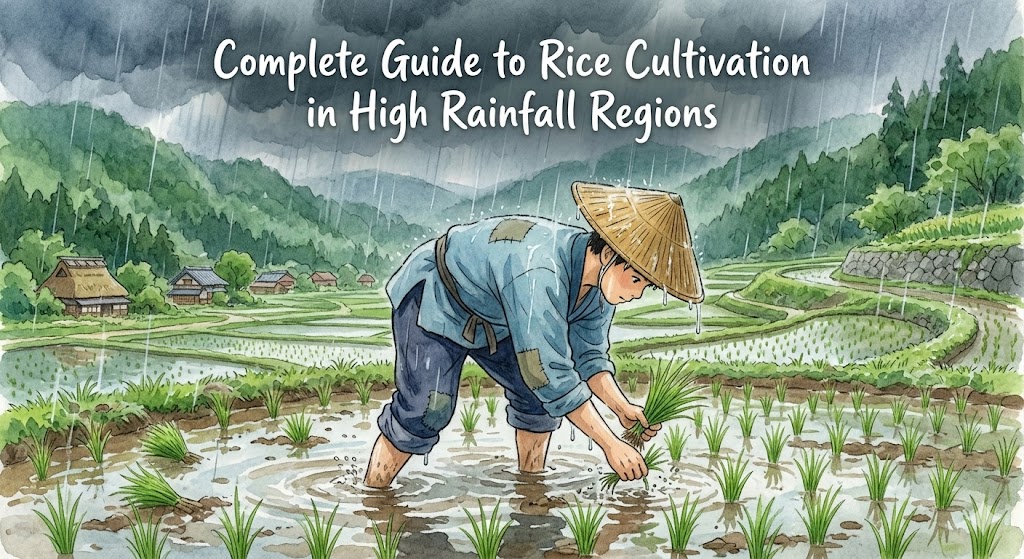
Did you know that over 3.5 billion people rely on rice as their primary staple food, yet unpredictable and extreme rainfall patterns are currently threatening its global supply chain?
Farming in high rainfall regions presents a unique and frustrating paradox for agricultural professionals. While abundant water is absolutely essential for crop growth, too much of it leads to severe waterlogging, massive nutrient washout, and devastating crop diseases that can wipe out an entire season’s hard work in a matter of days. For farmers facing intense monsoon seasons, managing excess water is a constant battle for survival and profitability.
The ultimate solution lies in mastering climate-resilient agricultural practices specifically tailored for these intensely wet environments. By shifting from traditional methods to adaptive water-management strategies, farmers can actually harness heavy rains to their advantage.
In this comprehensive guide, we will explore the core fundamentals of rice cultivation in heavy rainfall zones, outline the immense benefits of adapting to these climates, provide a step-by-step practical implementation plan, and discuss how to navigate future agricultural challenges to ensure a bountiful harvest.
Understanding Rice Cultivation in High Rainfall Regions: Key Concepts and Importance
Cultivating paddy in areas receiving over 2,000mm of annual rainfall requires a fundamental shift in traditional farming techniques. At its core, this practice involves utilizing specific deep-water or flood-tolerant rice varieties and implementing advanced land engineering to manage standing water effectively.
Historically, ancient civilizations across monsoon Asia thrived by adapting to heavy rains, meticulously carving terraces into mountainsides to manage water flow, thereby turning a potential disaster into an agricultural advantage. Today, with climate change significantly increasing the frequency and intensity of heavy downpours, these time-tested practices, combined with modern agricultural science, are more critical than ever for global food security.
Think of a high-rainfall rice farm like a carefully balanced aquarium. Just as you need the right water filters, appropriate oxygen levels, and hardy fish to maintain a healthy aquatic ecosystem, a wet-region rice paddy requires highly specific soil management, precise drainage channels, and genetically resilient seeds to thrive in a constant state of inundation. Without this balance, the environment becomes toxic to the plant.
Why It Matters: The Top Benefits of High Rainfall Cultivation
While excess rain can seem like a curse, properly managed high-rainfall cultivation offers incredible advantages that dryland farmers often miss out on.
- Natural Weed Suppression: Maintaining deep water levels in the paddy field naturally suffocates and suppresses the growth of most terrestrial weeds. This drastically reduces the labor and financial costs associated with manual weeding and minimizes the need for harsh chemical herbicides.
- Significantly Lower Irrigation Costs: By relying entirely on abundant natural rainfall and surface runoff, farmers can cut down the massive energy expenses and infrastructure costs required for artificial water pumping and complex irrigation networks.
- Enhanced Natural Soil Fertility: Heavy floodwaters from higher elevations often carry rich, organic silt and vital minerals. As this water settles in the paddy, it naturally deposits these essential nutrients into the soil, acting as a free, organic fertilizer year after year.
- Support for Local Ecosystems: Flooded rice fields act as vital temporary wetlands. They support incredible local biodiversity, providing habitats for beneficial insect predators, amphibians, and migratory birds that help naturally control crop pests.
- Exceptional Yield Potential: When the correct flood-tolerant genetic strains are planted and managed correctly, heavy rainfall regions consistently produce some of the highest and most stable crop yields globally.
Pro Fact: Rice is the only major global cereal crop that can easily germinate and thrive in standing water. This is largely due to a unique internal tissue structure called aerenchyma, which acts like a built-in snorkel, transporting oxygen from the leaves above the water straight down to the submerged roots!
How to Get Started: A Practical Guide for Beginners
Transitioning to or improving farming practices in wet climates requires a strategic approach. Here is a 5-step actionable plan to ensure your crop survives and thrives during the heavy rains.
1. Select the Right Seed Variety
Your first line of defense is genetics. Choose locally adapted, flood-tolerant or deep-water rice varieties. Look for seeds engineered with the Sub1 gene, which allows the rice plant to survive being completely submerged underwater for up to two weeks without sustaining permanent damage.
2. Prepare the Land Wisely
Proper land preparation dictates your water control. Construct strong, reinforced bunds (earthen embankments) around your fields to hold and control water levels. Thoroughly puddling the soil (tilling it while flooded) is absolutely crucial; this creates a dense “hardpan” layer just below the surface that prevents essential water and expensive fertilizers from percolating too deep into the groundwater.
3. Optimize Sowing and Transplanting Timing
Timing is everything. Plan your nursery preparation and field transplanting so that the seedlings are strong enough to withstand the heaviest monsoon showers. Seedlings should be slightly older and taller (around 25-30 days old) before transplanting into deep-water fields.
4. Manage Nutrients and Drainage Systems
Never apply all your fertilizer at once. Apply split doses of vital nutrients (like Nitrogen) specifically during brief dry spells or “sunny breaks” rather than immediately before a heavy rain to prevent total runoff. Furthermore, ensure robust drainage channels are dug and cleared out before the season starts to remove excess water quickly after a flash flood.
5. Monitor Aggressively for Pests and Diseases
High humidity, constant moisture, and overcast skies create the perfect breeding ground for fungal and bacterial diseases like Rice Blast, Sheath Blight, and Bacterial Leaf Blight. Regularly scout the fields at least twice a week and utilize Integrated Pest Management (IPM) techniques, introducing organic fungicides at the first sign of spotting.
Beginner’s Tip: Never apply granular fertilizers when the field water is actively flowing or overflowing its banks. The nutrients will wash away instantly into the nearest river. Always wait for the water level to stabilize or artificially lower the water level before broadcasting fertilizer.
Overcoming Challenges and Looking into the Future
Despite the best preparations, farming in extreme weather has its hurdles. The most common challenges include severe waterlogging leading to root rot, and torrential rains washing away valuable topsoil. Farmers can overcome these by implementing improved terracing systems, utilizing raised-bed planting techniques for seedling nurseries, and planting cover crops during the off-season to anchor the soil.
Looking to the future, technology is rapidly solving these ancient problems. Precision agriculture is becoming a game-changer. We are seeing a rise in the use of agricultural drones capable of aerial seed broadcasting and pinpointing disease outbreaks in muddy, flooded terrain where heavy tractors simply cannot go. Additionally, ongoing research into CRISPR gene-editing promises to deliver “super-rice” varieties capable of surviving both catastrophic two-month floods and sudden, unexpected droughts, securing the future of farming in volatile climates.
Conclusion
Successfully cultivating rice in high rainfall regions is undoubtedly challenging, but it is highly rewarding if approached with the right knowledge and tools. By understanding the core fundamentals of water management, leveraging the natural economic and environmental benefits of heavy rains, and following a strict, step-by-step practical implementation plan, agricultural professionals can turn the threat of heavy monsoons into a distinct competitive advantage.
Your Next Step: Review your local weather patterns for the upcoming season, and schedule a consultation with your local agricultural extension officer to identify the absolute best flood-resistant seed variety for your specific soil type today.
Let the rain nourish your crops, not destroy them—embrace the power of resilient farming for a sustainable and profitable future.
Frequently Asked Questions (FAQs)
1. What is the best rice variety to plant in heavy rainfall areas? The best varieties are those carrying the Sub1 gene (such as Swarna-Sub1), which are specifically bred to tolerate prolonged submergence. Local deep-water traditional varieties are also highly recommended depending on your geographical location.
2. How long can rice actually survive completely underwater? Standard rice varieties will die after 3 to 4 days of complete submergence. However, modern flood-tolerant varieties can survive being completely underwater for up to 14 to 17 days by effectively holding their breath and pausing their growth until the water recedes.
3. Does too much rain decrease the final rice yield? Yes, if unmanaged. Excessive rain during the crucial flowering and pollination stages can wash away pollen, leading to “empty” grains. Constant waterlogging without drainage can also lead to severe root toxicity and stunted growth.
4. How do you fertilize a heavily flooded rice field? Avoid broadcasting standard granular fertilizers in deep, flowing water. Instead, use foliar sprays (liquid fertilizers applied directly to the leaves) during dry hours, or incorporate slow-release fertilizer briquettes deep into the soil during the initial land preparation phase to prevent washout.