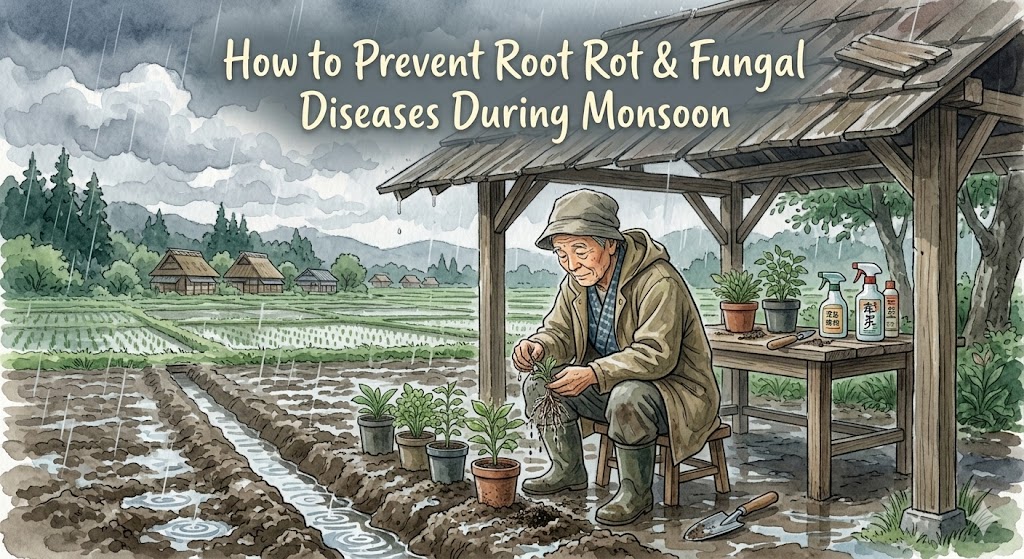
Did you know that nearly 30% of global crop and garden losses during the heavy rainy season are caused by invisible, underground killers?
When the monsoon arrives, it brings life-giving water that is essential for agricultural growth. However, it also brings a farmer’s and gardener’s worst nightmare: prolonged soil saturation. This excess moisture displaces vital oxygen in the earth, effectively suffocating plant roots. Worse still, warm and waterlogged conditions create the absolute perfect breeding ground for highly destructive fungal pathogens that can wipe out an entire season of hard work in just a few days.
The ultimate solution lies in proactive soil management and advanced disease prevention techniques. By mastering moisture control and building strong fungal defenses before the heavy rains begin, you can safeguard your plants and ensure a bountiful harvest regardless of the weather.
In this comprehensive guide, we will explore the core fundamentals of root rot and fungal infections, outline the vital benefits of preventative care, provide a practical step-by-step implementation plan, and discuss the future trends in agricultural disease management.
Understanding Monsoon Fungal Diseases: Key Concepts and Importance
Root rot is a devastating condition primarily caused by soil-borne fungal pathogens such as Phytophthora, Pythium, and Rhizoctonia. These microscopic organisms naturally exist in the soil, remaining completely dormant during dry, sunny periods. However, the moment the soil becomes continuously flooded during the monsoon, these pathogens “wake up” and multiply at an astonishing rate, attacking the weakened, oxygen-deprived roots of your plants.
Historically, farmers suffered massive losses to these unseen diseases, often attributing crop failures to “bad soil” or “cursed rain.” Today, modern agricultural science allows us to understand exactly how the hydrology of the soil interacts with microbiology, giving us the power to intervene before the damage is done.
Think of your plant’s root system like the concrete foundation of a house. If that foundation sits in standing, stagnant water for too long, it begins to soften, crack, and crumble, eventually causing the entire house to collapse. Similarly, plant roots need to “breathe” oxygen to survive. When water entirely replaces the oxygen in the soil pores, the roots drown, turn to mush, and essentially roll out the red carpet for fungal attackers to consume the plant from the bottom up.
Why It Matters: The Top Benefits of Preventing Root Rot
Focusing on prevention rather than trying to cure a diseased plant offers incredible advantages. Once root rot sets in, it is notoriously difficult to reverse. Here is why prioritizing fungal prevention matters for your agricultural success:
- Guaranteed Harvest Yields: Protecting your plant’s root system ensures that the crops can reach full maturity. This secures your food supply and protects your commercial income from sudden, weather-related devastation.
- Significant Financial Savings: Proactive soil management is incredibly cost-effective. Preventing disease through proper drainage is far cheaper than purchasing gallons of expensive, heavy-duty chemical fungicides to treat an actively dying crop.
- Preserved Soil Microbiome: Fungal diseases often force farmers to use harsh chemicals that sterilize the earth. Proactive, organic prevention keeps the beneficial microbes and earthworms alive, maintaining long-term, multi-generational soil health.
- Reduced Overall Plant Stress: Healthy, deep-breathing roots mean stronger, more resilient plants. A crop that isn’t fighting off a fungal infection has more energy to naturally defend itself against other seasonal pests and insects.
Pro Fact: The fungal spores responsible for severe root rot (like Phytophthora) can actually “swim” through waterlogged soil! They use tiny, tail-like appendages called flagella to propel themselves through standing water to infect neighboring healthy plants.
How to Get Started: A Practical Guide for Beginners
Protecting your crops from the monsoon requires practical, preventative action. Follow this 5-step actionable plan to ensure your plants survive the wettest months of the year.
1. Elevate and Aerate the Soil
Your first and most important step is improving drainage. Never plant in flat, low-lying areas if you expect heavy rain. Instead, build raised garden beds or tall earthen mounds. Mix organic matter, perlite, or coarse river sand into your topsoil to break up heavy clay and create essential air pockets that allow excess water to drain away rapidly.
2. Apply Preventive Biological Controls
Do not wait for the fungus to attack. Before the monsoon peaks, introduce beneficial bio-fungicides to your soil. Fungi like Trichoderma viride act as natural bodyguards for your plants roots, aggressively outcompeting and destroying harmful rot-causing pathogens before they can take hold.
3. Optimize Plant Spacing and Airflow
Fungal diseases don’t just attack the roots; they thrive on wet, stagnant leaves. Ensure you leave adequate space between your crops when planting. Proper spacing allows the wind to flow through the canopy, quickly drying the foliage after a heavy downpour and preventing foliar diseases like powdery mildew and leaf blight.
4. Mulch Strategically
Applying a thin layer of organic mulch (like straw or dry leaves) over the soil helps prevent heavy rain from splashing muddy, spore-filled water up onto the undersides of your plant’s leaves. However, ensure you pull the mulch at least two inches away from the main stem to prevent the base of the plant from rotting.
5. Implement a Smart Watering Schedule
This may sound obvious, but overwatering during the monsoon is a common fatal error. Never stick to a rigid watering schedule when the weather is unpredictable. Always test the soil manually—if the top two inches of the earth are still damp from recent rains, put the hose away.
Beginner’s Tip: Never walk heavily on the wet soil immediately surrounding your plants! Compacting damp earth destroys the microscopic air pockets under the surface, instantly suffocating the roots and accelerating the rot process.
To execute this plan effectively, ensure you have basic tools like a sturdy broadfork for deep soil aeration, raised bed construction materials, and access to high-quality organic compost and bio-fungicides.
Overcoming Challenges and Looking into the Future
Even with the best preparations, farming during extreme weather presents unique hurdles. One of the most common challenges is the occurrence of sudden, unexpected flash floods that overwhelm standard drainage systems. You can overcome this by proactively digging emergency trench drains (swales) at the lowest points of your property to redirect massive volumes of water away from the root zones. Another challenge is the emergence of aggressive, fungicide-resistant pathogen strains, which can be mitigated by strictly rotating your crops season after season.
Looking into the future, the agricultural industry is rapidly developing innovative solutions to fungal diseases. We are seeing a massive rise in the use of AI-driven soil moisture sensors that send alerts directly to a farmer’s smartphone when the soil reaches a critical, rot-inducing saturation point. Furthermore, ongoing developments in biotechnology promise new generations of crop varieties genetically edited with enhanced, built-in resistance to the most devastating fungal pathogens.
Conclusion
Successfully navigating the monsoon season without losing your crops to root rot is entirely possible when you prioritize soil health and proper drainage. By understanding the biology of soil-borne fungi, leveraging the financial and environmental benefits of preventative care, and following a strict, step-by-step land management plan, you can easily protect your harvest from the heaviest rains.
Your Next Step: Walk your farm or garden today. Identify the lowest, wettest spots on your property, and dig your first emergency drainage trench before the next major storm rolls in.
Let the monsoon rains nourish your hard work, not destroy it—take proactive control of your soil’s health today!
Frequently Asked Questions (FAQs)
1. How can you visually tell if a plant already has root rot? The most common above-ground signs include leaves turning pale yellow, stunted growth, and the plant mysteriously wilting even though the soil is soaking wet. If you dig up a small section of the roots, they will appear dark brown or black, feel mushy, and often emit a foul, swampy odor.
2. Can a plant fully recover from severe root rot? It is very difficult but sometimes possible for potted plants or small garden crops. You must gently uproot the plant, use sterilized shears to trim away all the black, mushy roots, treat the remaining healthy roots with a mild hydrogen peroxide solution, and replant it in entirely fresh, well-draining dry soil.
3. Does spraying Neem oil help prevent fungal diseases? Yes, Neem oil is an excellent organic preventative measure. While it is primarily known as an insecticide, it has strong anti-fungal properties. Spraying a diluted Neem oil mixture on the plant’s leaves can help prevent foliar fungal infections from taking hold during highly humid weather.
4. Should I use chemical fungicides during the monsoon? Chemical fungicides should be used as an absolute last resort. While they can quickly kill an active infection, they also kill the beneficial microbes in your soil, leading to poorer soil health over time. Focus heavily on improving drainage and using biological controls first.