Did you know that poor field drainage is responsible for up to 40% of crop yield losses during extreme monsoon seasons worldwide?
For farmers and agricultural business owners, the rainy season is often a stressful double-edged sword. While abundant water is the absolute lifeblood of agriculture, a sudden deluge can rapidly turn a fertile, productive field into a stagnant swamp. Prolonged waterlogging displaces vital oxygen in the soil, suffocating plant roots, leaching away expensive fertilizers, and creating the ultimate breeding ground for devastating fungal diseases. Watching your hard-earned crops rot in standing water is a frustrating and costly nightmare.
The ultimate solution to this seasonal threat is implementing robust and efficient agricultural drainage systems. By strategically taking control of how water moves across and beneath your land, you can protect your crops from drowning, stabilize your soil, and secure your harvest regardless of how heavy the rains get.
In this comprehensive guide, we will explore the core concepts of effective farm drainage, highlight the incredible economic benefits of these systems, provide a step-by-step practical installation guide for beginners, and look at the future of water management technology.
Understanding Drainage Systems for Rainy Season Farming: Key Concepts and Importance
At its core, agricultural drainage is the intentional, engineered removal of excess surface and sub-surface water from farming land to enhance crop growth. Historically, ancient civilizations like the Romans dug intricate open ditches to reclaim unusable swampland for wheat production. Today, modern farming relies on a sophisticated mix of surface grading, deep trenches, and perforated underground pipes to carefully manage heavy, unpredictable rainfall.
Think of a farm drainage system like the overflow valve in your bathtub. If the faucet is running full blast (heavy monsoon rain) and the drain is plugged (poor soil absorption), the tub will inevitably overflow, ruining your bathroom floor. A proper drainage system unplugs that drain. It ensures that the water level never rises high enough to cause catastrophic damage, allowing the soil to “breathe” while safely redirecting the excess volume away from the root zones.
Why It Matters: The Top Benefits of Proper Farm Drainage
Upgrading your field’s water management is one of the most profitable and risk-reducing investments you can make. Focusing on drainage offers incredible advantages that directly impact your bottom line. Here is why prioritizing it is critical:
- Prevents Root Asphyxiation: Well-drained soil retains essential microscopic oxygen pockets. This allows plant roots to breathe and absorb nutrients efficiently, rather than drowning and rotting in thick mud.
- Reduces Severe Soil Compaction: Wet, boggy soil is easily compressed and destroyed by heavy tractors and farming equipment. Proper drainage keeps the earth firm and stable, allowing you to operate machinery safely without destroying the delicate soil structure.
- Maximizes Fertilizer Efficiency: Excess, uncontrolled water washes away expensive nitrogen and potassium. A good drainage setup manages the water table effectively without aggressively flushing your valuable applied nutrients into the local river.
- Accelerates Planting and Harvesting: Fields that drain quickly dry out much faster after early rains. This allows farmers to get their machinery into the fields to plant seeds or harvest crops weeks earlier than competitors struggling with muddy land.
Pro Fact: Fields equipped with properly installed subsurface drainage systems can see overall crop yield increases of up to 30% compared to identical, undrained fields experiencing the exact same weather conditions!
How to Get Started: A Practical Guide for Beginners
Building a reliable drainage network doesn’t always require hiring massive engineering firms right away. Here is a 5-step actionable plan to dramatically improve your farm’s water management.
1. Survey Your Topography During a Storm
The best time to plan is while it’s raining. Walk your fields during a heavy downpour and note exactly where the water naturally pools and the direction it tries to flow. This natural pathway is exactly where you should focus your drainage efforts.
2. Dig Surface Drainage Ditches
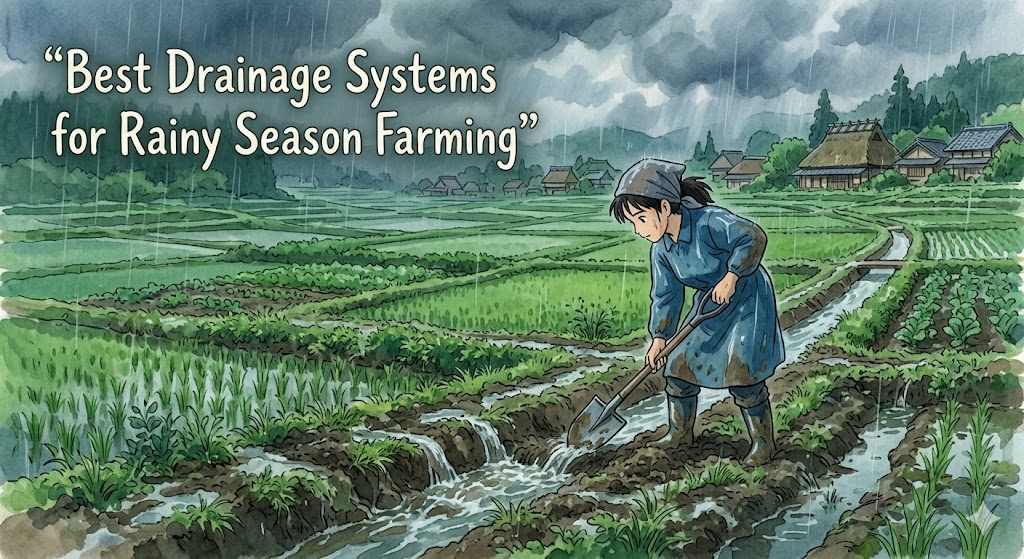
For immediate, cost-effective relief, use a tractor with a ditching blade to create shallow, V-shaped surface drains. These trenches should follow the natural downward slope of your land to catch standing water and actively channel it away from the primary planting zones.
3. Install French Drains in Chronic Trouble Spots
For areas that stay chronically wet, you must go underground. Dig a deep trench, lay down a perforated PVC or corrugated pipe wrapped in protective landscape fabric, and cover it completely with coarse washed gravel. This French drain pulls water down from the surface and moves it away invisibly beneath the earth.
4. Create Elevated Raised Beds
If you are growing high-value vegetables or cash crops, mound your soil into raised beds. This incredibly simple technique physically lifts the plant’s root crown directly out of the danger zone, ensuring they stay well above any temporary puddles.
5. Establish a Safe, Legal Water Outlet
All that excess water has to go somewhere safely. Ensure your ditches and underground pipes empty into a designated, secure outlet. This could be a local creek, a constructed retention pond, or a municipal drainage canal.
Beginner’s Tip: Never dig your drainage ditches completely flat! Always ensure there is a minimum slope (at least a 1% to 2% downward grade) so gravity can effectively pull the water away. Standing water in a flat ditch will just breed mosquitoes and cause further mud issues.
To execute this properly, you will need a transit level or laser level to accurately calculate your slopes, a ditch-witch or backhoe for trenching, perforated corrugated pipes, and access to clean gravel.
Overcoming Challenges and Looking into the Future
Implementing drainage systems comes with its own set of hurdles. The most common challenge farmers face is drain pipe clogging. Over time, fine silt and aggressive plant roots can infiltrate underground pipes, completely blocking water flow. You can solve this by ensuring you always wrap your subsurface pipes in high-quality geotextile fabric before burying them.
Another major challenge is soil erosion caused by fast-moving water rushing through surface ditches. Planting tough, fibrous grasses along the sloping banks of your ditches will naturally anchor the soil and prevent costly washouts.
Looking into the future, the agricultural drainage industry is becoming highly automated. We are already seeing the integration of smart drainage valves connected to AI-driven weather forecasting systems. These brilliant valves can automatically open to drain fields dry before a predicted heavy monsoon hits, and then automatically close to retain vital moisture during unexpected dry spells, creating the perfect underground environment year-round.
Conclusion
Surviving and thriving during the rainy season requires proactive, intelligent land engineering. By understanding how water interacts with your specific soil type, leveraging the immense economic benefits of moisture control, and implementing a strategic mix of surface ditches and underground pipes, you can completely eliminate the threat of waterlogging.
Your Next Step: Grab a notebook and map out your property’s natural water flow during the very next heavy rain. Identify your worst “puddling” spot and plan the layout to install a simple, effective French drain there this weekend.
Don’t let the heavy monsoon wash away your profits; take total control of your land’s hydrology and pave the way for a thriving, resilient harvest!
Frequently Asked Questions (FAQs)
1. What is the difference between surface and subsurface drainage? Surface drainage uses open ditches and land grading to remove water resting on top of the soil. Subsurface drainage uses buried perforated pipes to lower the underground water table and remove moisture from within the root zone.
2. How deep should an underground farm drainage pipe be buried? Generally, subsurface pipes (often called tile drains) should be buried between 2.5 to 4 feet deep. This is deep enough to prevent them from being crushed by heavy tractors plowing the surface, but shallow enough to effectively pull water away from the crop roots.
3. Can too much drainage actually harm my crops? Yes. If your drainage is too aggressive and you experience an unexpected drought, your soil may dry out completely. This is why controlled drainage systems, where you can cap the pipes to hold water back during dry periods, are becoming highly recommended.
4. What is the best material for underground farm drainage? Corrugated High-Density Polyethylene (HDPE) pipe is the modern industry standard. It is highly flexible, extremely durable, easy to install, and resists the chemical breakdown that can affect older clay or concrete pipes.