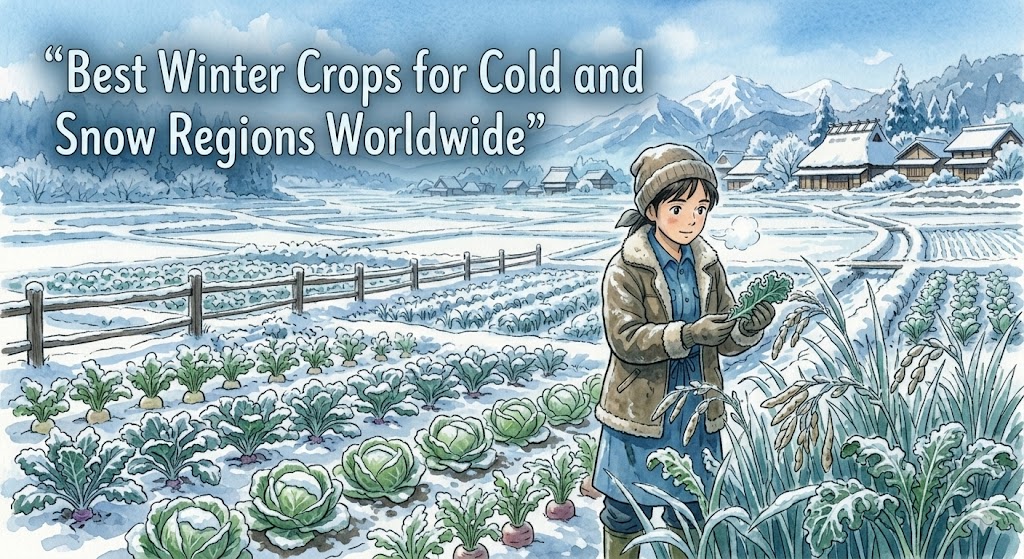
Did you know that some of the sweetest, most nutrient-dense vegetables on earth actually require freezing temperatures and a blanket of snow to develop their peak flavor?
For the vast majority of traditional farmers and home gardeners, the arrival of the first hard frost signals the definitive end of the growing season. The fields are abandoned, the soil is left bare, and the assumption is that freezing temperatures make agricultural production completely impossible. This abrupt halt in operations creates a massive “Pain Point” for growers: a complete loss of fresh produce and a significant drop in seasonal agricultural income for nearly half the year.
The ultimate solution lies in mastering the cultivation of cold-hardy winter crops. By shifting away from delicate summer vegetables and intentionally planting species genetically equipped to thrive in sub-zero environments, you can transform a dormant, snow-covered field into a highly productive and profitable winter oasis.
In this comprehensive guide, we will explore the biological fundamentals of winter farming, break down the incredible economic and culinary benefits, provide a practical step-by-step implementation guide for beginners, and discuss how to navigate the challenges of extreme winter agriculture.
Understanding Winter Crops: Key Concepts and Importance
At its core, winter farming involves cultivating specific varieties of vegetables and grains that possess incredible natural frost tolerance. Unlike summer crops that instantly wither when the temperature drops, cold-hardy crops—such as winter wheat, kale, carrots, and hardneck garlic—are biologically designed to survive deep freezes.
Historically, before the invention of globalized shipping and heated commercial greenhouses, mastering the winter harvest was a matter of life and death for ancient civilizations in Northern Europe and Asia. They relied on these resilient crops to survive the harshest months. Today, with the massive rise in demand for local, year-round organic produce, mastering winter agriculture has shifted from a survival tactic to a highly lucrative modern business model.
Think of a winter crop as a biological engine equipped with built-in antifreeze. When the temperature drops below freezing, standard plant cells freeze, expand, and burst, killing the plant. Winter crops, however, sense the dropping temperature and immediately convert their stored starches into natural sugars. This sugar acts precisely like antifreeze in a car’s radiator, significantly lowering the freezing point of the water inside the plant’s cells and allowing it to survive under feet of snow.
Why It Matters: The Top Benefits of Cultivating Winter Crops
Extending your growing season into the deepest parts of winter offers incredible advantages that most traditional farmers completely miss out on. Here is why prioritizing a winter harvest matters:
- Premium Market Prices: Because 90% of local growers shut down in the winter, the supply of fresh, locally grown produce plummets. This drastic drop in competition allows winter farmers to command premium prices at winter markets and from local restaurants.
- Superior Flavor Profiles: “Frost-kissed” vegetables are famous in the culinary world. Because the plants convert starches to sugars to survive the cold, root vegetables like carrots and parsnips harvested from the snow are noticeably sweeter and more delicious than those grown in the summer heat.
- Virtually Zero Pest Pressure: One of the greatest reliefs of winter farming is that freezing temperatures naturally eliminate almost all agricultural pests. You will rarely need to worry about aphids, caterpillars, or beetles destroying your hard work.
- Drastically Reduced Watering Needs: The combination of lower evaporation rates, cooler soil, and natural moisture from snowmelt means that winter crops require a fraction of the irrigation needed during the blistering summer months.
Pro Fact: A standard carrot left in the ground and harvested immediately after a heavy snowfall can contain up to 20% more natural, concentrated sugars than a carrot harvested in the middle of July!
How to Get Started: A Practical Guide for Beginners
Growing food in the snow requires a shift in timing and strategy. Follow this 5-step actionable plan to ensure your winter crops survive and thrive.
1. Select True “Overwintering” Seed Varieties
Not all seeds are created equal. You must specifically purchase seeds labeled as “cold-hardy” or “overwintering.” Excellent beginner choices include Winter Density lettuce, Siberian kale, spinach, radishes, and hardneck garlic.
2. Time Your Planting Perfectly
The biggest mistake beginners make is planting too late. Winter crops must be planted in late summer or early autumn. The goal is for the plant to grow to about 70% of its mature size before the deep freeze sets in. Once the days get too short and cold, the plants will stop growing and essentially enter a state of suspended animation in the “outdoor refrigerator” of your soil.
3. Construct Protective Micro-Climates
While the plants can handle the cold, harsh freezing winds can cause severe damage. Construct low tunnels (PVC pipes bent over the beds and covered with greenhouse plastic) or build traditional wooden cold frames. These simple structures trap the winter sun’s heat, keeping the soil workable and protecting the foliage from being crushed by heavy snow.
4. Apply Heavy Organic Mulching
Before the ground freezes solid, apply a very thick layer (at least 4 to 6 inches) of organic mulch, such as clean straw or shredded autumn leaves, directly over the soil. This acts like a heavy winter blanket, insulating the roots and preventing the aggressive freeze-thaw cycle that can heave small plants right out of the ground.
5. Harvest Strategically
Never harvest a winter crop early in the morning when the leaves are frozen solid; touching them will cause the cell walls to shatter. Always wait until mid-day or early afternoon when the winter sun has temporarily thawed the plant tissues, allowing you to harvest safely without damaging the remaining crop.
Beginner’s Tip: Never water your winter crops on a freezing or overcast day. Always apply necessary hydration during a sunny, mild afternoon to give the soil ample time to absorb the moisture before the overnight freeze turns surface water into an ice rink.
To execute this effectively, you will need a reliable soil thermometer, heavy-duty greenhouse plastic, wire or PVC hoops for tunneling, and a massive supply of insulating straw.
Overcoming Challenges and Looking into the Future
Farming in the snow comes with unique hurdles. The most common challenge is heavy snow loads collapsing protective tunnels and crushing the crops beneath. You can easily solve this by using reinforced galvanized steel hoops instead of cheap PVC, and by using a soft broom to gently sweep heavy, wet snow off your greenhouse plastic after a major blizzard. Another challenge is the ground freezing too deep to harvest root vegetables; this is mitigated by doubling the thickness of your mulch layer in late November.
Looking into the future, the technology surrounding winter agriculture is advancing rapidly. We are seeing a major rise in the use of geothermal high tunnels—greenhouses that use underground pipes to circulate the earth’s natural, ambient heat up into the growing space, completely eliminating the need for expensive electric heaters. Additionally, smart micro-climate sensors are allowing farmers to monitor the exact temperature and humidity beneath the snow via their smartphones, ensuring crops are never pushed past their biological limits.
Conclusion
Successfully cultivating crops in freezing, snow-covered regions is not an impossible battle against nature; it is simply a matter of intelligent adaptation. By understanding the unique biology of cold-hardy plants, leveraging the massive economic and culinary benefits of the winter market, and implementing strategic protective structures, you can completely redefine your growing season.
Your Next Step: Review your local frost dates today, measure out a small 4×8 section of your garden or farm, and order your first packet of overwintering spinach or cold-hardy carrots to plant this coming late summer.
Embrace the chill, don’t fear the frost, and let the winter snow become a protective blanket that nurtures your most profitable and delicious harvest yet!
Frequently Asked Questions (FAQs)
1. What is the absolute best vegetable to grow in deep snow? Kale is widely considered the ultimate winter survivor. Varieties like Russian or Siberian Kale actually improve in texture and sweetness after being buried under snow and can survive temperatures dropping well below 10°F (-12°C).
2. Do winter crops still need sunlight to survive? Yes, they do. While they enter a semi-dormant state and grow much slower, they still require at least 4 to 6 hours of sunlight. Ensure you gently brush heavy snow off your cold frames or low tunnels to let the crucial winter light pass through.
3. Can I plant garlic during the winter? Garlic is best planted in the late autumn, just a few weeks before the ground freezes solid. It requires a long period of cold vernalization (chilling) under the winter snow to properly separate into distinct cloves for a massive summer harvest.
4. Will the snow itself harm my winter vegetables? Surprisingly, no! A thick layer of soft snow is actually highly beneficial. It acts as an incredible natural insulator, trapping the earth’s residual heat and keeping the ambient temperature around the plants much warmer than the freezing, biting air above the snowline.