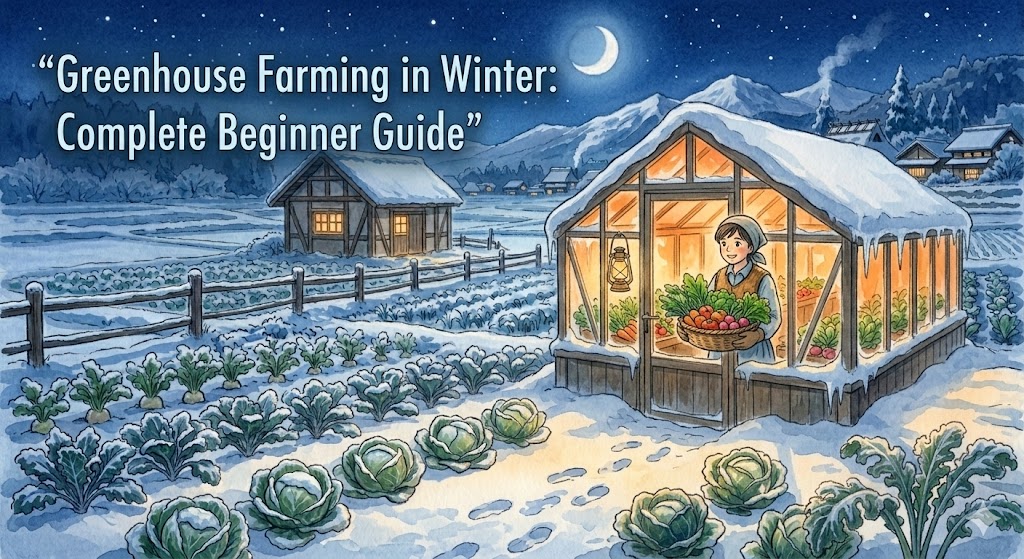
Did you know that a properly designed winter greenhouse can maintain temperatures up to 30 degrees warmer than the freezing air outside, entirely without the use of expensive electric heaters?
For the vast majority of traditional gardeners and agricultural entrepreneurs, the arrival of frost signals the tragic end of the growing season. Frozen soil, biting winds, and drastically shortened daylight hours force growers to abandon their fields. This abrupt halt creates a massive seasonal pain point: a total loss of fresh, homegrown produce and a complete stop to agricultural income for nearly half the year. Watching your productive land sit dormant under a blanket of snow is incredibly frustrating when demand for fresh food remains high.
The ultimate solution is mastering winter greenhouse farming. By harnessing the power of passive solar energy and controlled microclimates, you can successfully defy the freezing seasons.
In this complete beginner’s guide, we will explore the core fundamentals of cold-weather greenhouse cultivation, highlight the incredible economic and personal benefits, provide a practical step-by-step launch plan, and navigate the unique challenges of winter growing so you can harvest fresh food all year long.
Understanding Winter Greenhouse Farming: Key Concepts and Importance
At its core, winter greenhouse farming is the practice of utilizing a transparent, enclosed structure to trap solar radiation and create an artificial, temperate microclimate during the coldest months of the year. This isn’t a new concept. Historically, the Roman Emperor Tiberius commanded his gardeners to build early greenhouses using translucent sheets of mica (specularia) just so he could eat fresh cucumbers during the snowy winter. Today, with the rising demand for hyper-local, organic food year-round, winter greenhouse growing has evolved from a luxury into a highly profitable, modern agricultural necessity.
Think of a winter greenhouse like a giant thermos flask sitting in a sunny window. The transparent outer layer (the glass or plastic) allows the sun’s radiant light energy to enter freely. Once inside, that light hits the soil and plants, transforming into heat energy. The insulated walls of the “thermos” then trap that thermal energy inside, preventing the freezing outdoor air from stealing the warmth. The goal is to capture as much heat as possible during the short winter days and hold onto it throughout the freezing nights.
Why It Matters: The Top Benefits of Winter Greenhouse Farming
Extending your growing season straight through the winter offers incredible, life-changing advantages that traditional summer-only farmers completely miss out on. Here is why investing in a winter greenhouse matters:
- Year-Round Revenue Stream: Because local outdoor farms shut down in the winter, the supply of fresh regional produce plummets. Greenhouse growers can command premium, top-tier prices at winter farmer’s markets and local restaurants.
- Ultimate Weather Protection: Inside a greenhouse, your crops are entirely shielded from the destructive forces of nature. You never have to worry about a sudden blizzard, heavy frost, or freezing, gale-force winds snapping your delicate plants.
- Massive Pest Reduction: Winter naturally kills off or hibernates the vast majority of outdoor agricultural pests. Because your greenhouse is a sealed environment, you can grow virtually pest-free, completely eliminating the need for harsh chemical pesticides.
- Mental Health and Well-being: Stepping into a warm, bright, incredibly green space smelling of fresh earth during the darkest, most depressing days of winter offers immense psychological benefits and effectively combats seasonal affective disorder (SAD).
Pro Fact: By incorporating simple “thermal mass” elements—like large black barrels filled with water—into your greenhouse design, you can passively reduce your winter overnight heating requirements by up to 60%!
How to Get Started: A Practical Guide for Beginners
Launching a successful winter greenhouse requires specific preparations before the snow begins to fall. Follow this 5-step actionable plan to ensure your winter harvests thrive.
1. Optimize Your Site Orientation
The winter sun sits much lower in the sky than the summer sun. To capture the maximum amount of light and heat, the longest side of your greenhouse must face directly South (if you are in the Northern Hemisphere). Ensure there are no evergreen trees or tall buildings casting long winter shadows over your structure.
2. Seal and Insulate the Structure
A greenhouse is only as good as its insulation. If you are using plastic, upgrade to a double-layer polyethylene film and use a small blower fan to inflate the space between the layers; this dead air space acts as incredible insulation. Ensure every single crack around doors and baseboards is tightly sealed with weatherstripping to prevent freezing drafts.
3. Incorporate Thermal Mass
Water holds heat four times better than air. Place several large, black-painted 55-gallon drums filled with water along the north inside wall of your greenhouse. These barrels will absorb the sun’s heat all day long and act as natural, free radiators, slowly releasing that warmth back into the greenhouse throughout the freezing night.
4. Choose Cold-Hardy Crop Varieties
Do not try to grow heat-loving tomatoes or peppers in an unheated winter greenhouse. Instead, plant cold-hardy overwintering crops. Spinach, kale, Swiss chard, carrots, mache, and radishes actually thrive in cooler temperatures and will survive perfectly fine even if the greenhouse dips slightly near freezing at night.
5. Manage Winter Humidity
Counterintuitively, winter greenhouses often suffer from being too wet. Cold air holds less moisture, leading to heavy condensation dripping from the ceiling. You must manually open the roof vents for 15-20 minutes during the warmest, sunniest part of the afternoon to exchange the damp, stale air for fresh, crisp outside air.
Beginner’s Tip: Never overwater your winter crops! Because the plants are growing much slower due to shortened daylight, and the evaporation rate is incredibly low, winter soil stays wet for a very long time. Overwatering will instantly lead to deadly root rot.
To execute this plan properly, you will need a digital minimum/maximum thermometer to track your overnight temperature drops, weatherstripping tape, thermal mass water containers, and seeds specifically labeled as “cold-tolerant.”
Overcoming Challenges and Looking into the Future
Operating a greenhouse in the dead of winter comes with unique operational hurdles. The most common challenge is low light levels due to short, overcast winter days, which can cause plants to grow slow and leggy. You can easily solve this by installing highly efficient, low-heat LED grow lights on a simple automated timer to artificially extend the “daylight” to 10 or 12 hours.
Another major hurdle is heavy snow accumulation on the greenhouse roof, which blocks vital sunlight and threatens to collapse the structure. This is mitigated by designing your greenhouse with a steep roof pitch (allowing snow to slide off naturally) and keeping a soft-bristled broom handy to manually sweep the roof after major blizzards.
Looking into the future, winter greenhouse technology is becoming incredibly advanced and accessible. We are seeing a massive surge in geothermal heating loops (Climate Batteries), where small fans push the hot, humid daytime greenhouse air deep underground through buried pipes, storing the heat in the earth itself, and then pulling that exact heat back up to warm the greenhouse at night.
Conclusion
Successfully growing a bounty of fresh food while the world outside is frozen solid is one of the most rewarding experiences in modern agriculture. By understanding the physics of passive solar heating, leveraging the incredible economic benefits of a year-round harvest, and implementing a strict plan for insulation and thermal mass, you can turn a cold, dark winter into your most productive season.
Your Next Step: Purchase a digital minimum/maximum thermometer today and place it inside your current (or planned) greenhouse space. Track the temperature fluctuations for one week to understand exactly how much thermal mass or insulation you will need to add before the deep freeze hits.
Step confidently into your winter oasis, and watch your harvests thrive while the rest of the world is buried in snow!
Frequently Asked Questions (FAQs)
1. Do I absolutely need an electric or gas heater for a winter greenhouse? Not necessarily. If you choose the right cold-hardy crops (like spinach and kale), double-insulate your walls, and use water barrels for thermal mass, you can easily maintain an unheated “cold frame” greenhouse that stays just warm enough to keep plants alive without electricity.
2. Why are my greenhouse plants getting moldy in the winter? Mold and fungal diseases like powdery mildew are caused by high humidity and zero airflow. Even though it is freezing outside, you must briefly open your greenhouse vents on sunny afternoons to let the trapped, damp air escape.
3. Can a greenhouse collapse under the weight of winter snow? Yes, heavy, wet snow is incredibly heavy and can crush standard aluminum or PVC greenhouse frames. Always ensure your structure is built with reinforced trusses, has a steep roof angle, and proactively brush off excess snow after heavy storms.
4. What is the fastest-growing crop for a winter greenhouse? Radishes and certain varieties of loose-leaf lettuce or arugula are incredibly fast. Even in the lower light of winter, if the temperature is maintained comfortably, you can often harvest crisp winter radishes in just 35 to 40 days.