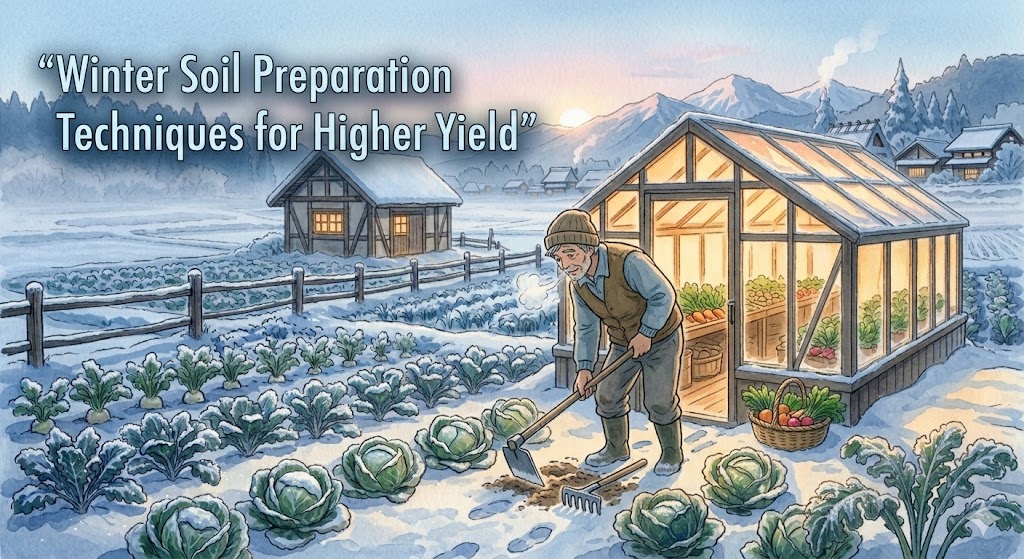
Did you know that agricultural soil left bare and untreated during the winter months can lose up to 40% of its vital, life-giving nutrients before the spring planting season even begins?
For many farmers and passionate home gardeners, the end of the autumn harvest means packing up the tools and ignoring the fields until the spring thaw. This “do nothing” approach is a massive and costly mistake. Leaving your earth completely exposed to harsh winter winds, freezing temperatures, and heavy snowpack leads to severe soil compaction, aggressive topsoil erosion, and the starvation of beneficial microbial life. When spring finally arrives, growers are forced to spend a small fortune on synthetic fertilizers just to artificially resuscitate their dead, exhausted dirt.
The ultimate solution is implementing strategic winter soil preparation techniques. By treating the winter not as a dead season, but as a critical period for intense soil regeneration, you can completely revitalize your land and set the stage for a massive harvest.
In this comprehensive guide, we will explore the core fundamentals of winter soil management, uncover the immense economic benefits of prepping your fields, provide a practical step-by-step implementation plan for beginners, and discuss the technological future of sustainable soil health.
Understanding Winter Soil Preparation: Key Concepts and Importance
At its core, winter soil preparation involves a series of physical and biological interventions designed to protect and nourish the earth during its dormant phase. Instead of leaving the ground naked and vulnerable, proactive farmers use organic amendments, thick protective mulches, and living cover crops to build a resilient, nutrient-dense shield against the harsh elements.
Historically, indigenous agricultural systems inherently understood this cycle, constantly returning organic matter back into the earth before the deep frost set in. Today, modern agronomy proves that soil is not just “dirt”—it is a living, breathing microscopic ecosystem that requires year-round, targeted care to maintain high commercial fertility.
Think of your garden soil like a high-performance athlete who has just finished running a grueling marathon (the heavy summer harvest). If that exhausted athlete simply collapses on the cold concrete without a blanket, nutrition, or a recovery plan, they will wake up stiff, sick, and weak. However, if they put on a warm jacket, eat a protein-rich recovery meal, and rest properly, they wake up stronger than before. Winter soil preparation is exactly that warm blanket and recovery meal for your exhausted fields.
Why It Matters: The Top Benefits of Winter Soil Management
Taking the time to properly “put your garden to bed” before the snow flies offers incredible advantages that drastically impact your spring success and your wallet. Here is why prioritizing winter soil preparation matters:
- Prevents Severe Topsoil Erosion: Bare, unprotected dirt is easily blown away by brutal winter gales or washed down drains by freezing rain. Ground covers and heavy mulches act as a physical anchor, securing your valuable topsoil exactly where it belongs.
- Drastically Reduces Weed Pressure: By completely covering the ground with thick organic matter or dense winter rye, you block the sunlight that dormant, opportunistic weed seeds desperately need to germinate. This saves you hours of grueling, back-breaking labor in the spring.
- Boosts Beneficial Microbial Life: Beneficial bacteria and earthworms thrive under a warm, insulating layer of compost and mulch. They work tirelessly all winter long beneath the snow, breaking down organic matter into highly bio-available plant food for the upcoming season.
- Saves Massive Fertilizer Costs: By naturally regenerating the earth with cover crops (specifically nitrogen-fixing legumes), you are essentially growing your own fertilizer on-site. This drastically reduces your reliance on expensive commercial chemical inputs.
Pro Fact: Planting a robust winter cover crop like Hairy Vetch can naturally pull and fix up to 150 pounds of pure atmospheric nitrogen per acre, depositing it directly into the soil for your spring cash crops to consume!
How to Get Started: A Practical Guide for Beginners
Transforming your exhausted summer fields into a powerhouse of winter regeneration is surprisingly simple if you follow a structured approach. Follow this 5-step actionable plan to prepare your soil for maximum spring yields.
Step 1: Clean Up Debris and Diseased Plants
Start by thoroughly clearing the field. Remove all dead summer vines, rotten fallen fruits, and particularly any foliage that suffered from blight or powdery mildew. Leaving diseased plant matter to rot in the winter moisture practically guarantees a severe fungal outbreak next year.
Step 2: Conduct a Late Autumn Soil Test
Before you add anything to the ground, you must know what your earth actually needs. Use a basic soil testing kit to check your pH and nutrient levels. Winter is the absolute best time to apply slow-acting amendments like agricultural lime (to raise pH) or elemental sulfur (to lower it), as they take months to break down.
Step 3: Apply a Thick Layer of Compost
Spread a generous 2 to 3-inch layer of high-quality, aged organic compost over the entire planting area. You do not need to till this in aggressively or destroy the soil structure; simply let the winter rain and snowmelt naturally wash the rich nutrients deep down into the root zone.
Step 4: Plant a Robust Winter Cover Crop
If you still have several weeks before the ground freezes solid, broadcast a mix of winter cover crops. Winter cereal rye, crimson clover, and daikon radishes (which drill deep into hardpan soil to break it up) are phenomenal choices for generating “green manure.”
Step 5: Apply Heavy Winter Mulch
If planting a living cover crop is no longer an option due to the rapidly dropping temperatures, you must heavily mulch the bare soil. Lay down a thick, 4 to 6-inch blanket of clean straw, shredded autumn leaves, or untreated wood chips to lock in moisture and insulate the earthworms below.
Beginner’s Tip: Never use cheap “hay” as a winter mulch! Hay is packed with thousands of dormant grass and weed seeds that will eagerly sprout the moment the spring sun arrives. Always insist on purchasing “clean straw,” which is simply the leftover stalks after the seed heads have been harvested.
To execute this properly, you will need a sturdy landscaping rake, a reliable digital soil testing kit, access to high-quality organic compost, and a broad-cast seeder to evenly distribute your cover crops.
Overcoming Challenges and Looking into the Future
Even the best-laid agricultural plans encounter hurdles. A common challenge in winter soil preparation is rodent infestation. Thick, warm layers of straw mulch can sometimes become a cozy winter hotel for field mice and voles, which may chew on the bark of nearby fruit trees when food gets scarce. You can easily solve this by pulling the heavy mulch at least six inches away from the vulnerable trunks of perennial trees and shrubs.
Another major hurdle is dealing with heavily compacted clay soil that refuses to drain winter moisture, turning fields into concrete. Instead of deep-tilling, which destroys the soil’s natural webbing, modern farmers are successfully solving this by planting “tillage radishes.” These massive taproots naturally pierce and aerate the hard clay over the winter, rotting in the spring to leave deep, perfect drainage holes behind.
Looking into the future, agronomic science is rapidly advancing. We are seeing a massive rise in the use of custom-blended, lab-cultivated mycorrhizal fungi inoculants. Innovative farmers are spraying these liquid biological spores onto their autumn fields just before mulching. Over the dark winter, these fungi build massive, invisible underground communication networks that exponentially increase the soil’s ability to absorb water and nutrients by the time the spring planting season arrives.
Conclusion
Successfully preparing your soil for the harsh winter is the ultimate, proven secret to achieving a massive, high-yielding spring harvest. By understanding the biological needs of dormant earth, leveraging the incredible financial benefits of natural regeneration, and implementing a strict regimen of cleaning, composting, and cover cropping, you can completely revitalize your farm or garden.
Your Next Step: Grab a rake this weekend and completely clear your garden beds of all dead summer debris. Then, order a bag of winter rye seed to broadcast over the bare earth before the first major frost hits.
Don’t let your soil starve in the cold. Feed the earth this winter, and it will reward you with an incredibly abundant, highly profitable harvest next spring!
Frequently Asked Questions (FAQs)
1. Can I just till my soil in the winter instead of mulching? Tilling in the late autumn or winter is highly discouraged. It aggressively breaks up the soil’s natural structure, kills beneficial fungal networks, and leaves the dirt incredibly vulnerable to severe winter wind erosion and massive nutrient runoff.
2. What is the absolute best cover crop to plant before winter? A mixed broadcast of Winter Cereal Rye (for adding massive amounts of organic carbon biomass) and Hairy Vetch or Crimson Clover (for fixing atmospheric nitrogen into the soil) is widely considered the ultimate winter combination by professional agronomists.
3. Should I add synthetic chemical fertilizers to my soil during the winter? No. Plants and soil microbes are largely dormant and cannot absorb synthetic fertilizers during freezing weather. Applying them in the winter will simply result in the expensive chemicals washing away into the local groundwater, wasting your money and polluting the environment. Focus solely on slow-breaking organic matter.
4. When should I remove the heavy winter mulch in the spring? Wait until the danger of a hard, killing frost has completely passed and the daylight hours are consistently warming up. Rake the heavy mulch back 7 to 14 days before you intend to plant; this allows the spring sun to directly hit the earth, naturally warming and drying the underlying soil for your new seeds.