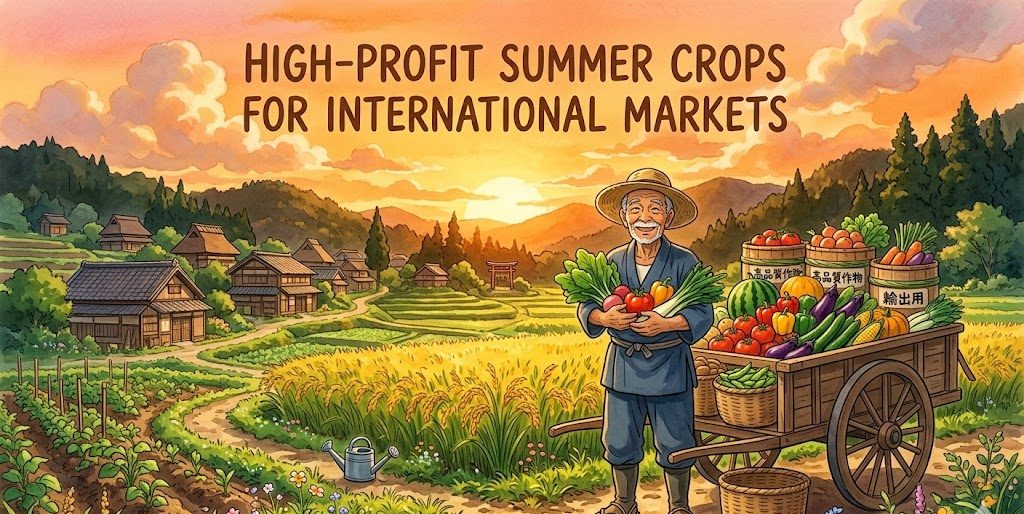
Did you know that the global trade in fresh agricultural produce is projected to surpass a staggering $1.5 trillion by the end of this decade?
For ambitious agricultural business owners, the peak summer season often brings a frustrating paradox. The warm weather produces a massive, bountiful harvest, but because every other local farmer is experiencing the exact same yield, local markets become completely oversaturated. Selling standard tomatoes and cucumbers at the municipal level leads to a brutal price war, razor-thin profit margins, and tragically wasted produce. Working tirelessly in the summer heat only to break even is a massive “Pain Point” that limits the financial growth of countless farms.
The ultimate solution is pivoting your agricultural business model to cultivate high-profit summer crops specifically targeted for lucrative international export. By stepping out of the local arena and entering the global supply chain, you can unlock unprecedented revenue streams.
In this comprehensive guide, we will explore the core concepts of global agricultural trade, break down the immense economic benefits of exporting, provide a step-by-step launch plan for your agribusiness, and navigate the logistical challenges of international farming.
Understanding International Export Farming: Key Concepts and Importance
At its core, cultivating high-profit crops for international markets involves intentionally growing premium, heat-loving produce that possesses a massive foreign demand but cannot be easily grown in the buyer’s destination country. Historically, the spice trade paved the way for this global agricultural exchange. Today, driven by advanced cold-chain logistics and rapidly expanding global middle classes, the demand for exotic, high-quality fresh produce is at an all-time high.
Think of the international agricultural market much like high-stakes financial trading. You wouldn’t invest heavily in a locally oversaturated, stagnant stock; you look for emerging global markets with massive demand and limited supply. Growing specialized crops allows you to leverage market gaps in bustling urban centers across Asia and the Middle East, transforming a standard farming operation into a highly lucrative, global enterprise. You are no longer just growing food; you are manufacturing a premium export commodity.
Why It Matters: The Top Benefits of Exporting Summer Crops
Transitioning your farm to target international buyers does much more than just change what seeds you plant; it completely revitalizes your bottom line. Here is why prioritizing export agriculture is critical for modern business growth:
- Exponential Revenue Potential: Accessing international buyers allows you to command premium, top-tier pricing. Exotic summer crops like Dragon Fruit, specialized hot peppers, or premium vanilla beans sell for significantly more overseas than standard domestic crops do locally.
- Massive Market Diversification: By exporting your harvest, you are no longer entirely reliant on the economic health of a single local town or region. If the domestic market crashes, your international buyers will keep your cash flow strong and stable.
- Opportunities for Tech Integration: Operating on a global scale opens the door to upgrading your farm with modern SaaS (Software as a Service) management tools, allowing you to track crop health, predict yields, and manage international invoices digitally.
- Government Export Incentives: Many national governments actively want to boost their export numbers and will offer significant tax breaks, agricultural grants, and subsidized logistics training to farmers willing to sell overseas.
Pro Fact: A single shipping container of premium, sustainably grown Dragon Fruit exported to high-density, high-income Asian markets like Hong Kong can yield up to 300% more net profit compared to selling the exact same volume of fruit at a local domestic market!
How to Get Started: A Practical Guide for Beginners
Launching an international agricultural export business requires precise planning, strict quality control, and the right partnerships. Follow this 5-step actionable plan to get your export operation off the ground.
1. Conduct Rigorous Global Market Research
Do not plant a single seed until you know exactly who is buying it. Research emerging culinary trends and import demands in lucrative regions like the Middle East and East Asia. Identify high-value, heat-tolerant crops such as Passion Fruit, Ginseng, Saffron, or specialized medicinal herbs that thrive in your summer climate but are highly sought after abroad.
2. Secure International Certifications
Foreign buyers demand safety and quality. You must apply for and secure internationally recognized certifications, such as GlobalG.A.P. (Good Agricultural Practices) and USDA or EU Organic certifications. Without these standardized documents, your produce will never be allowed to legally cross international borders.
3. Implement Precision Agriculture and Quality Control
International buyers pay for visual perfection and consistent taste. Utilize modern IT tools and precision irrigation systems to ensure every single crop receives the exact nutrients it needs.
A scarred or misshapen fruit might sell locally, but it will be immediately rejected at an international customs checkpoint.
4. Partner with Reliable Freight Forwarders
You cannot ship a ton of fresh produce via standard mail. You must establish a strong relationship with a commercial freight forwarder who specializes in agricultural cold-chain logistics. They will handle the complex refrigerated shipping containers, customs paperwork, and international port fees on your behalf.
5. Brand for the Premium Buyer
Do not just pack your crops in blank cardboard boxes. Develop a high-quality, professional brand identity. Highlight your farm’s sustainable practices and unique regional soil on the packaging, creating a compelling story that foreign consumers are eager to pay a premium for.
Beginner’s Tip: Do not try to export five different crops in your first year. Pick one highly profitable, specialized niche crop and master its complete growth-to-export supply chain before attempting to expand your global catalog.
To execute this properly, you will need farm management software, strict water quality testing kits, certified packaging materials, and access to an agricultural export consultant.
Overcoming Challenges and Looking into the Future
Operating an international agricultural business comes with complex logistical hurdles. The most devastating challenge is cold chain disruption. If a refrigerated shipping container loses power for even a few hours while sitting at a port, your entire summer harvest will spoil before reaching the buyer. You can mitigate this massive financial risk by ensuring your freight contracts include comprehensive cargo insurance and utilizing real-time IoT (Internet of Things) temperature trackers inside every single shipment.
Another major hurdle is navigating complex, ever-changing foreign customs regulations and import tariffs. Building a strong relationship with an experienced customs broker will solve this, ensuring your produce is never held up due to improper paperwork.
Looking to the future, the agricultural export industry is rapidly modernizing. We are seeing a massive integration of blockchain technology in global food supply chains. Buyers in foreign countries can now scan a QR code on a piece of fruit and instantly see the exact farm, harvest date, and soil conditions where it was grown, providing ultimate transparency. Furthermore, AI-driven global pricing algorithms are helping modern farmers predict exact market shortages months in advance, allowing them to plant the perfect crop for maximum profit.
Conclusion
Exporting high-value summer crops shifts your agricultural business from a local survivor into a dominant global competitor. By understanding international market demands, leveraging the massive economic benefits of foreign trade, and rigorously controlling your supply chain logistics, you can completely redefine your farm’s profitability.
Your Next Step: Choose one exotic, heat-tolerant crop today (like Passion Fruit or specialty chilies) and spend one hour researching the specific agricultural import requirements for the United Arab Emirates or Hong Kong.
Stop fighting over pennies at the local market. Plant the seeds of global expansion today, and watch your agribusiness thrive on the world stage!
Frequently Asked Questions (FAQs)
1. Do I need a massive farm to start exporting crops? No, you do not need thousands of acres. International markets value high quality over sheer quantity. Many highly successful boutique farms export small, extremely valuable shipments of saffron, vanilla, or specialized medicinal herbs grown on just a few acres of land.
2. How long does it take fresh produce to ship overseas? It depends entirely on the destination and the shipping method. Air freight can deliver fresh produce globally in 24 to 48 hours, but it is highly expensive. Sea freight in refrigerated containers is much cheaper but can take anywhere from 14 to 35 days, which is why proper post-harvest treatments are critical.
3. What happens if my exported crops are rejected at the foreign border? If customs officials find pests, diseases, or chemical residues that violate their country’s strict import laws, the shipment will be quarantined, destroyed, or shipped back at your expense. This is why securing GlobalG.A.P. certification and strict quality control before shipping is absolutely mandatory.
4. Are there export brokers who can find buyers for me? Yes. If you do not want to negotiate directly with foreign supermarkets, you can partner with an Agricultural Export Management Company (EMC). They act as your international sales department, finding lucrative buyers and handling the complex negotiations in exchange for a percentage of the sale.