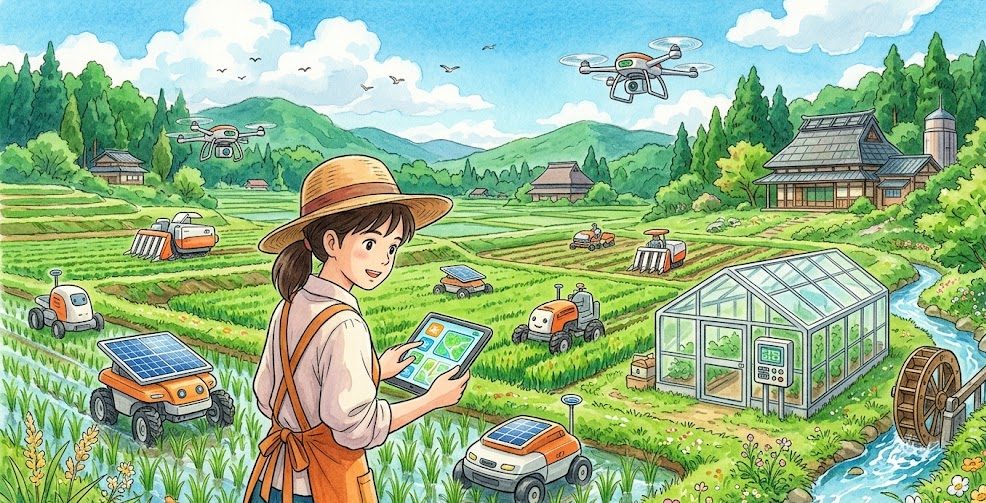
Think about the last time you took a road trip past sprawling farmland. You probably saw rows of green crops, maybe some cattle, and a classic tractor chugging along the horizon. It is a peaceful, traditional scene that has defined human civilization for centuries.
But if you look closer inside that tractor today, you might not see the driver’s hands on the wheel. In fact, there might not be a driver at all.
Agriculture is quietly undergoing its biggest revolution since the invention of the steam engine. Driven by smart farming technology and automated agriculture systems, modern farms are trading pure guesswork for high-tech data. Instead of spraying an entire field with water or fertilizer and hoping for the best, today’s farmers can track and care for their crops down to the exact square inch.
Whether you are a traditional grower looking to upgrade or simply curious about the high-tech future of our food supply, this guide breaks down how automated tech is building a more efficient, profitable, and sustainable way to farm.
1. What Exactly is Smart Farming?
Smart farming—often called precision agriculture—is the practice of using modern information and communication technology to optimize crop yields and quality while reducing resource waste.
Instead of treating a massive field as one uniform block of land, smart farming treats it as an intricate puzzle made of thousands of tiny zones. By understanding exactly what each zone needs, farmers can stop wasting expensive seeds, water, and fertilizers on areas that don’t need them.
2. The Core Tools of Automated Agriculture
Automated farming isn’t about a single futuristic machine; it is an ecosystem of smart devices that constantly talk to one another through the cloud. Here are the heavy hitters leading the charge.
IoT Soil and Weather Sensors
Internet of Things (IoT) sensors are the eyes and ears of a modern farm. Placed directly into the dirt, these tiny, battery-powered devices monitor soil moisture, temperature, and nutrient levels in real-time. Instead of walking the fields to check if the ground is dry, a farmer can pull up a live dashboard on their smartphone.
Agricultural Drones and Satellites
Drones have completely changed how we look at crop health. Equipped with advanced multispectral cameras, these flying helpers scan fields from above. They read how leaves reflect light to identify plant stress, dehydration, or a pest invasion days before the damage becomes visible to the human eye.
Autonomous Machinery and Robotics
Self-driving tractors and robotic weeders are no longer prototypes. Using centimeter-accurate GPS systems, automated tractors can plant seeds in perfectly straight rows without human intervention. Meanwhile, laser-guided weeding robots roll between crops, identifying and zapping weeds without disturbing the surrounding soil or using chemical sprays.
3. The Major Benefits of Going Automated
Making the switch to smart farming requires an upfront investment, but the long-term rewards are transforming agricultural businesses worldwide.
Massive Resource Savings
Water, fuel, and fertilizer are among a farm’s highest operational expenses. Smart irrigation systems use live soil data to turn on automated drip lines only when the ground is genuinely thirsty, cutting water consumption by up to 40%. Similarly, automated tractor routes eliminate overlapping lines, saving thousands of gallons of fuel every season.
Skyrocketing Crop Yields
When a plant receives the exact amount of water, sunlight, and nutrients it needs to thrive, its growth accelerates. By using variable-rate technology to adjust how much seed and fertilizer are dropped across different parts of a field, farmers see much higher crop uniformity and dramatically increased overall harvests.
Environmental Protection
Traditional farming often leads to chemical runoff, where excess fertilizers wash away into local rivers and pollute groundwater. Automated agriculture system technology solves this by ensuring that inputs are absorbed entirely by the plants, protecting local ecosystems from chemical contamination.
4. How to Start Implementing Smart Tech (A Beginner’s Roadmap)
You don’t need to buy a fleet of robotic machinery to benefit from smart farming. In fact, trying to automate everything overnight is a quick way to blow through your budget.
[ Step 1: Install Simple Sensors ] ---> [ Step 2: Utilize Smart Irrigation ] ---> [ Step 3: Upgrade to GPS Guidance ]
- Start with Data: Begin by purchasing a few affordable, wireless soil moisture sensors. Learning to read your soil data is the foundation of all precision cultivation.
- Automate Your Water: Link your sensors to an automated irrigation controller. This simple step will immediately slash your utility bills and protect your plants from overwatering.
- Utilize Free Satellite Imagery: Many agricultural tech companies offer free or low-cost satellite mapping services that can show you basic crop health trends across your property from your computer.
Conclusion
Smart farming technology is transforming agriculture from a game of chance into a highly precise science. By letting sensors, drones, and automated systems handle the heavy lifting of monitoring and resource management, farmers can build a highly resilient business. The future of food production is digital, connected, and incredibly efficient—ensuring we can feed a growing world safely and sustainably.
Frequently Asked Questions (FAQs)
1. Is smart farming technology practical for small-scale family farms?
Absolutely! While large commercial operations use massive autonomous tractors, small-scale farmers can benefit tremendously from affordable tools. Handheld soil testers, mobile weather alert apps, and automated smartphone-controlled drip irrigation kits are highly accessible and provide an immediate return on investment.
2. Do automated farming systems require a constant internet connection?
Many field sensors use long-range, low-power radio networks (like LoRaWAN) to transmit data across miles of open land to a central hub in your home or barn. Only that central hub needs an internet connection to send the final data to your phone or computer.
3. How does smart technology help save bees and other beneficial insects?
By using drones to spot-map exactly where pests are located, farmers can target a single patch of infected crops instead of spraying an entire 100-acre field with chemicals. This targeted approach drastically reduces the exposure of harmless pollinators to toxic substances.
4. Will robots and automation completely replace human farm workers?
Automation changes the type of work required on a farm rather than eliminating it entirely. While machines handle repetitive, back-breaking tasks like weeding or steering tractors, human workers are needed to interpret data, maintain the tech hardware, and manage overall farm strategy.
5. How long does it take for smart farming equipment to pay for itself?
For most medium-sized farms, basic smart upgrades—like automated irrigation and GPS guidance systems on existing tractors—pay for themselves within 12 to 18 months solely through the money saved on water, seeds, fuel, and fertilizer.