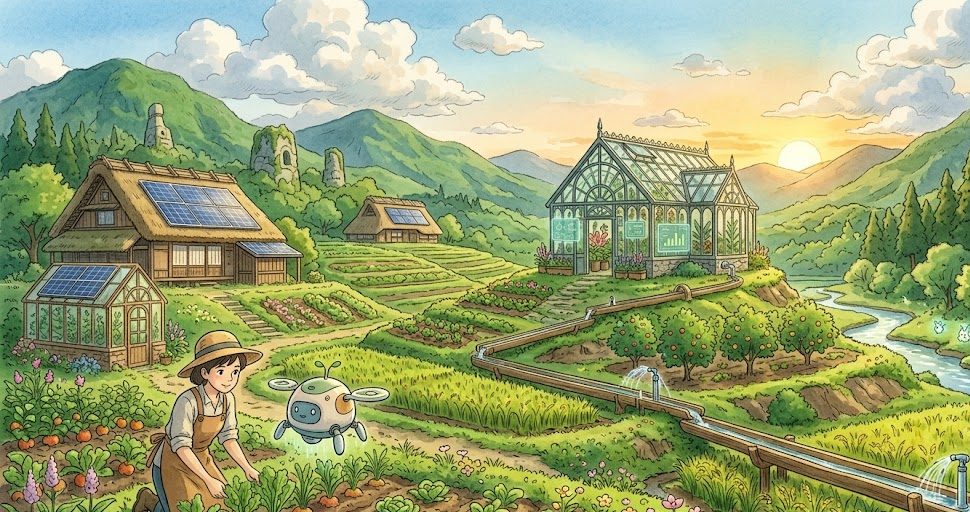
Agriculture is currently witnessing a silent revolution. The era of guessing what your soil needs or hoping for perfect weather is fading, replaced by a data-driven approach that prioritizes precision, efficiency, and sustainability. For the modern farmer, “smart farming” is not just a buzzword; it is a vital strategy to maximize yields in an increasingly unpredictable world. By integrating digital tools with advanced growing methods like hydroponics, you can effectively bypass the limitations of traditional, soil-based agriculture. Whether you are aiming to grow premium greens in a small urban space or looking to modernize a larger farm, combining smart technology with high-yield hydroponic systems offers a clear, scalable path to profitability. This guide explores how you can leverage these innovations to produce more, waste less, and secure your place in the future of food production.
Part 1: The Smart Farming Edge
Smart farming, or “Precision Agriculture,” leverages Internet of Things (IoT) sensors, automation, and real-time data analytics to manage crops. The goal is simple: provide every plant with exactly what it needs, at the exact time it needs it, to reach its maximum potential.
Why Data is Your Best Fertilizer
In traditional farming, you might fertilize based on a calendar. In smart farming, you fertilize based on real-time soil or water analysis. Sensors placed throughout your growing area monitor humidity, temperature, and nutrient concentration (EC levels) 24/7. When a variable drifts from the optimal range, the system can trigger an automated adjustment or alert you via your smartphone.
Recent Trends in Smart Tech
Recent industry data suggests that farmers who adopt precision irrigation and sensor-based monitoring can reduce water usage by up to 30% while simultaneously increasing crop output by 15–20%. By removing the “human error” component from routine tasks, you free up time to focus on business growth and market expansion.
Part 2: Setting Up a High-Yield Hydroponics System
Hydroponics—growing plants without soil by using nutrient-rich water—is the ultimate partner to smart farming. Because you are in total control of the growing medium, you can accelerate growth cycles significantly compared to soil-based farming.
1. Choosing Your System Type
Not all hydroponic systems are designed for the same crops. For high-yield results, choose the setup that fits your goals:
- Nutrient Film Technique (NFT): A shallow stream of nutrient-rich water flows over the plant roots. This is incredibly popular for leafy greens like lettuce and herbs because it is highly efficient and space-saving.
- Deep Water Culture (DWC): Plant roots are submerged in a reservoir of aerated, nutrient-rich water. This is excellent for larger crops like tomatoes or peppers, as the abundant oxygen and nutrient supply fuel rapid growth.
2. The Vital Importance of Nutrient Solutions
In soil, plants can find pockets of nutrients even if the soil isn’t perfect. In hydroponics, the water is the food. You must maintain a precise balance of minerals. Invest in a digital EC (Electrical Conductivity) meter and a pH pen.
- Pro Tip: Keep your pH between 5.5 and 6.5. If the pH drifts outside this range, the plant will stop absorbing certain nutrients, even if they are present in the water. This is a common pitfall for beginners that can be avoided with daily testing.
3. Lighting and Airflow
If you are growing indoors, your lighting is your “sun.” For high yields, utilize high-efficiency LED grow lights specifically tuned to the photosynthetic spectrum. Pair this with robust ventilation. Good airflow prevents humidity pockets around the leaves, which is the leading cause of mold and mildew in indoor systems.
Part 3: Integrating Smart Tech into Hydroponics
This is where the magic happens. By “smartening” your hydroponic system, you create a self-regulating farm that works for you even while you sleep.
Automated Dosing Systems
One of the most labor-intensive parts of hydroponics is maintaining nutrient levels. An automated dosing system can measure your water’s EC and pH and automatically inject the correct amount of nutrients or pH-adjusting solutions into the reservoir. This ensures your plants never experience the “feast or famine” nutrient cycles that cause stress and lower yields.
Cloud-Based Monitoring
Modern smart systems connect to your Wi-Fi, allowing you to view your greenhouse data from anywhere in the world. If a pump fails or a power outage occurs, you receive an instant notification on your phone. In a commercial operation, this “early warning system” can literally be the difference between a successful harvest and a total crop failure.
Part 4: Practical Steps for Maximum Yields
To ensure your setup is truly high-yield, you must approach the process with a commercial mindset.
Consistency is Key
Hydroponic crops thrive on consistency. Keep your water temperature stable (ideally between 18°C and 22°C). High water temperatures reduce oxygen levels, which can kill roots. If you are in a hot climate, consider a water chiller or even simple insulation for your reservoirs to keep the roots cool.
Sanitation Protocols
Because hydroponics is a closed-loop system, any disease or pathogen introduced to the water will spread rapidly to every plant.
- Sanitize everything: Before each new batch, sterilize your reservoirs, pipes, and pumps.
- Routine Checks: Inspect roots regularly. Healthy roots should be bright white or light cream. If you see brown or slimy roots, address it immediately by cleaning the system and flushing the water.
Selection of High-Performing Varieties
Not all plant varieties are bred for hydroponic success. Look for “hydro-specific” or “indoor-optimized” seeds. These varieties are often more resistant to the specific environmental stressors of high-density growing and are bred to respond rapidly to consistent nutrient delivery.
Conclusion: The Path to Future-Proof Farming
Smart farming and hydroponics are not just trends—they are the building blocks of a more efficient and profitable future in agriculture. By moving your operation into a controlled, data-monitored environment, you eliminate the risks posed by volatile climates and soil pathogens. You take the uncertainty out of the equation and replace it with predictable, repeatable, and scalable success.
The key to getting started is simple: start with a reliable system, focus on maintaining your water quality, and layer in smart technology as your knowledge grows. You do not need to be a tech expert to benefit from these innovations. By embracing the precision of modern tools, you empower yourself to produce better, faster, and more profitably. The future of farming is here—and it’s more efficient than ever.