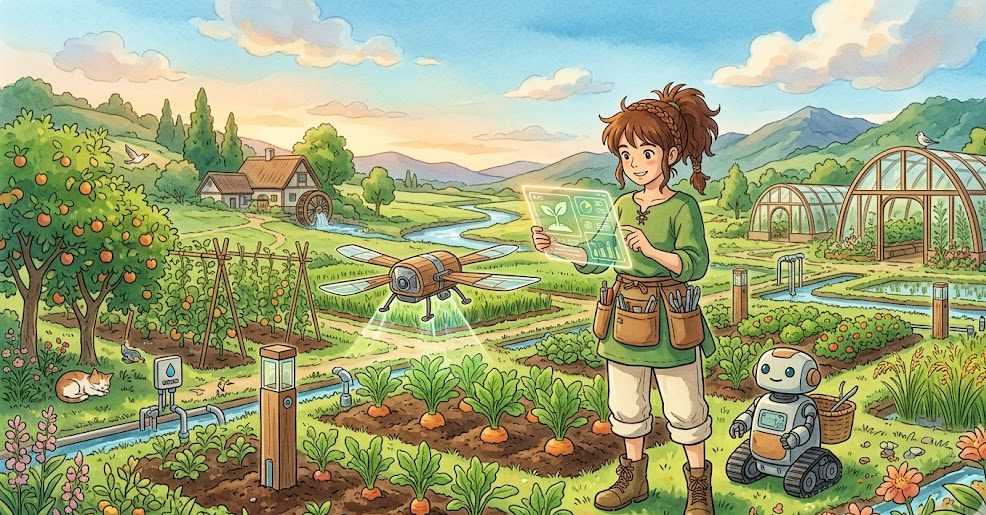
Farming has historically been a game of chance. For generations, growers have looked to the sky, hoping for the right amount of rain and favorable temperatures to secure a good harvest. But agriculture is rapidly changing. Today, relying purely on the unpredictability of nature is a massive financial risk.
Modern agriculture is no longer just about plowing dirt and planting seeds; it is about precision, data, and resilient systems. Smart farming techniques allow growers to take complete control of their environment. By utilizing advanced growing methods, automated technology, and cloud-based tracking, farmers can produce significantly more food on less land, all while reducing their daily physical labor.
If you are looking to step away from the exhausting, unpredictable cycle of traditional field farming and want to build a highly profitable, modern agricultural business, you need a smart approach. Let us explore the exact techniques that are transforming everyday farms into high-yield, sustainable operations.
Moving Beyond Traditional Soil Management
Healthy crops start with a strong foundation. In the past, this meant spending thousands of dollars on synthetic fertilizers to constantly amend exhausted field soil. Smart farming approaches soil management entirely differently.
Instead of guessing what the earth needs, modern farmers use smart digital sensors pushed directly into the beds. These sensors monitor real-time soil moisture, temperature, and pH levels, sending that exact data to a smartphone or computer. This completely eliminates the guesswork. You only water the crops when the soil is genuinely dry, and you only apply nutrients when the specific mineral levels drop.
This precision drastically reduces the cost of agricultural inputs. Furthermore, it prevents the common problem of nutrient runoff, protecting the local environment while ensuring your plant roots sit in the perfect conditions for explosive growth.
The Vertical Farming and Hydroponics Revolution
Perhaps the biggest leap in smart agriculture is the realization that we do not necessarily need open fields to grow food. Vertical farming and hydroponics are completely rewriting the rules of crop yield.
Hydroponics removes soil from the equation entirely. Instead, plant roots are suspended in a highly oxygenated, nutrient-rich water solution. Because the plants do not have to waste valuable energy growing massive root systems to search for food in the dirt, they redirect all that energy into growing lush leaves and heavy fruits. The growth rates in a well-managed hydroponic system are easily double those of traditional soil farming.
When you combine hydroponics with vertical farming—stacking growing channels on top of each other in a climate-controlled room or greenhouse—the results are staggering. You can effectively multiply your growing acreage without buying a single extra square foot of land. This setup completely insulates your harvest from droughts, floods, and seasonal temperature swings, guaranteeing a consistent, year-round income.
Connecting the Farm to the Cloud
A modern farm generates a massive amount of valuable data. The secret to smart farming is capturing that data and using it to automate your daily tasks.
Today’s most efficient growers utilize cloud-based management systems to oversee their operations. Instead of relying on a paper notebook or localized storage that can be easily lost, all farm data is beamed directly to a central cloud dashboard. This allows for multi-user tracking. The farm owner, the irrigation manager, and the harvest crew can all look at the exact same real-time data from their mobile devices, no matter where they are.
This level of connectivity means you can set automated parameters. If the temperature in the greenhouse gets too high, the system automatically opens the vents and turns on the cooling fans. If a water pump fails, you get an instant push notification on your phone before the plants begin to wilt.
Practical Tips You Can Apply Right Now
You do not need to invest a million dollars to start farming smartly. You can begin integrating modern techniques into your current setup today.
- Upgrade to Drip Irrigation: Stop using overhead sprinklers. Install automated drip lines that deliver water directly to the root zone on a strict, automated timer. This saves water and reduces crop disease.
- Use Smart Pest Traps: Instead of blanketing your crops in chemical sprays, use camera-equipped sticky traps. These devices scan the caught insects and alert you via an app when a specific pest population is rising, allowing you to spot-treat the exact problem area.
- Invest in LED Grow Lights: If you are growing indoors or starting seeds in a nursery, use targeted LED spectrum lights. They consume a fraction of the electricity of traditional bulbs and can be tuned to emit the exact light waves that trigger faster vegetative growth.
- Digitize Your Records: Move your planting dates, harvest yields, and daily observations into a dedicated farm management mobile app. Tracking historical data accurately is the only way to make informed decisions for the next season.
A Real-Life Example: The Mobile-Managed Greenhouse
Let us look at how these techniques play out in reality. Consider a modern grower who took over a small, aging family greenhouse. The traditional methods were failing; the watering was done entirely by hand, pests were rampant, and the crop yields were terribly inconsistent.
The grower decided to implement a complete smart overhaul. He cleared the old dirt beds and installed a stacked, vertical hydroponic system to grow high-value lettuce and herbs. He then wired the entire greenhouse with cheap, effective micro-sensors linked to a central, cloud-based dashboard.
Instead of walking the aisles for hours every morning, he managed his entire climate, lighting schedule, and nutrient dosing directly from a custom mobile application on his smartphone. By shifting to a smart, automated setup, he reduced his daily physical labor by 70%, completely eliminated his reliance on seasonal weather, and tripled his total weekly harvest volume to secure lucrative contracts with local restaurants.
Common Mistakes to Avoid in Smart Farming
While technology is powerful, it is very easy to misuse it. Avoiding these common pitfalls is essential for a smooth transition to modern agriculture.
The most frequent mistake is buying complex technology without understanding basic agronomy. A state-of-the-art automated nutrient doser will not save your crop if you do not fundamentally understand what a nitrogen deficiency looks like. Technology is meant to enhance a grower’s knowledge, not replace it entirely. You still need to walk your rows and look closely at your plants.
Another major error is failing to create backup systems. If your entire farm is run by a central computer and the local power grid goes down, your automated water pumps will stop. Always have physical overrides, backup generators, or gravity-fed water tanks ready to deploy in an emergency.
Step-by-Step Guide to Upgrading Your Farm
Transitioning a traditional agricultural business into a smart farm should be a gradual, calculated process. Follow these steps to ensure a successful upgrade:
- Audit Your Bottlenecks: Identify the single biggest issue costing you time or money. Is it wasted water, unpredictable weather, or pest damage? Focus your first technology upgrade on solving that specific problem.
- Start Small with Sensors: Before changing your entire growing method, buy a few basic smart soil or climate sensors. Get comfortable reading the digital data and trusting what the dashboard tells you.
- Automate Your Irrigation: The fastest return on investment comes from automating your water. Install solenoid valves and a smart timer linked to local weather data so your farm waters itself precisely.
- Introduce Hydroponics: Set up a small test area using a basic hydroponic flow system. Master the art of managing liquid nutrients and balancing pH before you scale it up to a commercial level.
- Centralize Your Data: Once you have multiple smart systems running, connect them all to a single cloud-based management platform. This gives you a complete, high-level overview of your entire operation from one screen.
Conclusion
The future of profitable, sustainable agriculture belongs to those who adapt. Smart farming techniques offer an incredible opportunity to produce a higher yield while using vastly fewer resources. By taking the guesswork out of the equation and relying on precise data, controlled environments, and modern automation, you take the power back from unpredictable weather and volatile markets.
Whether you are laying drip lines in an open field or managing a multi-tiered vertical hydroponic room from a smartphone application, the goal is exactly the same: growing healthier food with unmatched efficiency. It requires a willingness to learn new systems and trust the data, but the financial stability and operational freedom that come from a truly smart farm are completely worth the effort.
Frequently Asked Questions (FAQs)
Q: Do I need to know how to code to use smart farm technology? A: Not at all. Modern agricultural technology is designed specifically for growers, not computer scientists. Most sensor networks and cloud dashboards operate exactly like standard smartphone applications, featuring incredibly simple, user-friendly interfaces.
Q: Is smart farming only for large, corporate operations? A: Definitely not. In fact, small-scale growers often benefit the most from smart techniques. Vertical farming and automated hydroponics allow a single individual to produce a massive commercial yield out of a small backyard greenhouse or a converted shipping container.
Q: What happens to my farm data if my internet connection drops? A: Good smart farming systems are built with edge computing capabilities. This means the local sensors and controllers store the data temporarily and continue running their automated routines based on your last settings. Once the connection is restored, they automatically sync the backed-up data back to the cloud.
Q: How much does it cost to set up a basic hydroponic system? A: You can build a highly effective, small-scale PVC pipe hydroponic system for under a few hundred dollars using parts from a local hardware store. Commercial, automated vertical racks will require a larger upfront investment, but they pay for themselves quickly through vastly increased crop yields.
Q: Can smart farming techniques be used for organic agriculture? A: Yes. While hydroponics relies on mineral salts, you can absolutely use smart sensors, automated drip irrigation, and digital climate control to manage certified organic soil farms. Precision technology simply helps you manage organic inputs much more effectively.