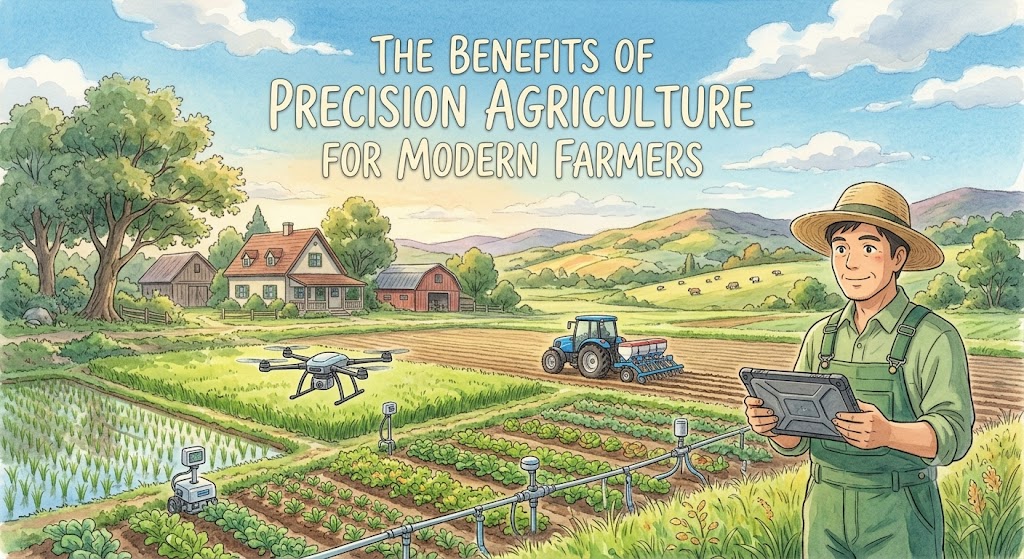
For generations, farmers have relied on experience, observation, and traditional knowledge to manage their fields. While these methods have fed millions of people, modern agriculture faces new challenges that require greater accuracy than ever before. Rising input costs, unpredictable weather, labor shortages, and increasing food demand have made farming more complex than it was even a decade ago.
This is where precision agriculture is making a remarkable difference. Instead of treating an entire field the same way, precision agriculture allows farmers to understand the unique needs of every section of their land. Using technologies such as GPS guidance, drones, soil sensors, satellite imagery, artificial intelligence, and smart farm management software, growers can make informed decisions based on real-time information rather than assumptions.
The result is a farming system that is more productive, more efficient, and better prepared for future agricultural challenges.
Farming Before Precision Agriculture
Traditional farming often relied on averages.
A farmer might apply the same amount of fertilizer across an entire field, irrigate every section equally, or spray crops without knowing exactly where problems existed.
While these methods worked reasonably well in the past, they often resulted in:
- Uneven crop growth
- Higher production costs
- Excessive water use
- Fertilizer waste
- Delayed pest detection
- Lower overall efficiency
Managing large farms using observation alone became increasingly difficult.
Farming After Precision Agriculture
Precision agriculture replaces guesswork with accurate field information.
Instead of making decisions based on assumptions, farmers now use technology to understand exactly what is happening across every part of the farm.
Modern systems provide information about:
- Soil moisture
- Crop health
- Nutrient levels
- Weather conditions
- Irrigation performance
- Pest and disease risks
This allows farmers to respond quickly and manage resources more effectively.
Better Crop Productivity
One of the greatest advantages of precision agriculture is improved crop performance.
When plants receive the right amount of water, nutrients, and protection at the right time, they develop more uniformly.
Benefits include:
✔ Stronger plant growth
✔ Higher yields
✔ Improved crop quality
✔ More consistent harvests
Healthy crops are the result of better decision-making throughout the growing season.
Efficient Water Management
Water has become one of agriculture’s most valuable resources.
Precision irrigation systems use information from sensors and weather forecasts to determine exactly when crops require water.
This approach helps farmers:
- Reduce water waste
- Prevent overwatering
- Improve root development
- Lower irrigation expenses
Efficient water management benefits both productivity and environmental sustainability.
Smarter Fertilizer Application
Applying too much fertilizer increases costs and may harm the environment.
Applying too little limits crop growth.
Precision agriculture helps farmers apply nutrients only where they are needed.
Advantages include:
- Balanced crop nutrition
- Reduced fertilizer waste
- Lower production costs
- Improved soil health
- Better nutrient efficiency
Targeted nutrient management often improves both yields and profitability.
Early Detection of Crop Problems
Modern monitoring technologies identify issues long before they become visible from ground level.
Tools such as drones, satellite imagery, and crop sensors can detect:
- Water stress
- Nutrient deficiencies
- Disease symptoms
- Pest infestations
- Uneven crop development
Early detection allows faster intervention and reduces production losses.
Lower Production Costs
Increasing profits does not always require producing more crops.
Sometimes reducing unnecessary expenses has an even greater impact.
Precision agriculture helps lower costs by reducing:
- Water consumption
- Fertilizer use
- Fuel usage
- Chemical applications
- Labor requirements
Improved efficiency directly increases farm profitability.
Better Time Management
Managing large farms manually requires significant time and effort.
Digital technologies allow farmers to monitor fields remotely and prioritize work more effectively.
Daily tasks become more organized because farmers know:
- Which fields need irrigation
- Which crops require attention
- Where machinery should operate
- Which areas remain healthy
This improves labor productivity across the farm.
Supporting Sustainable Agriculture
Precision agriculture benefits not only farmers but also natural resources.
By applying inputs more accurately, farms reduce unnecessary environmental impact.
Positive environmental outcomes include:
- Reduced nutrient runoff
- Improved soil conservation
- Lower pesticide usage
- Better water efficiency
- Reduced greenhouse gas emissions
These improvements contribute to more sustainable food production.
Making Better Business Decisions
Agriculture is also a business, and good businesses rely on accurate information.
Precision farming technologies generate valuable data that supports long-term planning.
Farmers can evaluate:
| Farm Activity | Business Insight |
|---|---|
| Crop yields | Productivity trends |
| Water usage | Efficiency improvements |
| Fertilizer application | Cost optimization |
| Weather records | Seasonal planning |
| Equipment performance | Maintenance scheduling |
| Financial data | Profit analysis |
Reliable information supports better investment decisions.
Suitable for Farms of Every Size
Many people assume precision agriculture is only for large commercial farms.
In reality, many technologies are affordable for smaller operations.
Examples include:
- Smartphone weather apps
- Soil moisture sensors
- GPS field mapping
- Smart irrigation controllers
- Digital record-keeping software
Farmers can adopt these technologies gradually according to their needs and budgets.
Challenges Worth Preparing For
Although precision agriculture offers many advantages, implementation requires planning.
Some challenges include:
- Initial investment
- Technology training
- Internet connectivity
- Equipment maintenance
- Data interpretation
As technology becomes more accessible, these barriers continue to decrease.
The Future of Precision Agriculture
Innovation continues to reshape modern farming.
Emerging developments include:
- AI-powered crop advisors
- Autonomous tractors
- Robotic harvesting systems
- Satellite-based field monitoring
- Predictive disease modeling
- Climate-smart farming platforms
These technologies will continue helping farmers produce more food while using fewer resources.
Final Thoughts
Precision agriculture represents one of the most significant advancements in modern farming. By combining traditional agricultural knowledge with technologies such as GPS, drones, sensors, artificial intelligence, and data analytics, farmers can make smarter decisions that improve productivity while reducing unnecessary costs.
Rather than replacing farmers, precision agriculture provides better tools for understanding crops, managing resources, and responding to changing conditions. As food demand continues to rise and environmental challenges become more complex, adopting precision agriculture will play an increasingly important role in creating profitable, resilient, and sustainable farming businesses for the future.
Frequently Asked Questions
1. What is precision agriculture?
Precision agriculture is a farming approach that uses technologies such as sensors, GPS, drones, satellite imagery, and data analysis to manage crops more accurately.
2. How does precision agriculture improve crop yields?
It helps farmers provide the right amount of water, nutrients, and crop protection exactly where and when crops need them.
3. Can small farmers use precision agriculture?
Yes. Affordable technologies such as mobile farming apps, soil moisture sensors, and smart irrigation systems are suitable for farms of all sizes.
4. Does precision agriculture reduce farming costs?
Yes. More accurate use of water, fertilizers, pesticides, and fuel helps reduce unnecessary expenses while improving efficiency.
5. Why is precision agriculture important for sustainable farming?
It conserves natural resources, reduces environmental impact, improves resource efficiency, and supports long-term agricultural productivity.