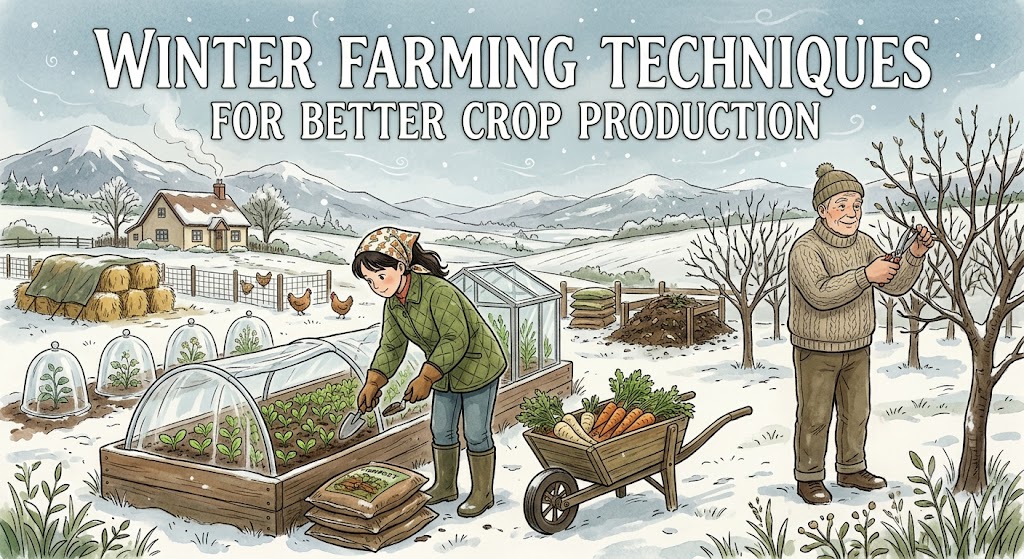
Winter farming is often misunderstood. Many people assume that cold weather automatically slows agricultural productivity, but experienced farmers know that winter can be one of the most rewarding growing seasons when managed correctly. Cooler temperatures, balanced soil moisture, and reduced pest activity create favorable conditions for many crops, provided the right cultivation techniques are followed.
The difference between an average winter harvest and an excellent one rarely depends on luck. It comes from using practical farming methods that help crops establish strong roots, absorb nutrients efficiently, and withstand changing weather conditions. Every decision—from seed selection to irrigation scheduling—contributes to the final yield.
This guide explores proven winter farming techniques that help farmers maximize production while protecting crops from seasonal challenges.
Build the Season Around a Strong Planting Schedule
Successful winter farming begins with timing rather than tools.
Planting too early may expose seedlings to excessive heat, while planting too late can reduce the growing period before severe cold arrives.
A well-planned planting schedule helps crops:
- Develop stronger roots
- Use available sunlight efficiently
- Reach maturity at the right time
- Produce more uniform harvests
Following locally recommended planting windows improves crop performance.
Encourage Deep Root Development
Healthy roots determine how well crops survive cold weather.
Strong root systems allow plants to absorb water and nutrients even when temperatures fluctuate.
Farmers can encourage root growth by:
- Preparing loose soil
- Avoiding soil compaction
- Maintaining balanced soil moisture
- Applying organic matter before planting
Deep roots improve both crop health and final yields.
Use Raised Beds Where Necessary
Raised beds improve growing conditions in areas that experience poor drainage during winter.
Benefits include:
- Better root aeration
- Faster soil warming
- Reduced waterlogging
- Easier field management
Vegetables such as carrots, onions, garlic, and leafy greens often perform well in raised-bed systems.
Apply Nutrients Gradually
Winter crops continue