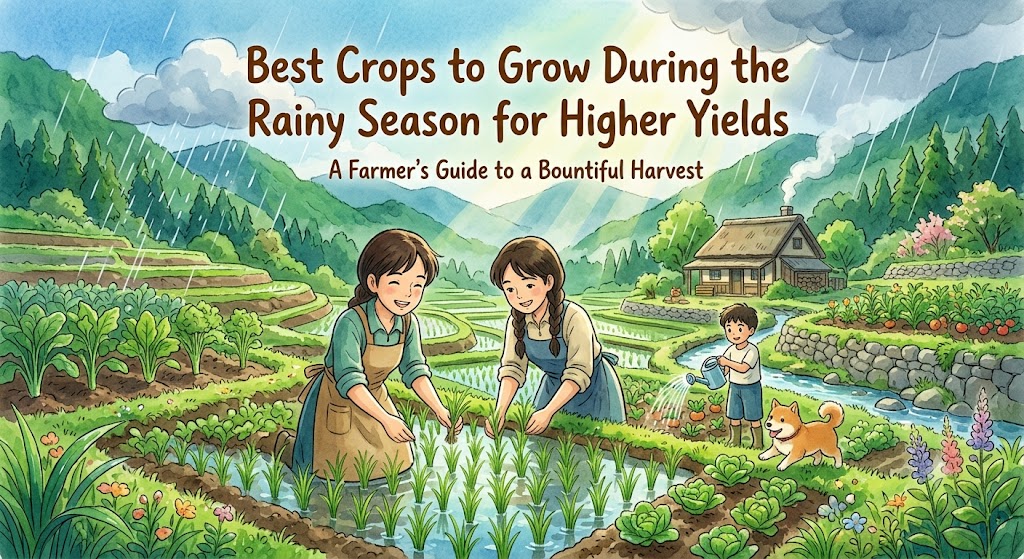
The rainy season is one of the most productive periods for agriculture. Adequate rainfall, improved soil moisture, and favorable temperatures create ideal growing conditions for many crops. When farmers select the right crops and follow proper cultivation practices, the rainy season can deliver high yields, lower irrigation costs, and increased farm profitability.
However, successful rainy-season farming requires more than simply planting seeds when the rains begin. Excess water, poor drainage, weeds, pests, and crop diseases can quickly reduce productivity if not managed properly. Choosing crops that are well suited to local climate, soil type, and rainfall patterns is the first step toward achieving a successful harvest.
This guide explains the best crops to grow during the rainy season and provides practical tips to maximize production while reducing common farming risks.
Why the Rainy Season Is Important for Farming
Rainfall naturally replenishes soil moisture, making it easier for seeds to germinate and plants to establish strong root systems. Many crops depend on seasonal rains for healthy growth, especially in regions where irrigation facilities are limited.
Benefits of rainy-season farming include:
- Lower irrigation costs
- Improved seed germination
- Better nutrient availability
- Increased soil microbial activity
- Reduced dependence on groundwater
- Higher biomass production
- Better crop establishment
When managed correctly, rainy-season farming supports both food security and farm income.
1. Rice
Rice is one of the most popular rainy-season crops worldwide. It grows exceptionally well in areas receiving consistent rainfall and warm temperatures.
Why Rice Performs Well
Rice fields naturally require abundant water during much of the growing season. Rainfall reduces irrigation requirements while supporting healthy vegetative growth.
Benefits include:
- High market demand
- Reliable production
- Suitable for water-rich conditions
- Good commercial value
- Multiple improved varieties available
Proper field leveling and drainage remain important because excessive flooding can still damage young plants.
2. Maize (Corn)
Maize is another highly productive rainy-season crop.
With proper rainfall and fertile soil, maize develops rapidly and produces excellent yields.
Advantages
- Short growing period
- High demand for food and animal feed
- Good income potential
- Suitable for many soil types
Avoid waterlogging by maintaining effective field drainage.
3. Soybean
Soybean is a valuable oilseed and protein crop that performs well during moderate rainy seasons.
As a legume, soybean also contributes nitrogen to the soil, improving fertility for future crops.
Benefits
- High market value
- Improves soil fertility
- Strong export demand
- Useful in crop rotation
- Multiple industrial uses
Healthy drainage is essential because prolonged standing water may damage roots.
4. Groundnut (Peanut)
Groundnut grows successfully in many regions during the rainy season where soils drain well.
Its underground pods require loose, well-aerated soil for proper development.
Advantages
- Good commercial demand
- Valuable oil crop
- Nitrogen-fixing legume
- Suitable for small farms
Avoid heavy clay soils that retain excessive moisture.
5. Millets
Millets are becoming increasingly popular because they tolerate variable rainfall while providing nutritious grain.
Popular millet varieties include:
- Pearl millet
- Finger millet
- Foxtail millet
- Little millet
Benefits
- Climate resilience
- Lower water requirements than many cereals
- High nutritional value
- Suitable for dry and semi-arid regions
Millets perform well even where rainfall is less predictable.
6. Pigeon Pea
Pigeon pea is another excellent rainy-season legume.
Its deep root system allows it to tolerate temporary dry periods after establishment.
Benefits
- Improves soil nitrogen
- Good market demand
- Useful in mixed cropping
- Drought tolerance after establishment
Pigeon pea fits well into sustainable farming systems.
7. Green Gram (Mung Bean)
Green gram has a relatively short growing period, making it suitable for rainy-season cultivation.
It also contributes nitrogen to the soil while providing nutritious grain.
Advantages
- Quick maturity
- Low production cost
- Strong consumer demand
- Suitable for crop rotation
Timely weed control improves productivity significantly.
8. Black Gram (Urad Bean)
Black gram performs well under moderate rainfall and is widely cultivated in many agricultural regions.
Benefits
- Nitrogen fixation
- Good profitability
- Short-duration crop
- Suitable for intercropping
Healthy drainage helps prevent root diseases.
9. Cotton
Cotton is commonly planted during the rainy season in suitable climates.
Adequate rainfall supports early vegetative growth.
Advantages
- High commercial value
- Strong textile industry demand
- Suitable for large-scale farming
Balanced fertilizer management and effective pest monitoring are essential for good yields.
10. Sugarcane
Although sugarcane has a long growing cycle, planting during the rainy season allows young plants to establish quickly.
Benefits
- High biomass production
- Long-term income
- Strong industrial demand
- Excellent ratoon potential
Proper drainage helps prevent root problems during periods of excessive rainfall.
11. Okra
Okra grows vigorously during warm, rainy conditions.
Its rapid growth makes it a popular vegetable crop for commercial growers.
Benefits
- Continuous harvesting
- Strong local demand
- Good market prices
- Fast crop establishment
Disease monitoring becomes important during periods of high humidity.
12. Cucumbers
Cucumbers perform well in warm rainy-season conditions when fields have proper drainage.
Advantages
- Fast growth
- Short harvest period
- High consumer demand
- Suitable for fresh markets
Raised beds often improve drainage and reduce disease risk.
13. Pumpkin
Pumpkins thrive during the rainy season because vines develop rapidly under warm and moist conditions.
Benefits
- Long storage life
- High yield potential
- Strong market demand
- Low maintenance after establishment
Allow adequate spacing to improve airflow around plants.
14. Chili Peppers
Chili peppers are profitable vegetable crops in many rainy-season farming systems.
Advantages
- High commercial value
- Strong export demand
- Multiple harvesting cycles
- Suitable for small farms
Excess humidity may encourage fungal diseases, making regular field inspection important.
15. Turmeric
Turmeric requires warm temperatures and sufficient moisture during early growth.
Rainy-season planting supports healthy rhizome development.
Benefits
- High-value spice crop
- Growing international demand
- Good storage potential
- Suitable for long-term cultivation
Mulching helps conserve soil moisture while suppressing weeds.
How to Maximize Rainy-Season Crop Yields
Choosing the right crop is only part of successful farming.
Several management practices significantly improve productivity.
Prepare Land Properly
Well-prepared fields improve drainage, seed germination, and root development.
Raised beds may be useful in areas prone to waterlogging.
Select Quality Seed
Certified, disease-free seed improves:
- Germination
- Uniform growth
- Disease resistance
- Final yield
Always select varieties recommended for your local climate.
Improve Soil Fertility
Healthy soils produce healthier crops.
Apply:
- Compost
- Farmyard manure
- Vermicompost
- Balanced fertilizers
- Green manure
Soil testing helps determine nutrient requirements.
Maintain Proper Drainage
Excess standing water is one of the biggest threats during the rainy season.
Good drainage:
- Prevents root rot
- Reduces fungal diseases
- Improves oxygen availability
- Supports healthy plant growth
Clean drainage channels before heavy rains begin.
Control Weeds Early
Rainfall encourages rapid weed growth.
Weeds compete with crops for:
- Water
- Nutrients
- Sunlight
- Growing space
Early weed management prevents yield losses.
Monitor Pests and Diseases
Warm, humid weather favors many crop diseases.
Regular inspection helps identify problems before they spread.
Integrated Pest Management practices reduce unnecessary pesticide use while protecting beneficial insects.
Apply Balanced Fertilizers
Do not rely only on nitrogen fertilizers.
Balanced nutrition including phosphorus, potassium, sulfur, and micronutrients supports healthy crop growth.
Split fertilizer applications often improve nutrient efficiency.
Common Mistakes to Avoid
Many farmers reduce rainy-season yields through avoidable mistakes.
These include:
- Planting unsuitable crop varieties
- Poor drainage
- Delayed sowing
- Overcrowding plants
- Ignoring soil testing
- Excessive nitrogen application
- Delayed weed control
- Poor disease monitoring
Correct management can significantly improve harvest quality and profitability.
Frequently Asked Questions
Which crop gives the highest yield during the rainy season?
Rice is generally one of the highest-yielding rainy-season crops in regions with adequate rainfall, while maize, soybean, and sugarcane also offer excellent production potential depending on local conditions.
Which vegetables grow well during the rainy season?
Okra, cucumber, pumpkin, chili peppers, bottle gourd, ridge gourd, and several leafy vegetables perform well when proper drainage is maintained.
Why is drainage important during the rainy season?
Standing water reduces oxygen around plant roots, encourages disease, and may cause root rot, resulting in lower yields.
Can legumes improve soil fertility?
Yes. Legumes such as soybean, pigeon pea, green gram, and black gram fix atmospheric nitrogen, improving soil fertility for future crops.
How can farmers increase rainy-season profits?
Selecting suitable crop varieties, maintaining drainage, controlling weeds early, using quality seed, applying balanced nutrients, and managing pests promptly all contribute to higher yields and better profitability.
Conclusion
The rainy season offers excellent opportunities for farmers to achieve high crop yields when proper planning and management are followed. Crops such as rice, maize, soybean, groundnut, millets, pigeon pea, green gram, black gram, cotton, sugarcane, okra, cucumbers, pumpkins, chili peppers, and turmeric perform particularly well under favorable rainfall conditions. Choosing crops that match local climate, soil type, and market demand is essential for maximizing productivity.
Along with crop selection, practices such as proper drainage, soil fertility management, quality seed selection, timely weed control, and integrated pest management play a major role in determining final yields. By combining these sustainable farming techniques with careful seasonal planning, farmers can improve harvest quality, increase profitability, and build more resilient farming systems for the future.