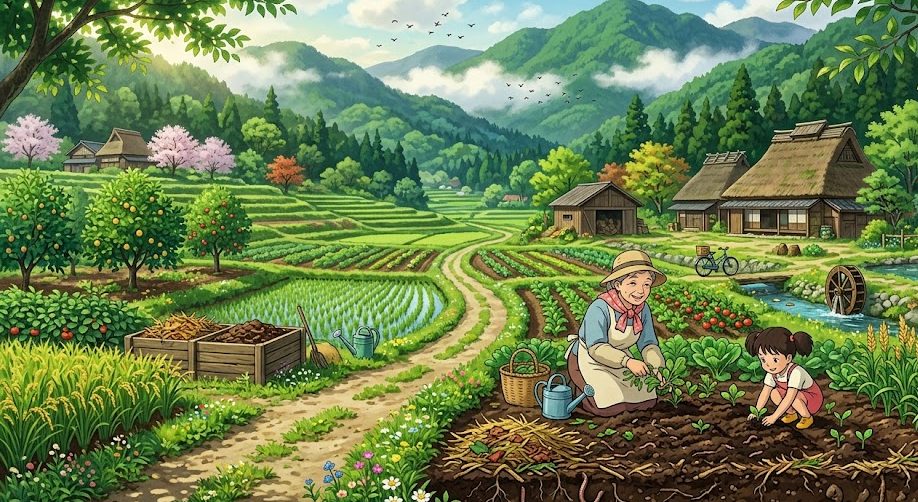
Summer can be one of the most productive periods on a farm, but high temperatures, intense sunlight, rapid evaporation, and limited water availability can make crop management more demanding. Farmers need to think carefully about which crops can handle local conditions, when to plant them, how to protect soil moisture, and how to keep plants productive during periods of heat.
Across the United States, summer farming looks very different from one region to another. A grower in the Pacific Northwest may experience relatively moderate summer conditions, while farms in the Southwest can face intense heat and extremely low humidity. Southern states may combine high temperatures with significant humidity, creating a different set of crop-management challenges.
Because of these differences, successful summer farming is not based on one universal method. The best approach combines local weather knowledge, crop selection, soil management, efficient irrigation, and regular field observation.
Begin With the Summer Growing Environment
Before selecting crops, farmers should understand what summer actually looks like on their farm.
Important factors include:
- Typical daytime temperatures
- Nighttime temperatures
- Length of the growing season
- Rainfall patterns
- Humidity
- Soil type
- Water availability
- Wind conditions
- Expected periods of extreme heat
Two farms located in the same state may have very different growing conditions because of elevation, soil, irrigation access, and local weather patterns.
Historical information can help with planning, while current forecasts can guide decisions during the growing season.
The goal is to choose crops and management practices that fit the farm’s actual environment rather than relying only on a general “summer crop” list.
Choose Crops That Match the Heat
Crop selection is one of the most important summer decisions.
Warm-season crops generally perform best when temperatures are suitable for active growth. Many vegetables and field crops can perform well during warm weather, but excessive heat can reduce flowering, pollination, fruit development, and overall crop quality.
Common summer crops in suitable U.S. growing regions include:
- Sweet corn
- Tomatoes
- Peppers
- Cucumbers
- Squash
- Melons
- Beans
- Okra
- Certain varieties of sunflowers
- Warm-season forage crops
The exact choice should depend on local climate, available water, planting dates, market demand, and the length of the growing season.
A crop that performs well in a humid southern environment may need different management in a hot and dry western region.
Think About Heat Tolerance, Not Just Crop Type
Even within the same crop, varieties can respond differently to heat.
Seed selection should therefore consider the expected summer conditions.
Farmers can look for varieties described as suitable for their growing region and growing season. Important characteristics may include heat tolerance, maturity period, disease resistance, drought tolerance, and suitability for local soil conditions.
Shorter-maturity varieties can sometimes reduce the amount of time crops spend exposed to the most intense part of summer.
The best variety is not necessarily the one with the highest potential yield under ideal conditions. It is the one that fits the farm’s actual growing environment and production goals.
Planting Timing Can Make a Major Difference
Summer crop management starts with the planting date.
Planting too early may expose young plants to unsuitable temperatures, while planting too late can push flowering or harvesting into periods of extreme heat.
Farmers should consider both soil temperature and the expected weather after planting.
For some crops, early establishment before the hottest part of summer can be beneficial.
For others, direct planting during warmer conditions may be more appropriate.
Using a seasonal crop calendar helps farmers coordinate planting, irrigation, labor, pest monitoring, and expected harvest periods.
Prepare the Soil Before the Heat Arrives
Healthy soil can make summer water management easier.
Soil with good structure and adequate organic matter can often hold and release water more effectively than severely degraded or compacted soil.
Before planting, farmers can evaluate:
- Soil texture
- Organic matter
- Drainage
- Compaction
- pH
- Nutrient availability
- Existing soil moisture
Soil testing can help identify nutrient requirements.
Avoid unnecessary soil disturbance when conditions are unfavorable, particularly when it could create compaction or leave the surface vulnerable to erosion.
Good soil preparation should create a suitable root environment without destroying valuable soil structure.
Protect Soil Moisture With Ground Cover
Hot summer weather can cause rapid evaporation from exposed soil.
Keeping soil covered can help reduce direct exposure to the sun and wind.
Depending on the production system, farmers may use:
- Organic mulch
- Crop residues
- Cover crops
- Living ground covers
- Appropriate plastic mulch in some vegetable systems
Mulching can also help moderate soil temperature and reduce weed growth.
However, the choice of mulch should match the crop and local climate. Organic materials may behave differently depending on their thickness, moisture content, and decomposition rate.
Make Irrigation More Precise
Water is often the most important resource during hot weather.
Instead of treating irrigation as a fixed calendar activity, farmers can make decisions based on crop requirements and actual soil conditions.
Useful information may include:
- Soil moisture
- Recent rainfall
- Temperature
- Wind
- Humidity
- Crop growth stage
- Forecasted weather
Irrigating according to need can help prevent both drought stress and unnecessary water use.
The objective is not to keep the soil constantly wet. Different crops need different amounts of water, and excessive moisture can create its own problems.
Consider Drip Irrigation
Drip irrigation can be particularly useful for some summer vegetable and specialty-crop systems.
It delivers water close to the root zone rather than applying water broadly across the entire field.
Potential advantages include:
- Reduced evaporation
- More targeted water delivery
- Better control of irrigation timing
- Reduced wetting of plant foliage
- Compatibility with fertigation systems
However, drip systems need regular inspection.
Blocked emitters, leaks, damaged tubing, and uneven pressure can result in some plants receiving too much water while others receive too little.
Irrigate at the Right Time of Day
The timing of irrigation can influence water efficiency.
During very hot and windy periods, water applied during the hottest part of the day may experience greater evaporative losses depending on the irrigation method.
Early-morning irrigation is often practical for many systems because it can provide water before the hottest part of the day.
The best timing still depends on the irrigation method, crop, climate, and local conditions.
Automated irrigation controllers combined with soil-moisture information can make scheduling easier.
Understand Plant Water Needs by Growth Stage
Crops do not necessarily need the same amount of water throughout their entire lifecycle.
Water demand can change as plants develop.
Young seedlings may have relatively small root systems, while mature plants may require considerably more water.
Flowering and fruit development can also be important periods for many crops.
This means irrigation should be adjusted according to plant development rather than following one fixed schedule from planting through harvest.
Keeping notes about crop growth stages can help farmers make better decisions.
Manage Heat Stress
Plants can experience heat stress when temperatures become too high for their normal physiological processes.
Signs can vary by crop but may include:
- Temporary wilting
- Leaf curling
- Leaf scorch
- Poor flowering
- Blossom drop
- Reduced fruit quality
- Slow growth
Adequate soil moisture can help plants cope with heat, but irrigation alone cannot solve every heat-related problem.
Other strategies may include shade structures for certain specialty crops, reflective materials, wind management, appropriate plant spacing, and selecting heat-tolerant varieties.
The correct strategy depends on the crop and production system.
Improve Airflow Around Plants
Summer conditions can create an interesting balance between heat and humidity.
Dense vegetation can restrict airflow and create favorable conditions for certain diseases.
Proper plant spacing can help air move through the crop canopy.
For vegetables such as tomatoes and cucumbers, trellising or pruning systems may also improve airflow and make harvesting easier.
Farmers should avoid excessive pruning simply to increase airflow, however. Leaves are important for photosynthesis, so crop-specific practices should be followed.
Control Summer Weeds Early
Weeds compete aggressively during warm weather.
They can consume water and nutrients that crops need, while dense weed growth can make harvesting and field operations more difficult.
Early weed control is usually easier than trying to remove mature weeds after they have become established.
Farmers can combine methods such as:
- Mulching
- Mechanical cultivation
- Hand removal
- Crop spacing
- Cover crops
- Crop rotation
- Appropriate herbicide programs where applicable
Integrated weed management can reduce dependence on any single method.
Watch for Summer Pests
Warm weather can increase activity from many agricultural pests.
Regular scouting is therefore important.
Farmers should inspect leaves, stems, flowers, fruit, and the underside of foliage for unusual signs.
Possible warning signals include:
- Chewed leaves
- Discolored foliage
- Sticky plant surfaces
- Distorted new growth
- Damaged fruit
- Visible insects
- Unusual plant decline
Early detection gives farmers more options.
Integrated Pest Management can combine field monitoring, prevention, beneficial organisms, crop rotation, resistant varieties, mechanical methods, and targeted treatments when necessary.
Manage Fertilizer Carefully
Summer irrigation and rainfall can influence nutrient availability.
Fertilizer should be applied according to crop requirements, soil-test information, and the plant’s growth stage.
Applying excessive fertilizer during hot conditions can create unnecessary costs and may increase plant stress in some situations.
In irrigated systems, fertigation can provide nutrients through the irrigation system when properly designed.
However, fertilizer concentration and irrigation equipment should be monitored carefully.
More fertilizer does not automatically produce better crops.
Use Shade Strategically
Shade can be useful for certain crops during periods of extreme heat.
Shade cloth and other structures can reduce the amount of direct solar radiation reaching plants.
This approach is more common in specialty crops, nurseries, greenhouses, and controlled growing environments.
Too much shade can reduce photosynthesis and slow growth, so the objective is not to eliminate sunlight.
The goal is to reduce excessive heat or radiation while maintaining enough light for healthy crop development.
Keep Farm Equipment Ready
Summer often creates a narrow window for critical field operations.
Equipment problems during planting, cultivation, spraying, or harvesting can become expensive.
Preventive maintenance should include:
- Checking tires
- Inspecting belts
- Cleaning filters
- Checking fluids
- Inspecting irrigation pumps
- Testing irrigation lines
- Maintaining harvest equipment
- Checking cooling systems
Dust and heat can place additional stress on machinery.
Keeping equipment clean and properly maintained can reduce unexpected downtime.
Plan Harvest Around Heat
Harvesting during extreme heat can affect both workers and crop quality.
Some produce should be harvested during cooler parts of the day whenever practical.
Fresh vegetables and fruits can lose quality rapidly when left exposed to high temperatures after harvest.
A good summer harvest plan should consider:
- Harvest timing
- Labor availability
- Shade
- Containers
- Cooling
- Transportation
- Market delivery schedules
For perishable crops, post-harvest handling can be just as important as production.
Protect Farm Workers During Hot Weather
Summer farming also requires careful planning for people working outdoors.
Heat exposure can become a serious workplace concern during periods of high temperature and humidity.
Farm managers should provide appropriate opportunities for workers to drink water, rest, and reduce exposure during extreme conditions.
Work schedules can sometimes be adjusted so that the most physically demanding activities occur during cooler portions of the day.
Training workers to recognize signs of heat-related illness is also an important part of responsible farm management.
Use Technology to Save Water
Technology can make summer irrigation more precise.
Farmers can combine:
- Soil-moisture sensors
- Weather stations
- Automated irrigation controllers
- Flow meters
- Satellite imagery
- Farm-management software
For example, a soil sensor can show that a particular section of a field still contains adequate moisture, allowing irrigation to be delayed.
Flow meters can help identify unusual water usage that may indicate a leak.
Satellite or drone imagery can help identify areas where crops appear more stressed than surrounding plants.
Technology should support field observations rather than replace them.
Make Summer Crop Planning More Flexible
Weather does not always follow the expected calendar.
A very hot period may arrive earlier than normal, or rainfall may be lower than expected.
Farmers can improve resilience by maintaining some flexibility in planting and harvest schedules.
Useful strategies include:
- Planting multiple maturity groups
- Diversifying crop varieties
- Staggering planting dates
- Maintaining backup irrigation plans
- Keeping equipment ready
- Monitoring long-range weather patterns
- Avoiding dependence on one crop
Flexibility can reduce the impact of unusual weather.
Record What Happens Each Season
Summer farming becomes easier to improve when results are documented.
Farmers can record:
- Planting dates
- Irrigation amounts
- Rainfall
- Soil moisture
- Heat events
- Pest problems
- Fertilizer applications
- Harvest dates
- Yield
- Crop quality
- Input costs
After the season, these records can reveal which decisions worked and which need adjustment.
For example, a farmer may discover that an earlier planting date produced better results, or that one irrigation schedule used less water without reducing yield.
Good records turn one growing season into information for the next.
A Practical Summer Farm Routine
A simple routine can help keep operations organized.
Morning
Check weather conditions, soil moisture, irrigation systems, crop appearance, and equipment.
During the day
Monitor heat conditions, field operations, irrigation performance, and signs of pest or crop stress.
Evening
Review irrigation needs, inspect areas that experienced stress, and prepare for the following day’s work.
Weekly
Review crop growth, water use, pest pressure, equipment condition, and upcoming weather.
This routine can be adjusted according to farm size and crop type.
Common Summer Farming Mistakes
Several problems occur repeatedly during hot growing conditions.
Farmers may:
- Irrigate on a fixed schedule without checking soil moisture
- Plant crops without considering heat tolerance
- Leave soil completely exposed
- Ignore small irrigation leaks
- Apply excessive fertilizer
- Allow weeds to compete for water
- Enter fields without considering soil conditions
- Delay pest scouting
- Harvest perishable crops during the hottest part of the day
- Ignore worker heat exposure
- Depend entirely on historical weather patterns
Most of these problems can be reduced through better observation and planning.
Final Thoughts
Summer farming can be highly productive when crops, water, soil, labor, and timing are managed together.
Choosing suitable varieties is the starting point, but successful summer production also depends on protecting soil moisture, using irrigation efficiently, controlling weeds and pests, monitoring heat stress, maintaining equipment, and planning harvest operations carefully.
There is no single summer farming formula that works across the entire United States. Climate, soil, rainfall, water availability, and crop markets vary considerably between regions.
The most practical strategy is to build a farm plan around local conditions and then adjust it as the season develops.
By combining healthy soil, efficient irrigation, heat-aware crop planning, modern monitoring tools, and consistent field observation, farmers can make better use of limited resources while keeping crops productive through challenging summer conditions.