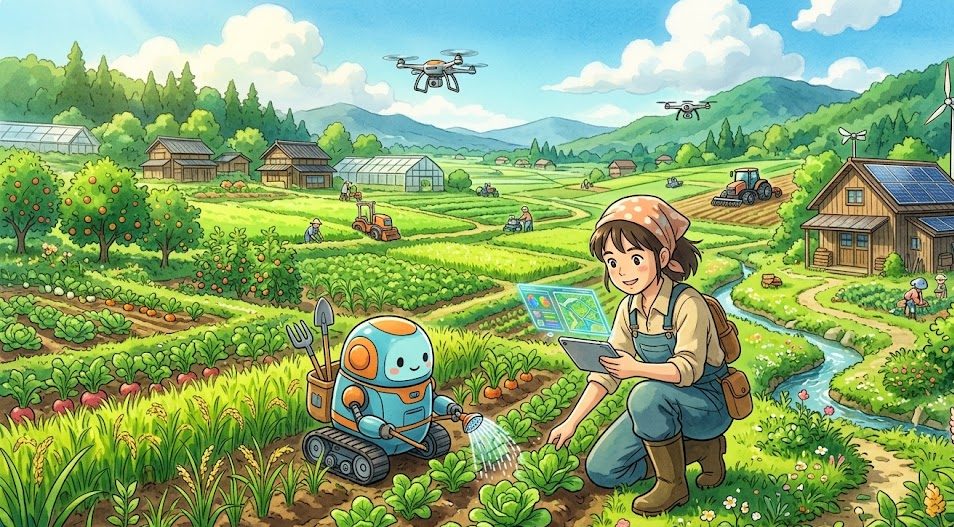
Introduction
Smart farming is transforming traditional agriculture by integrating modern technologies such as Artificial Intelligence (AI), Internet of Things (IoT), and data analytics. As global food demand continues to rise and resources become limited, farmers are turning toward smart farming solutions to increase efficiency, productivity, and sustainability.
This advanced approach allows farmers to monitor crops, soil, weather, and irrigation systems in real time. By using data-driven decisions, smart farming reduces waste, improves crop yield, and ensures better resource management.
Key Benefits of Smart Farming
- Increases crop productivity
- Reduces water and fertilizer usage
- Real-time monitoring of farm conditions
- Saves labor and operational costs
- Improves decision-making with data
1. Role of Technology in Smart Farming
Smart farming relies heavily on advanced technologies:
- IoT Sensors: Monitor soil moisture, temperature, and humidity
- Drones: Used for crop monitoring and spraying
- AI Systems: Analyze data and provide recommendations
- GPS Technology: Helps in precision farming
These tools help farmers manage their farms more efficiently and accurately.
2. Precision Agriculture
Precision agriculture is a key part of smart farming. It involves using data to apply water, fertilizers, and pesticides only where needed. This reduces waste and increases efficiency.
Farmers can map their fields and understand which areas need more attention, leading to better crop management.
3. Automation in Farming
Automation is another important aspect of smart farming. Machines and robots are used for planting, harvesting, and irrigation.
Automated irrigation systems ensure crops get the right amount of water at the right time, improving yield and saving resources.
4. Challenges in Smart Farming
Despite its advantages, smart farming has some challenges:
- High initial investment
- Requires technical knowledge
- Dependence on internet connectivity
- Maintenance of advanced equipment
However, as technology becomes more affordable, these challenges are gradually reducing.
Conclusion
Smart farming is the future of agriculture. By combining technology with traditional farming practices, it offers a sustainable and efficient way to meet global food demands. Farmers who adopt smart farming today will have a strong advantage in the future.