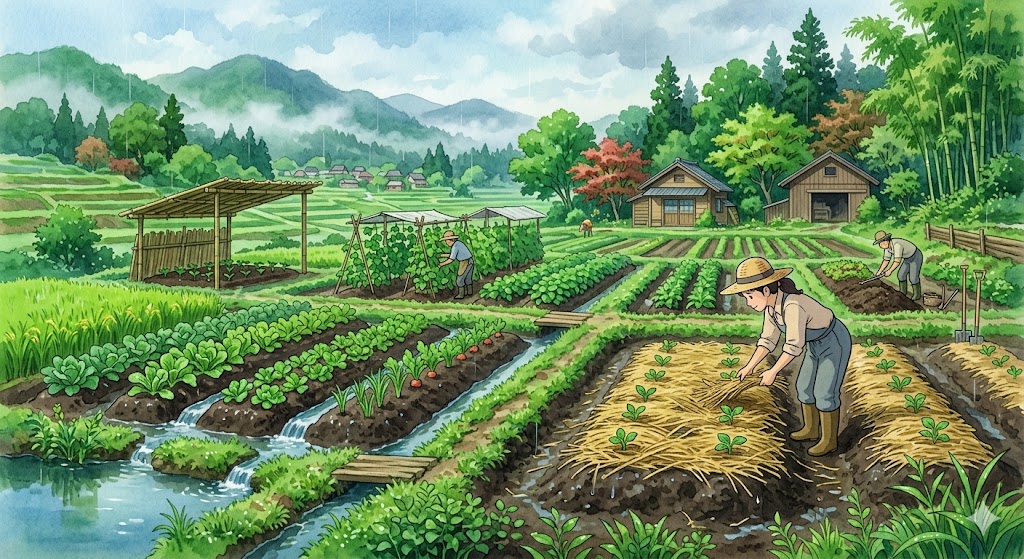
The rainy season—or Chomasu in our region—is a paradox for the small-scale farmer. On one hand, it is a blessing that fills our reservoirs and eliminates the need for expensive irrigation. On the other, it brings the “silent killers” of agriculture: fungal pathogens, root rot, soil compaction, and nutrient leaching.
When the humidity spikes and the ground stays saturated, your crops are under constant siege. If you are farming in a high-rainfall area, you cannot afford to rely on “wait and see” tactics. You need an active strategy to protect your investment and ensure your crops make it to harvest. Here are seven smart strategies to safeguard your farm against the wet weather and maximize your yields.
1. Elevated Bed Farming (The Foundation of Drainage)
The greatest enemy of a plant during the rainy season is “wet feet.” If water pools around the roots, the oxygen supply is cut off, and the plant will rot within days.
- The Strategy: Shift from flat-bed planting to raised beds or high ridges.
- The Impact: Raising your planting area by even 6 to 10 inches allows excess water to drain away from the root zone into the furrows. This ensures that even during heavy downpours, the soil around the roots remains aerated, preventing the anaerobic conditions that trigger root rot.
2. Strategic Mulching and Canopy Management
While mulching is essential in the summer to hold moisture, in the rainy season, thick, wet organic mulch can become a breeding ground for slugs, snails, and fungal spores.
- The Strategy: If you must mulch, use coarse, dry materials like straw rather than finely shredded organic matter, and keep the mulch a few inches away from the base of the plant stems. Additionally, prune the lower leaves of your crops to improve airflow.
- The Impact: Improving airflow around the base of the plant reduces the humidity in the “micro-climate” surrounding your crop, which significantly lowers the risk of mildew and blight.
3. Integrated Nutrient Management (Preventing Leaching)
Heavy rains are notorious for “leaching”—washing away nitrogen and other soluble nutrients deep into the subsoil where plant roots cannot reach them.
- The Strategy: Instead of applying one large dose of synthetic fertilizer, adopt a “little and often” approach. Use slow-release organic fertilizers (like compost or well-aged manure) that bind to the soil better than synthetic salts.
- The Impact: By feeding your plants small amounts throughout the season rather than front-loading them, you ensure nutrients stay available in the root zone, preventing the deficiency-induced yellowing that often plagues crops during the monsoon.
4. Selecting Monsoon-Resistant Varieties
Not all crops are built to handle high moisture. Trying to grow a desert-adapted pepper in the peak of the rainy season is a recipe for heartbreak.
- The Strategy: Consult your local agricultural extension for varieties specifically bred for resistance to bacterial wilt and fungal pathogens. Look for “monsoon-hardy” seeds that have been vetted in your local soil types.
- The Impact: Choosing the right genetics is the most cost-effective form of “insurance” you can buy. A plant that is naturally resistant to fungal attacks requires far fewer inputs and interventions later in the season.
5. Implementing “Natural” Fungicides
When fungal pressure is high, you need a preventative strategy. Waiting for the first sign of leaf spot is often too late.
- The Strategy: Utilize organic, low-cost preventatives. A mixture of neem oil, diluted buttermilk, or copper-based sprays (when applied responsibly) can create a barrier against fungal spores.
- The Impact: These treatments work by altering the surface pH of the leaf, making it an inhospitable environment for fungi to germinate. Consistency is key; applying these before the humidity peaks is far more effective than trying to “cure” an established infection.
6. Contour Planting and Swales
If your farm has any slope, the rainy season will turn your fields into a water-delivery system for erosion.
- The Strategy: Implement “contour farming,” where you plant rows across the slope of the land rather than up and down it. Combine this with swales—shallow trenches that intercept water flow.
- The Impact: This slows down the movement of water, encouraging it to soak into the soil where it lands rather than rushing downhill. This prevents the loss of topsoil and ensures your fields are hydrated more evenly across the entire surface.
7. Post-Harvest Preservation Strategies
Often, farmers lose their crop not in the field, but during the drying process. High ambient humidity makes it nearly impossible to dry grains or seeds without them developing mold.
- The Strategy: If possible, invest in or build a simple solar dryer—a structure covered with clear plastic that uses the sun to raise the temperature and lower the humidity. If not, utilize a fan-driven drying area in a shed.
- The Impact: Ensuring your harvest reaches the proper moisture content immediately after picking is the final line of defense against rot. Proper drying is what differentiates a high-quality saleable product from a compost heap.
The Mindset of a Monsoon Farmer
Successful rainy season farming is about observation. You have to be out in the fields every day, watching for the first yellowed leaf, the first sign of stagnant water, or the first pest outbreak.
The wet season is a time of explosive growth, but it is also a time of high risk. By managing your soil drainage, optimizing your nutrient delivery, and staying ahead of fungal pressure with preventative care, you can turn the monsoon from a period of anxiety into your most productive time of year.
Remember, the goal isn’t to fight the rain—it’s to manage it. When you design your system to welcome the water while keeping your plants healthy and elevated, you are setting yourself up to harvest when others are struggling to survive.