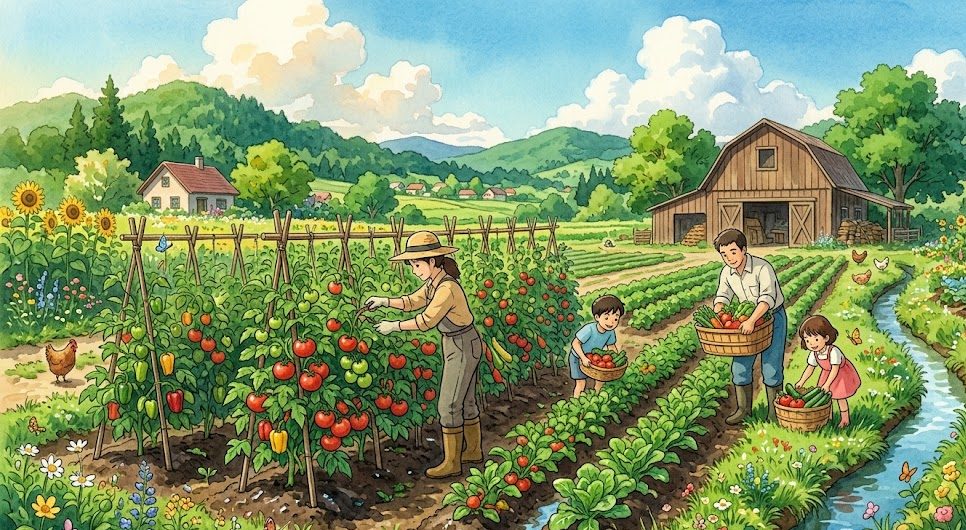
In the agricultural landscape of 2026, the summer season presents a significant challenge to productivity. Rising temperatures and unpredictable heatwaves can quickly turn a thriving field into a stressed ecosystem. However, for the modern grower, summer is not a time to slow down; it is a season to implement “Smart Farming” strategies that prioritize protection and precision. By focusing on “Natural Farming” principles, you can achieve a high-yield harvest while maintaining Financial Freedom through reduced input costs.
This guide provides a comprehensive “Practical Farming” blueprint to help you beat the heat and secure your agricultural success.
1. Water-Saving Innovations: The Precision Pivot
In a high-heat environment, water is your most precious asset. To “Grow More with Less,” you must treat hydration as a digital resource.
- Precision Drip Irrigation: Moving away from traditional flood irrigation is a mechanical necessity. Drip systems deliver water directly to the root zone, reducing waste by up to 60% and ensuring the plant’s “biological engine” stays fueled.
- Smart Soil Sensors: Integrate IoT sensors to monitor moisture levels in real-time. These devices ensure you provide hydration only when the data indicates a need, preventing over-saturation and saving energy.
- Early Morning Hydration: Timing is everything. Watering in the pre-dawn hours ensures that plants are fully hydrated before the peak heat hits, allowing them to withstand transpiration stress throughout the day.
2. Mulching: Nature’s Thermal Shield
Mulching is a cornerstone of “Practical Farming” that acts as a low-maintenance protective blanket for your land.
- Evaporation Lockdown: A thick layer of organic residue (straw, wood chips, or dried leaves) can reduce soil evaporation by over 50%.
- Root Zone Insulation: Mulch keeps the soil significantly cooler than the surrounding air temperature, protecting sensitive microbes and ensuring that roots do not bake in the summer sun.
- Weed Suppression: By blocking sunlight from reaching the soil, mulch naturally smothers weeds that would otherwise compete with your High-Value Cash Crops for moisture.
3. Healing the Soil Naturally: Building a “Sponge”
Healthy soil has a higher water-holding capacity. “Healing the soil naturally” is your best long-term defense against summer droughts.
- The No-Till Advantage: Tilling breaks up the soil structure and allows moisture to escape. No-till practices preserve the organic matter and fungal networks (mycorrhizae) that act as a natural sponge, holding onto every drop of water.
- Organic Bio-Inputs: Utilize fermented organic matter and bio-inputs to “recharge” the soil’s microbial life. This increase in biological activity improves soil porosity and moisture retention.
- Zero Chemical Costs: By avoiding synthetic fertilizers, which can increase salt buildup and make plants thirstier, you keep your input costs near zero while improving plant resilience.
4. Strategic Shade and Crop Selection
If you have limited space, “Micro Farming” techniques can help you manage the micro-climate of your farm.
- Agrivoltaics and Shade Nets: Using temporary shade nets for “Exotic Vegetables” like broccoli or leafy greens can reduce heat stress and prevent sunscald.
- High-Value Summer Crops: Focus on heat-tolerant varieties of tomatoes, peppers, and zucchini. These “Smart Crops” are bred to maintain quality even in high temperatures.
- Intercropping: Planting taller crops (like corn or sunflowers) to provide natural shade to shorter, more delicate vegetables creates a multi-layered, resilient ecosystem.
5. Smart Technology for Summer Monitoring
Technology is the bridge to a “low-maintenance” summer operation.
- AI Predictive Analytics: Artificial Intelligence acts as the brain of the farm, analyzing heatwave patterns to provide a precise blueprint for irrigation and shade deployment.
- Drones for Stress Detection: Drones provide “eyes in the sky,” using multispectral mapping to identify plant dehydration or nutrient stress before it becomes visible to the human eye.
- Automated Climate Systems: For those in “Farming Innovation Hubs,” automated systems can manage greenhouse fans and misters based on real-time sensor data.
Conclusion: Securing Your Digital Goldmine
Beating the heat is about more than just survival; it is about precision and profit. By combining the precision of Smart Technology with the sustainable wisdom of Natural Farming, you can transform the challenges of summer into a “digital goldmine” of high-yield harvests.
Whether you are scaling a commercial innovation hub or practicing intensive Micro Farming, the goal remains the same: grow more, waste less, and achieve Financial Freedom by working in harmony with the environment.