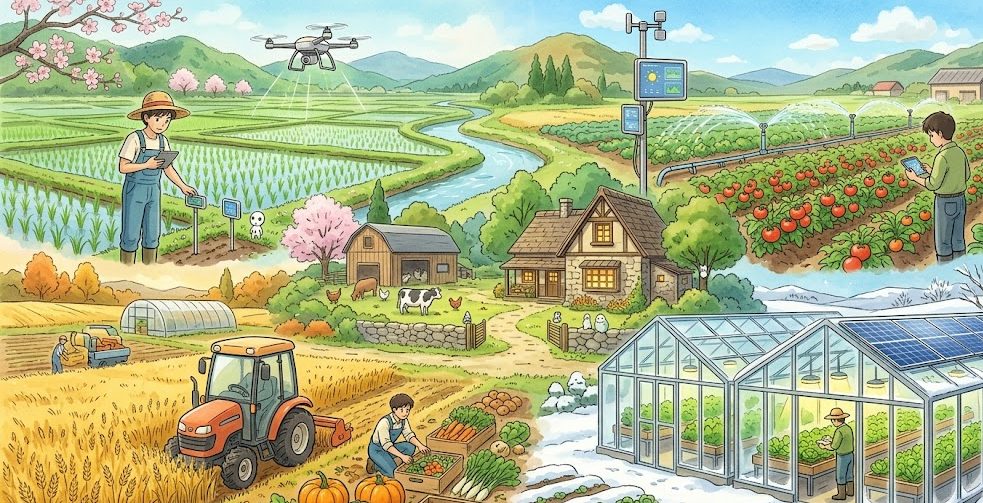
Agriculture is evolving. No longer just a battle against the elements, modern farming is about intelligence, data, and precision. “Smart Farming”—the integration of IoT, sensors, and predictive analytics—allows farmers to transition from reactive measures to proactive management.
Dirox+ 1
Whether you are managing a small-scale plot or a commercial operation, seasonal planning remains the backbone of success. This guide explores how to leverage smart technology across the distinct agricultural seasons to maximize yield, conserve resources, and increase profitability.
1. Understanding the Seasonal Cycle in Precision Farming
A farm’s success hinges on the sky above, but today’s farmers don’t just “watch the clouds.” They use technology to interpret patterns.
- The Kharif Season (Monsoon): Focuses on moisture management. Smart sensors monitor soil saturation to prevent root rot, while automated drainage systems ensure fields don’t stay waterlogged. AgriPlast
- The Rabi Season (Winter): Characterized by cooler, drier conditions. Here, smart irrigation and greenhouse climate control (temperature/humidity) are vital to maintaining growth when natural light and heat are limited. AgriPlast
- The Zaid Season (Summer): A period of intense heat. Focus shifts to heat-tolerant crop varieties and AI-driven predictive irrigation to combat evaporation and heat stress.
Expert Tip: Use historical data from previous years to identify “weather micro-climates” on your land. Digital farm management software can track these trends, helping you decide exactly when to plant for the best results.
2. Soil Health: The Foundation of Smart Agriculture
Before you plant a single seed, you must understand the “intelligence” of your soil. Traditional testing is periodic, but smart farming makes it continuous.
- Real-Time Monitoring: Instead of manual soil testing once a year, utilize IoT-based soil probes that provide live data on NPK (Nitrogen, Phosphorus, Potassium) levels, pH balance, and soil moisture.
- Variable Rate Technology (VRT): Based on the data gathered, apply fertilizers only where needed. This “precision nutrition” prevents soil degradation and significantly reduces the cost of chemical inputs. Valtra
Pro Tip: Invest in soil sensors that are durable enough to withstand seasonal shifts. Connecting these sensors to a mobile dashboard allows you to manage nutrient levels remotely, even if you are miles away from your fields.
Smarter Technologies
3. Water Optimization: Precision Irrigation
Water is your most precious resource. Traditional flood irrigation is wasteful, but precision irrigation—drip or sprinkler systems integrated with smart controllers—can cut water usage by up to 50%.
Dirox
Technologies to Implement:
- Soil Moisture Sensors: These prevent over-watering by triggering irrigation only when the soil reaches a specific, pre-defined moisture threshold.
- Weather Forecasting Integration: Smart irrigation controllers connect to local weather APIs. If rain is forecast, the system automatically pauses the irrigation cycle, saving water and electricity.
- Automated Drip Lines: By delivering water directly to the root zone, you reduce weed growth (which thrives on excess moisture in the furrows) and maximize nutrient uptake. AgriPlast
4. Selecting Climate-Resilient Crop Varieties
As weather patterns become more unpredictable, the “tried and true” seeds of the past may no longer be the best choice. Data-driven farming helps you make smarter selections:
- Drought-Tolerance: For regions expecting dry spells, data-backed seed selection can identify varieties that thrive with minimal water.
- Flood-Resistance: For monsoon-heavy areas, genetically resilient varieties can withstand temporary waterlogging, protecting your investment from total loss.
- Data-Driven Trials: Use a small section of your farm for “test crops.” Track their performance via an app to see if they outperform your standard seeds under current local conditions.
5. Automation and Remote Farm Management
One of the greatest benefits of smart farming is the removal of manual bottlenecks. Technology allows you to manage your farm as a business, not just a labor-intensive chore.
- Remote Surveillance: Use connected cameras to monitor gate security, livestock behavior, and asset integrity.
- Drone Scouting: Use drones for rapid field inspections. They can spot signs of pest outbreaks or nutrient deficiency long before they are visible to the naked eye. Agricultural Recruitment Specialists
- Decision-Support Systems: Integrate all your sensors into a single dashboard. When the system detects a drop in soil moisture or a spike in greenhouse temperature, it can send an alert directly to your smartphone, allowing for instant intervention. FarmRaise+ 1
Conclusion
Smart farming is not just for large-scale industrial operations; it is a scalable approach for any farmer looking to increase their profit margins. By integrating technology into your seasonal planning—from soil testing and water management to precision planting—you remove the guesswork and replace it with predictable, data-driven outcomes.
AgriPlast
Remember: Start small. You don’t need a fully autonomous farm overnight. Begin by automating one critical pain point, such as irrigation or soil monitoring, and build your digital infrastructure season by season. The future of farming is smart, sustainable, and increasingly profitable for those willing to adapt.
Would you like me to elaborate on specific low-cost IoT sensor kits that you can integrate into your current setup, or should we focus on the software side for tracking your seasonal yields?