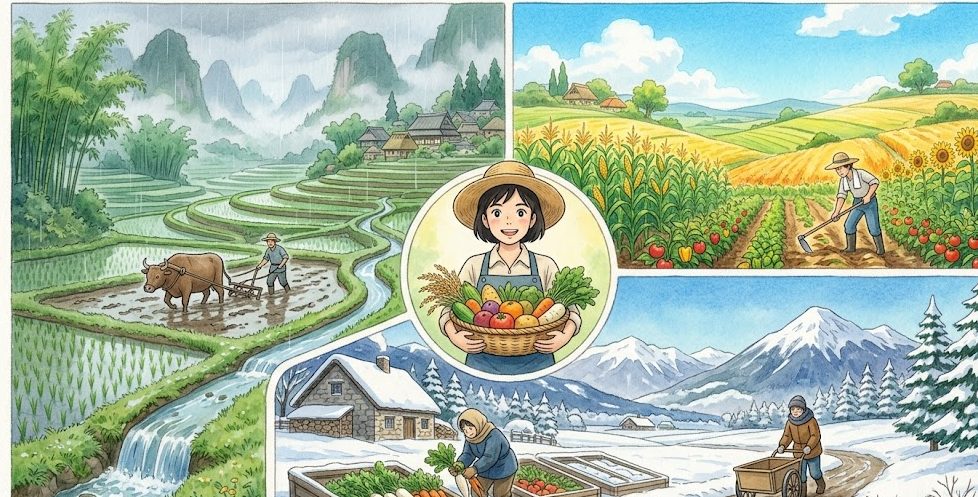
In the modern agricultural landscape, consistency is the greatest challenge. Traditional farming often relies on the unpredictable whims of nature, but the emergence of the “Seasonal Farm Hub” model, powered by smart technology, is changing the game. By integrating data, infrastructure, and adaptive planning, farmers can maintain year-round productivity regardless of the climate.
Whether you are managing a small community plot or a mid-sized commercial operation, creating a “Smart Farm Hub” is the key to maximizing efficiency. In this guide, we explore the essential techniques and technologies to keep your farm thriving in every season.
What is a Smart Seasonal Farm Hub?
A Smart Seasonal Farm Hub is a centralized operational model that aggregates resources, technology, and crop planning to ensure a continuous supply chain. Unlike traditional farming, which often experiences “feast or famine” cycles, a hub approach uses logistics, climate-controlled storage, and precision agriculture to smooth out production peaks and valleys.
The core of a smart hub is data-driven decision-making. By utilizing IoT (Internet of Things) sensors, drones, and farm management software, you can monitor soil moisture, temperature, and crop health in real-time. This allows for precise resource allocation—reducing water waste, lowering fertilizer costs, and preventing post-harvest loss.
Seasonal Strategies: Adapting Your Tech and Tactics
To operate successfully throughout the year, your management strategy must shift with the changing environment.
1. Spring: The Foundation Phase
Spring is all about preparation and precision planting.
- Sensor Calibration: Ensure all soil sensors are active to monitor temperature thresholds for seed germination.
- Data-Driven Planning: Use historical yield data to determine optimal planting densities.
- Early Weed Management: Utilize autonomous robotic weeders to clear fields without the need for excessive chemical herbicides, which preserves the soil biome for the heavy growth periods ahead.
2. Summer: Optimization and Water Management
Summer brings the challenge of heat stress and peak irrigation demand.
- Precision Irrigation: Implement drip irrigation systems connected to smart controllers that adjust watering schedules based on real-time evaporation rates.
- Remote Monitoring: If you manage a large area, use drone imaging to identify “hot spots” of crop stress or localized pest outbreaks before they spread across the entire farm.
- Shade Structures: For sensitive crops, integrate modular shade cloth systems that can be deployed or retracted based on local weather forecasts.
3. Autumn: The Harvest and Aggregation Phase
Autumn is the busiest time for your “Hub” infrastructure.
- Efficient Aggregation: This is where the “hub” model shines. Use central cleaning, grading, and sorting facilities to prepare produce for market immediately after harvest.
- Traceability: Implement digital logbooks to track the “farm-to-table” journey. Consumers increasingly demand to know the origin and handling of their food, and transparency builds brand trust.
4. Winter: Maintenance and Value-Added Production
Winter is not a period of inactivity; it is a time for optimization.
- Controlled Environment Agriculture (CEA): Use greenhouses or vertical farming units to grow high-value crops like microgreens or herbs during the off-season.
- Equipment Overhaul: Utilize IoT-connected diagnostic tools to perform preventative maintenance on tractors and irrigation pumps, ensuring everything is ready for the spring rush.
- Data Analysis: Spend the winter months analyzing the year’s data. Where were the bottlenecks? Which crops provided the best ROI? Use this to build a more resilient planting calendar for the next year.
Essential Infrastructure for a Smart Farm Hub
To turn a standard farm into a high-performing hub, you need specific “smart” infrastructure:
| Technology Component | Primary Benefit |
| IoT Soil Sensors | Real-time nutrient and moisture tracking. |
| Automated Greenhouses | Extends the growing season for sensitive crops. |
| Cold Storage Units | Prevents post-harvest spoilage and waste. |
| Inventory Software | Streamlines distribution and wholesale sales. |
| Drones/UAVs | Rapid mapping of field health and topography. |
The Benefits of Transitioning to a Smart Model
Adopting these techniques offers three primary advantages that go beyond just “easier farming.”
Financial Stability
By using a hub model to aggregate production, you gain better leverage in the market. You can supply consistent volumes to restaurants, schools, and grocery chains, which often pay a premium for reliable, local, and traceable produce.
Sustainability and Environmental Stewardship
Smart farming is inherently more sustainable. By applying inputs (water, fertilizer, and pesticides) only where and when they are needed, you significantly reduce chemical runoff and preserve the natural health of the ecosystem.
Scalability
The “hub” concept is modular. You can start with a basic sensor network and a small storage shed, then scale up to fully automated robotic systems and multi-farm cooperative networks as your operations grow.
Conclusion: The Future of Farming is Data-Driven
The transition to a Complete Seasonal Farm Hub is not merely about buying the latest technology; it is about adopting a mindset of continuous improvement. By integrating smart sensors, efficient storage solutions, and data-backed planning, you move away from the stress of reactive farming and toward a system of proactive, sustainable growth.
The technology exists today to make farming more profitable, more sustainable, and more resilient to climate change. As you begin your journey, focus on one area—perhaps data collection or improved storage—and build from there. The path to a smarter, more productive farm starts with a single step toward digital integration.
Are you ready to transform your farm into a smart hub? Start by identifying one recurring problem you face during the winter or summer months and look for a technological solution that can alleviate that specific bottleneck.