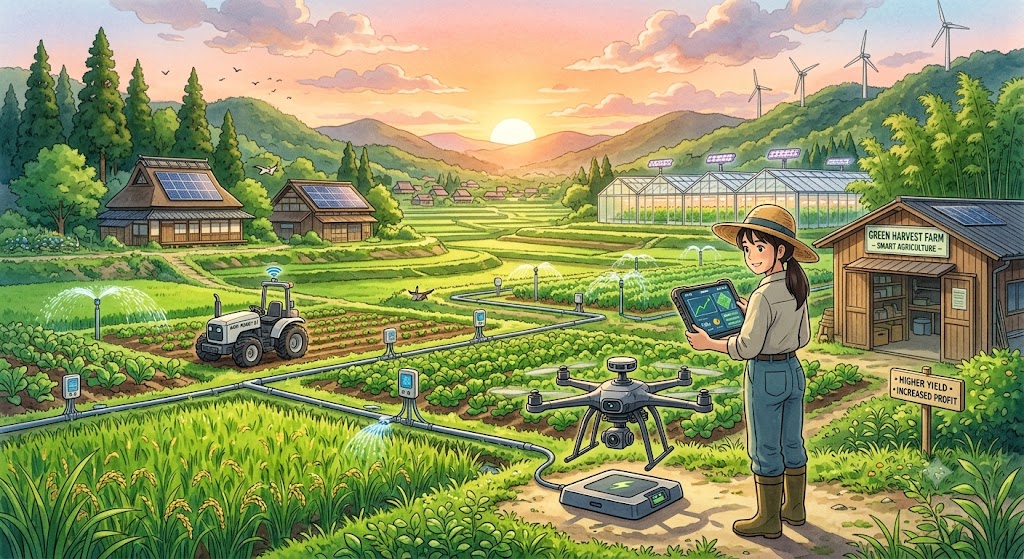
Agriculture is evolving rapidly as farmers face growing challenges such as rising production costs, changing weather patterns, labor shortages, and increasing food demand. To remain competitive and profitable, modern farmers are adopting smart farming techniques that improve efficiency, reduce waste, and maximize crop productivity.
Smart farming combines traditional agricultural knowledge with modern technologies and data-driven management practices. Rather than relying solely on experience or guesswork, farmers can use advanced tools and techniques to make informed decisions about irrigation, fertilization, pest control, and crop management.
The result is often higher yields, lower operating costs, better resource utilization, and increased profitability. Whether you operate a small family farm or a large commercial agricultural business, implementing smart farming techniques can help improve both productivity and long-term sustainability.
What Is Smart Farming?
Smart farming refers to the use of modern technologies, digital tools, automation, and data analysis to improve agricultural production and farm management.
The main objectives of smart farming include:
- Increasing crop yields
- Reducing production costs
- Improving resource efficiency
- Enhancing crop quality
- Supporting sustainable agriculture
- Maximizing farm profits
By using technology and accurate information, farmers can make better decisions and improve overall farm performance.
Why Smart Farming Matters
Traditional farming methods can still be effective, but modern agriculture requires greater efficiency to meet growing demands.
Benefits of Smart Farming
- Higher crop productivity
- Better resource management
- Reduced waste
- Improved profitability
- Enhanced sustainability
- Greater resilience to climate challenges
Smart farming allows farmers to optimize operations while protecting valuable resources.
Precision Agriculture
Precision agriculture is one of the most important smart farming techniques available today.
Instead of treating an entire field uniformly, precision agriculture allows farmers to manage specific areas based on actual field conditions.
Tools Used in Precision Agriculture
- GPS technology
- Soil sensors
- Yield monitors
- Satellite imagery
- Farm management software
Benefits
- More efficient fertilizer use
- Improved irrigation management
- Reduced input costs
- Better crop performance
Precision farming helps ensure resources are applied where they are needed most.
Conduct Regular Soil Testing
Healthy soil is essential for achieving maximum crop yields.
Soil testing provides valuable information about:
- Nutrient levels
- Soil pH
- Organic matter content
- Salinity
- Soil fertility status
Advantages of Soil Testing
- Accurate fertilizer recommendations
- Reduced nutrient waste
- Improved crop nutrition
- Better yield potential
Regular testing allows farmers to make informed nutrient management decisions.
Use Smart Irrigation Systems
Water management plays a major role in crop productivity.
Smart irrigation systems use sensors and data to determine when and how much water crops need.
Popular Irrigation Technologies
- Drip irrigation
- Soil moisture sensors
- Automated irrigation controllers
- Weather-based irrigation systems
Benefits
- Reduced water waste
- Lower irrigation costs
- Improved crop health
- Higher yields
Efficient water use helps farmers maximize productivity while conserving resources.
Monitor Crops with Drones
Agricultural drones have become powerful tools for crop management.
They can quickly collect valuable information about field conditions and plant health.
Common Drone Applications
- Crop scouting
- Field mapping
- Pest detection
- Disease monitoring
- Irrigation assessment
Why Drones Are Valuable
Farmers can identify problems early and take corrective action before significant losses occur.
Early intervention often improves yield outcomes and profitability.
Adopt High-Quality Seeds
Seed quality directly affects crop performance.
Investing in improved varieties can provide:
- Better germination rates
- Higher yield potential
- Disease resistance
- Climate adaptability
Choosing the Right Variety
Consider factors such as:
- Local climate
- Soil conditions
- Market demand
- Water availability
High-quality seeds often provide one of the best returns on investment.
Implement Crop Rotation
Growing the same crop repeatedly can reduce soil fertility and increase pest pressure.
Crop rotation helps maintain healthier fields and improves long-term productivity.
Benefits of Crop Rotation
- Better nutrient management
- Reduced disease outbreaks
- Improved soil structure
- Enhanced weed control
Rotating crops helps create a more balanced and productive farming system.
Utilize Cover Crops
Cover crops are grown primarily to improve soil health rather than for harvest.
Popular options include:
- Clover
- Rye
- Vetch
- Alfalfa
- Mustard
Advantages
- Improved soil fertility
- Reduced erosion
- Better moisture retention
- Weed suppression
- Increased organic matter
Healthy soil often leads to stronger crop growth and higher yields.
Apply Fertilizers More Efficiently
Smart nutrient management helps farmers maximize returns from fertilizer investments.
Best Practices
- Base applications on soil tests
- Split fertilizer applications
- Monitor crop nutrient needs
- Avoid over-application
Efficient fertilizer use reduces costs while improving crop performance.
Use Farm Management Software
Digital farm management platforms help farmers organize and analyze important information.
These systems can track:
- Crop performance
- Field activities
- Financial records
- Equipment maintenance
- Input usage
Benefits
- Better decision-making
- Improved planning
- Increased efficiency
- Enhanced profitability
Accurate record-keeping helps identify opportunities for improvement.
Integrate Weather Monitoring Tools
Weather conditions strongly influence crop growth and farm operations.
Modern weather technologies provide real-time information about:
- Rainfall
- Temperature
- Wind speed
- Humidity
- Storm forecasts
Benefits of Weather Monitoring
- Better irrigation planning
- Improved spraying decisions
- Reduced weather-related risks
- More efficient field operations
Timely information allows farmers to respond proactively to changing conditions.
Practice Integrated Pest Management
Pests can significantly reduce yields if not managed properly.
Integrated Pest Management (IPM) combines multiple strategies to control pests effectively.
IPM Techniques
- Crop rotation
- Biological controls
- Pest monitoring
- Resistant varieties
- Targeted treatments
Advantages
- Reduced pesticide costs
- Better environmental protection
- Improved crop health
- Long-term pest management
IPM helps farmers balance productivity with sustainability.
Reduce Post-Harvest Losses
Increasing yield is important, but protecting harvested crops is equally critical.
Ways to Reduce Losses
- Harvest at proper maturity
- Use suitable storage facilities
- Protect crops during transportation
- Monitor storage conditions
Reducing post-harvest losses directly increases profitability.
Embrace Automation
Automation is becoming increasingly important in modern agriculture.
Examples include:
- Automated irrigation systems
- Self-guided tractors
- Robotic harvesters
- Smart spraying equipment
Benefits of Automation
- Reduced labor costs
- Increased efficiency
- Improved accuracy
- Greater productivity
Automation allows farmers to manage larger operations more effectively.
Long-Term Benefits of Smart Farming
Farmers who adopt smart farming techniques often experience:
- Higher crop yields
- Improved crop quality
- Better resource efficiency
- Lower production costs
- Increased profitability
- Enhanced sustainability
These benefits contribute to stronger and more resilient farming businesses.
Frequently Asked Questions
1. What is smart farming?
Smart farming uses technology, automation, and data-driven management practices to improve agricultural productivity and efficiency.
2. How does precision agriculture increase yields?
Precision agriculture helps farmers apply water, fertilizers, and other inputs more accurately, improving crop growth and reducing waste.
3. Are drones useful for small farms?
Yes. Drones can help farms of various sizes monitor crop health, identify problems early, and improve management decisions.
4. Why is soil testing important?
Soil testing identifies nutrient deficiencies and helps farmers apply fertilizers more effectively.
5. Can smart farming increase profits?
Yes. By improving efficiency, reducing costs, and increasing yields, smart farming often leads to higher overall profitability.
Conclusion
Smart farming techniques are transforming agriculture by helping farmers achieve higher yields and greater profitability through better decision-making and resource management. Technologies such as precision agriculture, smart irrigation, drones, weather monitoring systems, farm management software, and automation enable growers to optimize every stage of crop production.
At the same time, practices such as soil testing, crop rotation, cover cropping, and integrated pest management strengthen the foundation of sustainable farming. By combining modern technology with sound agricultural principles, farmers can increase productivity, reduce waste, and build successful farming businesses that remain competitive in an ever-changing agricultural landscape.
Explore more helpful articles on our website for additional farming guides, agricultural innovations, and practical crop management strategies.