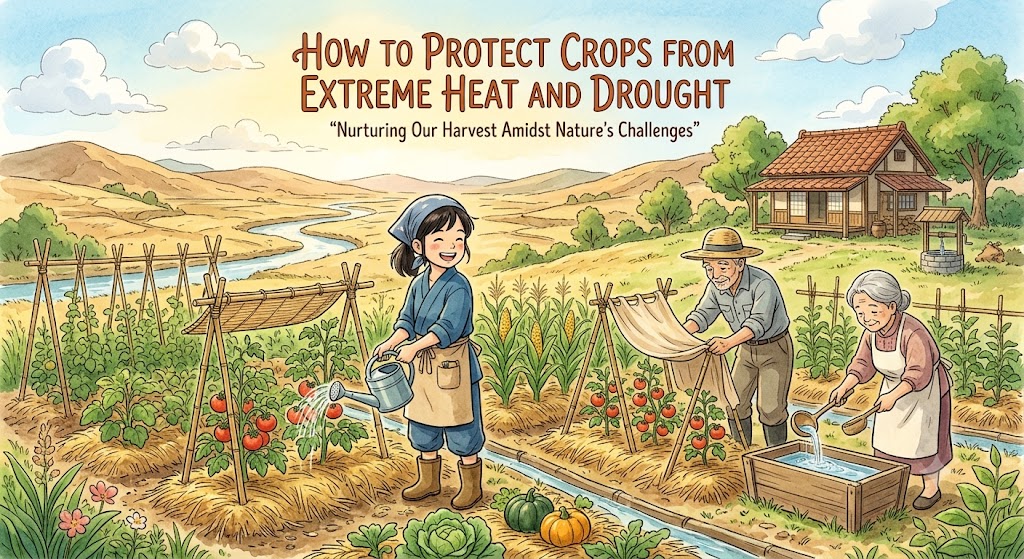
Every growing season brings its own challenges, but few are as difficult for farmers as prolonged heat waves and drought. Rising temperatures, irregular rainfall, and declining water availability can reduce crop yields, weaken plant health, and increase production costs. In many regions, these weather conditions have become more frequent, making crop protection an essential part of modern farming.
Although farmers cannot control the weather, they can control how their farms respond to it. Careful planning, efficient water management, healthy soil, and climate-smart farming practices can significantly reduce the damage caused by extreme heat and drought.
Protecting crops is no longer just about surviving one difficult season. It is about building a farming system that remains productive despite changing climate conditions.
Why Heat and Drought Damage Crops
Plants need a balance of sunlight, water, nutrients, and suitable temperatures to grow properly.
When temperatures become excessively high and rainfall is limited, crops begin to experience stress.
Common effects include:
- Slower growth
- Wilting leaves
- Poor flowering
- Reduced fruit development
- Lower grain filling
- Smaller harvests
Understanding these effects helps farmers respond before permanent damage occurs.
Build Healthy Soil Before the Dry Season
The ability of soil to retain water is one of the biggest factors influencing drought resistance.
Healthy soil acts like a sponge by storing moisture for longer periods.
Improve soil by adding:
- Compost
- Farmyard manure
- Green manure
- Crop residues
- Organic mulch
Increasing soil organic matter improves both water retention and root development.
Choose Heat- and Drought-Tolerant Crop Varieties
Not every crop responds to hot weather in the same way.
Modern agriculture offers many varieties that perform better under dry conditions.
Examples include:
- Drought-tolerant maize
- Sorghum
- Millet
- Cowpeas
- Chickpeas
- Heat-resistant tomato varieties
- Okra
Selecting suitable varieties reduces production risks before planting even begins.
Irrigate More Efficiently, Not More Frequently
During drought, every drop of water matters.
Rather than applying large amounts of water at random, farmers should irrigate strategically.
Efficient methods include:
✔ Drip irrigation
✔ Early morning watering
✔ Evening irrigation where appropriate
✔ Soil moisture monitoring
✔ Rainwater harvesting
These techniques reduce evaporation while delivering water directly to plant roots.
Protect the Soil With Mulch
Mulching is one of the simplest and most effective ways to conserve soil moisture.
Suitable mulch materials include:
- Straw
- Dry grass
- Wood chips
- Leaves
- Compost
- Crop residues
Mulch helps:
- Reduce evaporation
- Control weeds
- Regulate soil temperature
- Improve soil fertility over time
Healthy mulch creates a cooler environment around plant roots.
Reduce Water Loss Through Better Field Management
Fields lose water in many ways besides plant uptake.
Farmers can conserve moisture by:
- Removing weeds regularly
- Repairing irrigation leaks
- Avoiding unnecessary soil disturbance
- Maintaining proper plant spacing
Reducing competition for water allows crops to use available moisture more efficiently.
Monitor Crops for Early Signs of Heat Stress
Plants often show warning signs before serious damage occurs.
Watch for:
- Leaf curling
- Wilting during cooler hours
- Yellowing foliage
- Flower drop
- Slow growth
- Sunscald on fruits
Early action can prevent larger production losses.
Encourage Strong Root Development
Deep, healthy roots allow plants to access moisture stored deeper in the soil.
Practices that support root growth include:
- Avoiding soil compaction
- Balanced fertilization
- Proper planting depth
- Good drainage
- Organic matter improvement
Strong root systems improve drought tolerance naturally.
Use Shade Where Appropriate
Some high-value crops benefit from temporary protection during extreme heat.
Farmers may use:
- Shade nets
- Agroforestry systems
- Windbreak trees
- Protective structures
Reducing direct sunlight during the hottest hours can lower plant stress.
Feed Crops Carefully During Stress
Applying excessive fertilizer during severe drought may increase plant stress.
Instead:
- Apply nutrients based on crop needs.
- Improve soil organically where possible.
- Avoid unnecessary fertilizer applications during extreme heat.
Balanced nutrition helps crops recover more effectively.
Smart Technology Supports Better Decisions
Modern tools help farmers manage drought more efficiently.
Useful technologies include:
- Soil moisture sensors
- Weather forecasting apps
- Smart irrigation controllers
- Satellite crop monitoring
- Farm management software
These technologies reduce guesswork and improve water management.
Diversify Crops to Reduce Risk
Growing several crop species instead of relying on one provides greater financial security.
A diversified farm might include:
- Cereals
- Legumes
- Vegetables
- Fruit trees
- Forage crops
If one crop performs poorly during drought, others may continue producing.
Mistakes That Increase Heat Damage
Many crop losses result from avoidable management decisions.
Avoid:
- Midday irrigation
- Overcultivating dry soil
- Ignoring weed control
- Choosing unsuitable crop varieties
- Delaying irrigation repairs
- Leaving soil uncovered
Preventing these mistakes protects both crops and farm income.
Preparing for Future Climate Challenges
Climate experts expect heat waves and drought periods to become more frequent in many agricultural regions.
Forward-thinking farmers are preparing by investing in:
- Water storage systems
- Efficient irrigation
- Climate-resilient crop varieties
- Organic soil improvement
- Precision farming technologies
Preparation today strengthens tomorrow’s harvest.
Final Thoughts
Extreme heat and drought are among the greatest challenges facing modern agriculture, but they do not have to result in major crop losses. Farmers who build healthy soils, choose drought-tolerant varieties, conserve water efficiently, monitor crop health regularly, and adopt climate-smart farming practices can significantly improve the resilience of their farms.
Protecting crops from harsh weather is not based on a single solution. It is the combination of thoughtful planning, efficient resource management, and continuous adaptation that allows farms to remain productive even under difficult environmental conditions. As climate patterns continue to change, investing in resilience will become one of the most valuable decisions any farmer can make.
Frequently Asked Questions
1. What is the best way to protect crops during drought?
Improving soil organic matter, using mulch, adopting drip irrigation, and selecting drought-tolerant crop varieties are among the most effective strategies.
2. Why is mulching important in hot weather?
Mulch reduces evaporation, keeps soil cooler, suppresses weeds, and helps maintain moisture around plant roots.
3. Which crops tolerate drought better?
Sorghum, millet, cowpeas, chickpeas, okra, and several improved maize varieties are known for better drought tolerance.
4. Can technology help farmers manage drought?
Yes. Soil moisture sensors, weather forecasting tools, smart irrigation systems, and satellite monitoring help farmers make better water management decisions.
5. How can farmers prepare for future heat waves?
They can improve soil health, invest in efficient irrigation, diversify crops, adopt climate-smart farming techniques, and use drought-resistant crop varieties to strengthen long-term farm resilience.