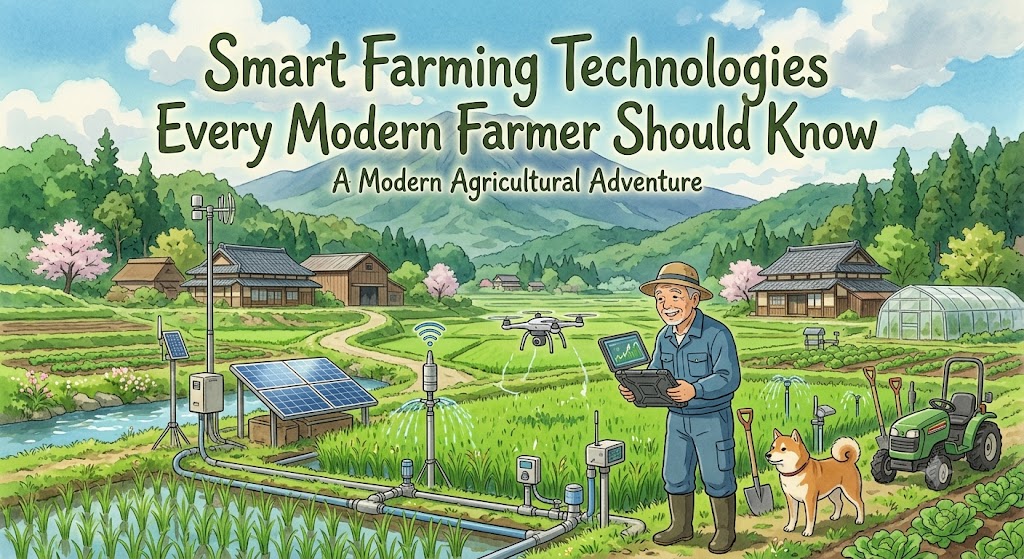
Agriculture is rapidly evolving as modern technologies transform the way crops and livestock are managed. Today’s farmers are no longer relying only on traditional knowledge and manual labor. Instead, they are using advanced tools such as sensors, drones, artificial intelligence, GPS-guided machinery, and automated irrigation systems to improve productivity, reduce costs, and make better farming decisions.
Smart farming combines digital technology with agriculture to increase efficiency while conserving natural resources. These innovations help farmers monitor crop health, manage water more effectively, reduce fertilizer waste, detect pests early, and maximize yields. Whether managing a small family farm or a large commercial operation, adopting smart farming technologies can improve profitability and prepare farms for future challenges.
This guide explores the most important smart farming technologies every modern farmer should know and explains how they contribute to sustainable and efficient agriculture.
What Is Smart Farming?
Smart farming, also known as precision agriculture or digital farming, is the use of technology to monitor, analyze, and manage agricultural activities more accurately. Instead of treating an entire field the same way, smart farming allows farmers to understand the specific needs of different areas within their fields.
Using real-time data collected from sensors, satellites, drones, weather stations, and farm equipment, farmers can make informed decisions that improve productivity while reducing unnecessary use of water, fertilizers, pesticides, and fuel.
The main objectives of smart farming include:
- Increasing crop yields
- Reducing production costs
- Improving resource efficiency
- Conserving soil and water
- Minimizing environmental impact
- Supporting long-term farm sustainability
1. GPS-Guided Farm Machinery
Global Positioning System (GPS) technology has transformed modern agriculture by improving the accuracy of field operations.
GPS-guided tractors and equipment help farmers:
- Plant crops in straight rows
- Reduce overlapping during spraying
- Improve fertilizer application
- Save fuel
- Increase field efficiency
Accurate navigation reduces wasted inputs while improving overall productivity.
Large commercial farms especially benefit from GPS-assisted machinery because it reduces labor time and operating costs.
2. Agricultural Drones
Drones have become one of the most valuable tools in precision agriculture.
They provide farmers with detailed aerial images of fields that are difficult to observe from the ground.
Drones help monitor:
- Crop growth
- Plant health
- Water stress
- Weed infestations
- Pest damage
- Nutrient deficiencies
- Field drainage
Some advanced drones also support precision spraying, seed distribution, and fertilizer application.
Regular aerial monitoring allows farmers to identify problems early before they spread across the entire field.
3. Soil Moisture Sensors
Efficient irrigation begins with understanding how much water crops actually need.
Soil moisture sensors measure the amount of water available around plant roots.
These sensors help farmers:
- Prevent overwatering
- Reduce irrigation costs
- Improve water conservation
- Increase crop health
- Lower energy consumption
Instead of irrigating on a fixed schedule, farmers can apply water only when the soil actually requires it.
4. Smart Irrigation Systems
Traditional irrigation often wastes water.
Smart irrigation systems automatically adjust watering schedules based on:
- Soil moisture
- Weather conditions
- Crop growth stage
- Temperature
- Humidity
These systems reduce water waste while maintaining optimal growing conditions.
Many smart irrigation controllers can be monitored remotely using mobile applications.
This technology is especially valuable in regions experiencing water shortages.
5. Weather Monitoring Stations
Weather plays a major role in agriculture.
Modern weather stations installed on farms provide real-time information about:
- Rainfall
- Temperature
- Wind speed
- Humidity
- Solar radiation
- Air pressure
This information helps farmers plan:
- Irrigation
- Fertilizer application
- Spraying
- Harvesting
- Planting
Accurate weather monitoring reduces risks associated with changing climate conditions.
6. Internet of Things (IoT) Devices
The Internet of Things connects farm equipment, sensors, and monitoring devices through the internet.
IoT systems continuously collect information from different parts of the farm.
Examples include:
- Soil sensors
- Water tanks
- Livestock trackers
- Weather stations
- Irrigation controllers
Farmers receive real-time updates on mobile devices or computers, allowing quick responses to changing conditions.
IoT improves efficiency while reducing manual monitoring.
7. Artificial Intelligence (AI)
Artificial Intelligence is becoming increasingly important in agriculture.
AI analyzes large amounts of farming data to support better decision-making.
AI applications include:
- Disease detection
- Yield prediction
- Pest identification
- Crop monitoring
- Fertilizer recommendations
- Irrigation scheduling
Machine learning systems continue improving as they analyze additional farm data over time.
AI allows farmers to identify problems earlier than traditional observation methods.
8. Satellite Monitoring
Satellite imagery provides valuable information over large agricultural areas.
Satellite technology helps monitor:
- Vegetation health
- Soil moisture
- Crop development
- Drought stress
- Field variability
Farmers can identify areas requiring additional attention without visiting every part of the field.
Satellite monitoring is especially useful for large farms covering hundreds of hectares.
9. Precision Fertilizer Application
Applying the same fertilizer rate across an entire field often leads to waste.
Precision agriculture allows nutrients to be applied according to actual crop requirements.
Using soil testing, GPS mapping, and variable-rate equipment, farmers can apply:
- More fertilizer where needed
- Less fertilizer where nutrients are already sufficient
Benefits include:
- Lower fertilizer costs
- Better nutrient efficiency
- Reduced environmental pollution
- Improved crop growth
10. Smart Pest and Disease Monitoring
Early detection is essential for effective pest and disease control.
Modern technologies use cameras, sensors, drones, and AI to identify early symptoms.
These systems allow farmers to:
- Detect outbreaks quickly
- Reduce pesticide use
- Protect beneficial insects
- Improve crop quality
Targeted treatment is often more effective than spraying entire fields unnecessarily.
11. Farm Management Software
Farm management software helps organize daily agricultural activities.
These digital platforms allow farmers to record:
- Planting dates
- Fertilizer applications
- Irrigation schedules
- Pest observations
- Harvest yields
- Labor costs
- Machinery maintenance
Accurate records improve planning and financial management.
Many systems also generate reports that support better decision-making.
12. Livestock Monitoring Technology
Smart farming also benefits livestock producers.
Wearable sensors and electronic identification systems monitor:
- Animal movement
- Feeding behavior
- Health status
- Body temperature
- Reproduction
- Milk production
Early detection of illness improves animal welfare while reducing treatment costs.
13. Automated Greenhouses
Modern greenhouses use automation to control growing conditions.
Systems automatically regulate:
- Temperature
- Humidity
- Irrigation
- Ventilation
- Lighting
- Carbon dioxide levels
Automation creates stable growing conditions that support year-round crop production.
Greenhouse technology is particularly valuable for high-value vegetables, herbs, and flowers.
14. Agricultural Robots
Agricultural robotics continues to develop rapidly.
Robots are being used for:
- Harvesting
- Planting
- Weeding
- Fruit picking
- Crop monitoring
Automation reduces labor requirements while improving operational efficiency.
Although currently more common on larger farms, robotic technology is expected to become increasingly accessible.
15. Digital Marketplaces
Technology now helps farmers sell products more efficiently.
Digital platforms connect farmers directly with:
- Consumers
- Retailers
- Restaurants
- Food processors
- Wholesalers
Benefits include:
- Better price transparency
- Larger customer base
- Reduced marketing costs
- Faster communication
Direct marketing often increases farm profitability.
Benefits of Smart Farming Technologies
Adopting smart technologies provides numerous advantages.
Major benefits include:
- Higher crop yields
- Better water conservation
- Reduced fertilizer waste
- Lower pesticide use
- Improved labor efficiency
- Better financial planning
- Reduced fuel consumption
- Improved environmental sustainability
- Better disease management
- Increased farm profitability
Technology supports more informed decisions throughout the growing season.
Challenges of Smart Farming
Despite many advantages, some challenges remain.
These include:
- Initial investment costs
- Internet connectivity limitations
- Technical training requirements
- Equipment maintenance
- Data management
- Technology compatibility
However, many technologies become more affordable over time as adoption increases.
Farmers can begin with simple digital tools and gradually expand their smart farming systems.
Tips for Farmers Starting Smart Agriculture
Farmers interested in adopting modern technology should begin gradually.
Helpful steps include:
- Conduct regular soil testing.
- Install simple weather monitoring equipment.
- Use GPS-enabled smartphones for field mapping.
- Adopt efficient irrigation systems.
- Keep digital farm records.
- Learn from agricultural extension programs.
- Evaluate return on investment before purchasing expensive equipment.
Technology should solve practical farming problems rather than adding unnecessary complexity.
Frequently Asked Questions
What is the most useful smart farming technology for beginners?
Soil moisture sensors, weather monitoring, GPS mapping, and farm management software are practical starting points for many farmers because they improve decision-making without requiring highly complex systems.
Are smart farming technologies only suitable for large farms?
No. Many technologies, including mobile farm management apps, weather stations, smart irrigation controllers, and soil sensors, are affordable and useful for small farms as well.
How do drones help farmers?
Drones monitor crop health, identify pest and disease problems, evaluate irrigation performance, detect nutrient deficiencies, and provide detailed aerial images that support precision farming decisions.
Can smart farming reduce production costs?
Yes. By applying water, fertilizers, and crop protection products only where needed, farmers can reduce waste, lower input costs, and improve overall efficiency.
Is smart farming environmentally friendly?
Yes. Smart farming supports sustainable agriculture by conserving water, reducing chemical use, improving nutrient management, lowering fuel consumption, and protecting natural resources.
Conclusion
Smart farming technologies are changing agriculture by making farming more precise, efficient, and sustainable. Innovations such as GPS-guided machinery, drones, soil moisture sensors, weather stations, artificial intelligence, IoT devices, automated irrigation, satellite monitoring, and digital farm management software help farmers make informed decisions based on real-time data. These tools improve crop health, conserve resources, reduce production costs, and increase long-term profitability.
Farmers do not need to adopt every technology at once. Starting with practical solutions that address specific farm challenges allows gradual modernization while minimizing investment risks. As technology continues to evolve, smart farming will play an increasingly important role in ensuring food security, protecting the environment, and building resilient agricultural systems capable of meeting the demands of the future.