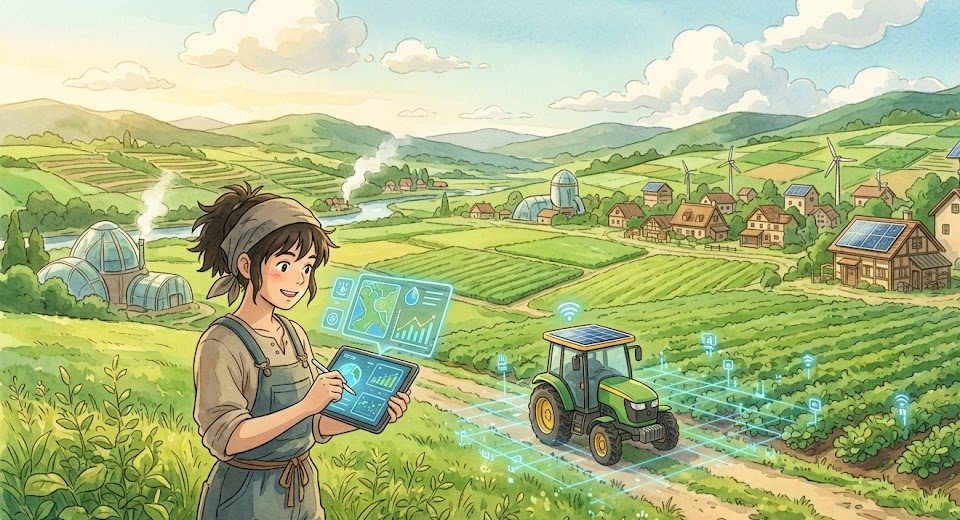
In the rapidly evolving agricultural landscape of 2026, the traditional image of farming is being replaced by a high-tech, data-driven reality known as Smart Farming. For modern growers, this “Digital Field” represents a goldmine of opportunity to maximize productivity while achieving Financial Freedom through increased efficiency and reduced costs. By integrating Artificial Intelligence (AI), the Internet of Things (IoT), and “Natural Farming” principles, agriculture is becoming a precise, low-maintenance, and highly profitable venture.
1. The Brain of the Farm: AI and Predictive Analytics
Artificial Intelligence is the core innovation revolutionizing the modern harvest. In 2026, AI acts as the central brain of the “Farming Innovation Hub,” moving beyond simple automation to predictive intelligence.
- Predictive Decision-Making: AI models analyze decades of weather patterns and real-time soil data to provide an accurate blueprint for every planting season.
- Yield Optimization: Computer vision and AI monitor crop health in real-time, identifying nutrient deficiencies or pest threats before they are visible to the human eye.
- Market Intelligence: AI can predict price fluctuations, allowing farmers to harvest and sell their High-Value Cash Crops at the most lucrative moments.
2. Precision Irrigation: Treating Water as a Digital Asset
Water management is a critical pillar of Smart Farming, especially in the face of unpredictable climate patterns. “Water-saving techniques” are no longer just for conservation; they are a mechanical necessity for boosting profit margins.
- IoT Soil Sensors: These sensors provide real-time moisture data directly to a farmer’s dashboard, ensuring that hydration is only provided when the data indicates a need.
- Automated Drip Systems: By delivering water and liquid bio-fertilizers directly to the root zone, these systems reduce waste by up to 60%.
- Mulching as a Shield: A cornerstone of Practical Farming, mulching acts as a protective blanket that suppresses weeds and significantly reduces evaporation, keeping the root zone moist and cool.
3. Healing the Soil: The Biological Engine
Innovation in 2026 is deeply rooted in “Natural Farming” principles, where “healing the soil naturally” ensures long-term resilience and Zero Chemical Costs.
- The No-Till Advantage: Avoiding heavy plowing preserves the delicate fungal networks (mycorrhizae) that act as a natural nutrient delivery system for plants.
- Organic Bio-Inputs: The secret to high-yield harvests lies in fermented organic matter and bio-inputs that “recharge” the soil’s microbial life without the harmful effects of synthetic chemicals.
- Integrated Livestock: Combining dairy, poultry, or goat farming creates a Closed-Loop system where animals provide manure for bio-inputs, and crop residues serve as nutritious feed.
4. Robotics and Drones: The Low-Maintenance Revolution
The labor-intensive nature of traditional agriculture is being transformed by autonomous machinery and robotics.
- Autonomous Machinery: GPS-guided tractors and harvesters can work around the clock with centimeter-level precision, optimizing land use for both large-scale operations and Micro Farming.
- Drones and Aerial Imaging: Drones provide “eyes in the sky,” using multispectral mapping to identify plant stress, disease, or dehydration from above.
- Targeted Intervention: Robots and drones can apply organic bio-inputs only to specific plants that need them, keeping costs at near-zero.
5. Transparency and Market Access via Blockchain
In 2026, how you sell is as important as what you grow. Consumers now demand transparency regarding their food’s origin.
- Traceability: Blockchain technology allows farmers to record every stage of a crop’s life—from seed selection to the “Zero Chemical” inputs used—adding immense value to the brand.
- Direct-to-Consumer Access: Digital platforms allow farmers to bypass middlemen, selling directly to high-end restaurants and health-conscious individuals to secure fair, premium pricing.
Conclusion: Your Path to a Digital Goldmine
The Digital Field is the ultimate Practical Farming Guide for the 2026 economy. By combining the precision of Smart Technology with the sustainable wisdom of Natural Farming, growers can transform their land into a resilient, high-yield asset that requires less effort and zero chemical costs.
Whether you are scaling a commercial innovation hub or practicing intensive Micro Farming, the goal remains the same: grow more, waste less, and achieve Financial Freedom by embracing the future of agriculture.