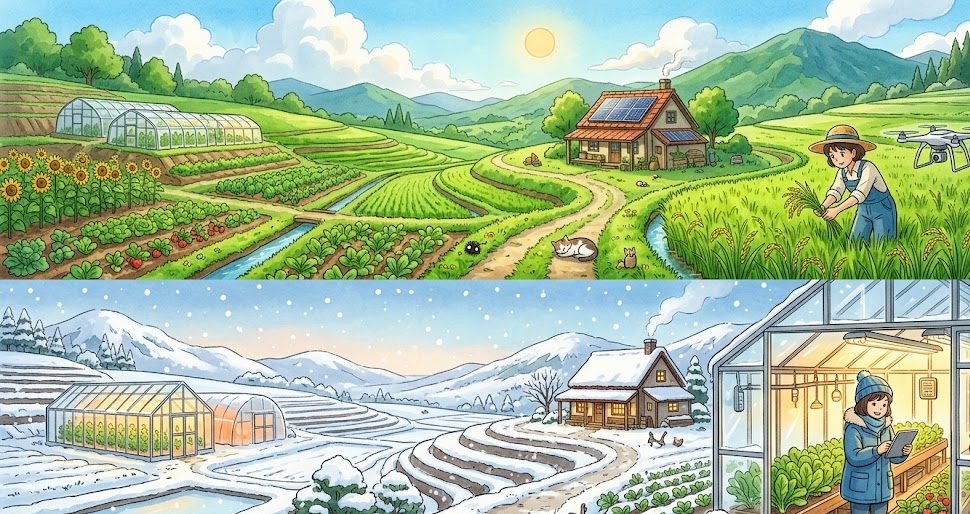
The global agricultural landscape is standing at a critical crossroads where traditional industrial methods are facing the limits of chemical dependency and soil depletion. As we move toward a more sustainable future, a new movement is emerging—one that combines AgriTech & Innovation with deep-rooted biological wisdom. For the modern farmer and the digital entrepreneur, the goal is no longer just about volume; it is about “Smart Farming” that ensures long-term profitability and ecological health throughout every season.
Phase 1: The Seasonal Strategy Blueprint
Success in agriculture requires a “Year-Round Strategy,” rotating crops according to the season to maintain soil fertility and a steady income stream. Before planting a single seed, successful modern farming requires a strategic “Blueprint” that integrates innovation with traditional wisdom.
- Smart Planning: A successful hub requires a strategic blueprint that coordinates modern tech with localized environmental data.
- AgriTech Integration: Utilizing “AI and Smart Technology” allows for precision agriculture where sensors and data analytics monitor moisture levels and nutrient requirements in real-time.
- Precision Management: “Smart Crop Farming” involves moving from generalized practices to precision-based management where resource waste is drastically reduced.
- Digital Wealth Blueprint: For the digital entrepreneur, this involves creating resources for “Freelancing & Remote Jobs” and generating “Passive Income” through automated farm management systems.
Phase 2: Summer Farming: Navigating the Heat
“Summer Farming” presents unique challenges, primarily involving heat stress and water scarcity. Mastering resource management is the key to maintaining yields during the peak of the sun.
- Water Saving Farming: Automated irrigation, drip systems, and rainwater harvesting ensure every drop is utilized effectively, which is vital for survival in drought-prone areas.
- Precision Irrigation: AI-driven conservation systems ensure that water is delivered exactly when and where it is needed, reducing waste by up to 50%.
- Hydroponic Integration: This soil-less method allows for “Smart Crop Farming” in controlled environments, using significantly less water than traditional field farming.
- Natural Protection: Utilizing mulching and cover cropping helps keep the soil covered and protected, preventing moisture loss and suppressing weeds.
Phase 3: Winter Farming: Thriving in the Cold
“Winter Farming” requires different strategies to protect crops from frost and maintain production during shorter daylight hours.
- Controlled Environments: Technologies like Hydroponics and specialized indoor setups allow for the year-round production of “Exotic Vegetable Farming” regardless of external weather conditions.
- Climate Adaptation: Implementing advanced “Climate & Soil Management” allows farmers to prepare for and adapt to unpredictable weather patterns, minimizing risk.
- Mushroom Farming: This requires minimal land and can be grown in controlled environments, providing a steady income stream regardless of the season.
- Forgotten Crops Farming: Reintroducing resilient, low-input “Forgotten Crops” adds genetic diversity and acts as a natural insurance policy against extreme seasonal shifts.
Phase 4: Healing the Soil Naturally for Year-Round Health
At the heart of seasonal success is a return to soil health. Treating the soil as a living ecosystem rather than just a medium for plants is essential for “Sustainable Farming”.
- Natural Soil Healing: Instead of relying on synthetic inputs, the focus is on natural restoration and soil science to enhance microbial health and long-term productivity.
- Restoring Nutrient Cycles: Focusing on organic matter enrichment ensures the ground remains productive for generations to come.
- Microbial Synergy: Fostering beneficial bacteria and fungi helps crops feed and protect themselves naturally against seasonal stressors.
- Carbon Sequestration: Healthy soil management improves yields while helping to combat climate change by trapping carbon in the ground.
Phase 5: Building the Circular Innovation Hub
A truly modern farm minimizes waste by creating a closed-loop system where various activities support one another throughout the year.
- Livestock & Dairy Hub: Integrating “Poultry Farming” or dairy animals provides a natural source of fertilizer for “Natural Soil Healing”.
- Animal Health Mastery: Maintaining high standards of animal care ensures that livestock remain productive assets rather than seasonal liabilities.
- Fish & Aqua Farming: Nutrient-rich water from aquaculture can be used to irrigate high-value crops, creating a symbiotic growth relationship.
- Integrated Pest Management (IPM): This involves using predatory insects and trap crops to keep pest populations below the threshold of economic damage without harsh chemicals.
Conclusion: The Future of Your Seasonal Harvest
The future of farming lies in the balance between the precision of AgriTech & Innovation and the foundational principles of soil and water conservation. By mastering these “Smart Farming” techniques across both summer and winter seasons, we can ensure harvests that are as profitable as they are sustainable.
Whether you are an established farmer or a digital entrepreneur building an “Innovation Hub,” the digital revolution offers the tools needed for a “Digital Wealth Blueprint” in the agricultural sector. The era of smart, sustainable, and high-yield year-round farming has arrived.