For generations, farming was largely a game of observation and intuition. Growers looked at the sky to predict rain, crumbled dirt in their hands to test moisture, and hoped their fertilizer applications would hit the mark. While that hands-on experience remains invaluable, the modern agricultural landscape demands a more exact approach.
Today, farmers face the immense challenge of feeding a rapidly growing global population while dealing with unpredictable weather patterns and rising input costs. The margin for error is shrinking. This is where smart farming techniques come into play. By combining traditional agronomic knowledge with modern data, sensors, and automation, agriculture is undergoing a quiet revolution. Smart farming is no longer just a futuristic concept for massive corporate operations; it is a practical, highly profitable strategy that independent growers can adopt right now to maximize their land’s potential.
Precision Agriculture and Variable Rate Technology
The days of treating an entire field as a single, uniform block are over. Anyone who has spent time on a tractor knows that soil quality, drainage, and fertility can change drastically from one end of a field to the other. Applying the exact same amount of seed and fertilizer across every acre is a recipe for wasted money and lost yield potential.
Precision agriculture solves this problem through Variable Rate Technology (VRT). Using data from historical yield maps and grid soil sampling, VRT equipment adjusts the output of seeds, nutrients, and chemicals on the fly. As a tractor drives over a highly fertile zone, the planter automatically drops more seeds to maximize the heavy yield potential. When it crosses a sandy, lower-quality ridge, the equipment scales back the seed density and reduces fertilizer output. This ensures every dollar spent on inputs is placed exactly where it will generate the highest return.
IoT Sensors for Soil and Moisture Management
Water is arguably the most critical and expensive resource on any farm. Overwatering leaches valuable nutrients deep past the root zone and creates a breeding ground for fungal diseases. Underwatering stresses the crop and permanently stunts growth. Relying on visual observation or calendar schedules often leads to one of these two extremes.
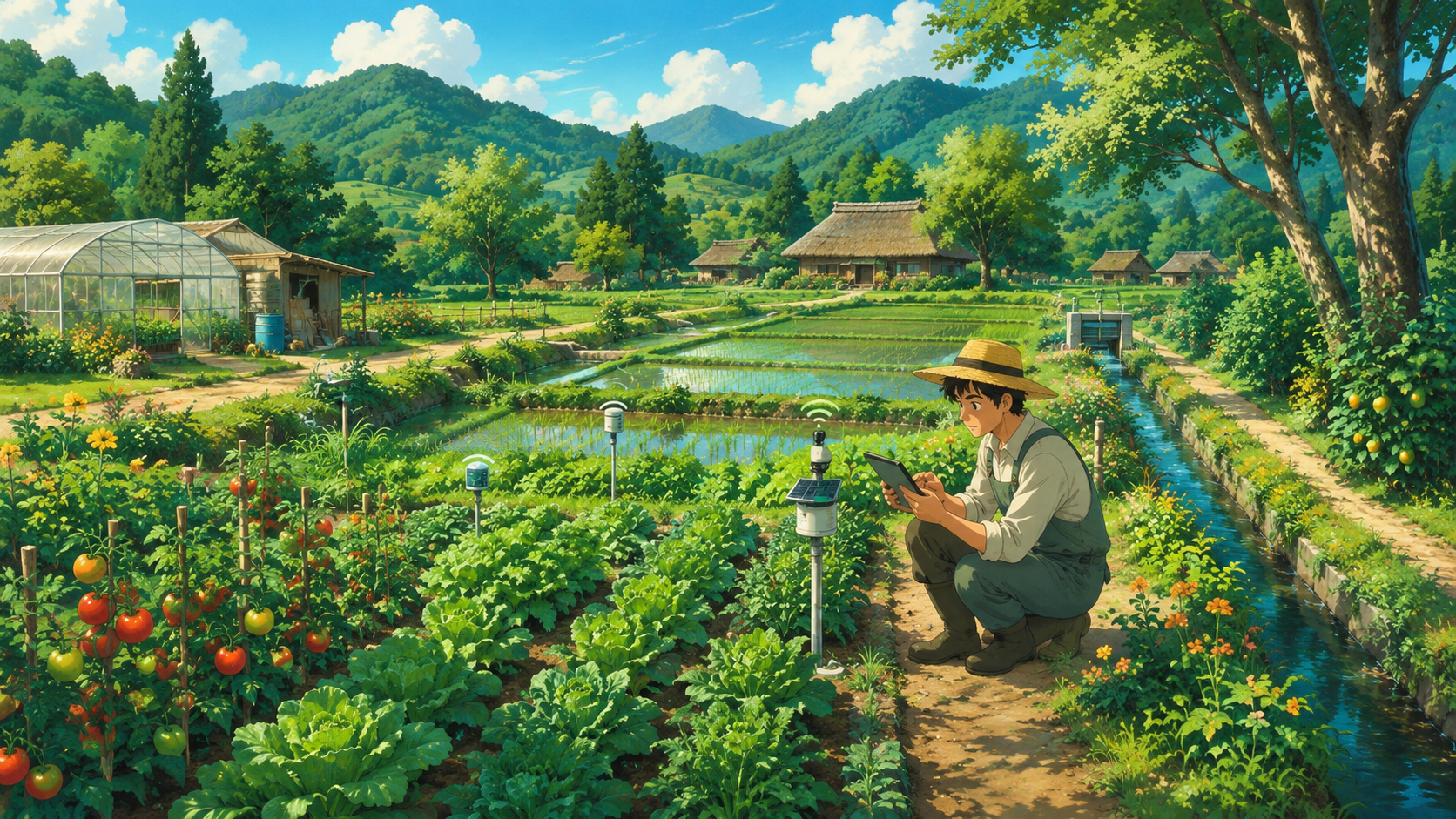
Internet of Things (IoT) soil sensors remove the guesswork from irrigation. These small, durable probes are pushed into the ground at varying depths to measure exact volumetric water content and soil temperature. The sensors transmit this data wirelessly to a farmer’s smartphone in real time. Instead of turning on the irrigation pumps because it has not rained in a week, a grower only triggers the water when the root zone actually drops below its optimal moisture threshold. This technique alone can reduce farm water usage by over twenty percent while keeping crops perfectly hydrated.
Aerial Field Scouting with Drones
Walking a massive field to look for pests or diseases is incredibly inefficient. By the time an issue is clearly visible from the edge of the field or the cab of a truck, the damage is usually widespread and expensive to treat.
Agricultural drones have completely changed field scouting. Equipped with multispectral cameras, these drones fly autonomously over crops and capture light reflections that are invisible to the human eye. Healthy, actively photosynthesizing plants reflect near-infrared light differently than stressed plants. Software translates these images into color-coded health maps. A grower can instantly spot a small, ten-foot patch of insect damage or nutrient deficiency in the middle of a dense fifty-acre field, allowing them to spot-treat the exact problem area before it spreads.
Practical Tips for Modern Growers
- Map Your Field Topography: Before buying expensive sensors, use free or low-cost satellite mapping tools to understand the natural drainage and elevation changes on your land. This helps you identify where to place physical soil probes later.
- Keep Physical Records: Technology occasionally fails. Always maintain a physical journal of your planting dates, weather anomalies, and harvest results. Comparing your digital data against written field notes provides the best overall picture of farm health.
- Regularly Calibrate Equipment: A smart tractor is useless if the mechanical spreader is jammed or out of calibration. Make equipment maintenance a strict weekly routine during the growing season to ensure your precision data matches your actual field application.
A Real-Life Example of a Farm’s Digital Turnaround
To see how these techniques work in reality, look at the experience of a family-owned soybean operation in the American Midwest. For years, they struggled with stagnant yields and rising chemical costs. They managed weeds by spraying their entire 800 acres with broad-spectrum herbicides multiple times a season.
Three years ago, they hired a local service to fly an agricultural drone over their fields early in the season. The resulting weed-pressure maps revealed that only about 15% of their total acreage actually harbored severe weed outbreaks.
Instead of blanket-spraying the entire farm, they loaded the drone’s coordinates into their GPS-guided sprayer, which automatically turned the spray nozzles on and off precisely over the weed patches. They cut their herbicide costs by nearly half in a single year. Furthermore, because the healthy soybeans were not subjected to the stress of unnecessary chemical applications, their overall yield increased by four bushels per acre.
Common Mistakes to Avoid
- Over-Investing Too Early: Buying a fleet of drones and a brand-new smart tractor on day one is a massive financial risk. Implement one piece of technology at a time to ensure it actually solves a specific problem on your farm.
- Ignoring Data Security: When you use digital farm management software, you are generating incredibly valuable data about your yields and land value. Always read the provider’s terms of service and ensure you retain complete ownership of your farm data.
- Forgetting Basic Agronomy: A moisture sensor cannot fix heavily compacted soil, and a drone cannot fix poor crop rotation. Smart farming tools are meant to enhance good farming practices, not replace them.
Step-by-Step Guide to Adopting Smart Farming
If you want to modernize your farm without taking on massive debt or overwhelming your daily operations, follow this phased approach:
- Identify the Main Bottleneck: Analyze your expenses. Are you spending too much on fertilizer? Is water access your biggest issue? Target your first tech investment directly at your largest problem.
- Start with Software: Before buying physical hardware, download reputable agronomic apps. Track local hyper-weather data and use basic digital scouting tools on your phone to get comfortable looking at digital field metrics.
- Run a Test Plot: If you decide to try variable rate fertilizer or soil sensors, do not apply them to your entire farm. Section off a 10-acre test plot. Treat the rest of the farm normally and compare the yield and costs at the end of the harvest.
- Upgrade Machinery Gradually: You rarely need to buy brand new equipment. Look for aftermarket GPS guidance kits and auto-steer retrofits that can be installed on older, reliable tractors.
- Analyze the ROI: After one season, sit down and calculate the exact return on investment. If the technology saved time, reduced inputs, or boosted yield enough to pay for itself, it is time to scale it across the rest of the farm.
Conclusion
Smart farming is simply the next logical step in agricultural evolution. It represents a shift from managing a farm based on broad averages to managing it based on precise, localized facts. By embracing targeted data, smart irrigation, and modern field scouting, growers can protect their soil health, slash their operating costs, and produce more food on the same amount of land. The tools available today allow any farmer, regardless of the size of their operation, to work smarter, not just harder.
Frequently Asked Questions
1. Do I need a massive farm to benefit from smart agriculture?
No. While large-scale machinery is built for massive acreage, many smart farming tools are perfect for small and mid-sized farms. Mobile scouting apps, targeted soil testing, and small-scale drip irrigation systems provide an excellent return on investment even on a five-acre plot.
2. Is agricultural data difficult to understand without an IT background?
Most modern agricultural software is designed specifically for growers, not computer scientists. The dashboards are generally highly visual, using simple color-coded maps and clear graphs to show you exactly what is happening in your fields. If you can navigate a smartphone, you can learn farm management software.
3. How do soil moisture sensors connect to the internet from a remote field?
If a field lacks reliable cellular service, many sensor networks use LoRaWAN (Long Range Wide Area Network) technology. This allows the sensors in the dirt to beam small packets of data over several miles to a single receiver located at your main barn or house, which is then connected to standard Wi-Fi.
4. Will drones replace the need to physically check my crops?
Drones are excellent for finding problems quickly and covering large areas, but they do not replace human judgment. A drone will tell you where a problem is, but you will often still need to walk out to that specific spot to physically inspect the leaf and determine what the problem is.
5. Are smart farming upgrades too expensive for a tight budget?
They do not have to be. The most expensive route is buying brand-new machinery. However, you can rent drones, use free satellite imagery services, or install relatively cheap aftermarket GPS monitors on older equipment. The key is to let the savings from a small tech investment fund your next upgrade.