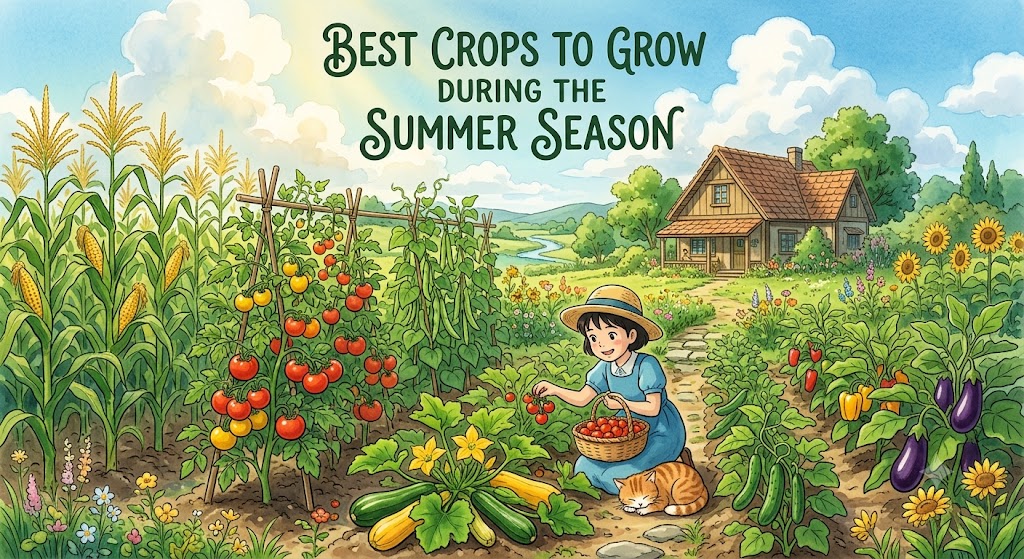
Summer is often considered one of the most challenging seasons for farming. High temperatures, intense sunlight, rapid evaporation, and occasional water shortages can make crop production difficult. However, for farmers who select the right crops and follow suitable management practices, summer can also become one of the most productive and profitable growing seasons.
Many vegetables, fruits, legumes, and cereal crops perform exceptionally well in warm conditions when they receive proper irrigation and care. The key is choosing heat-tolerant varieties that match the local climate and market demand. Successful summer farming is not about fighting the weather—it is about growing crops that naturally thrive in it.
Whether you are cultivating a small family garden or managing a commercial farm, understanding which crops perform best during the summer months can help improve productivity and increase farm income.
What Makes a Good Summer Crop?
Not every plant can tolerate high temperatures.
The most successful summer crops usually have several important characteristics.
They often provide:
- Heat tolerance
- Fast growth
- Efficient water use
- Strong market demand
- Good disease resistance
- Reliable yields
Selecting crops with these qualities increases the chances of a successful harvest.
Tomatoes
Tomatoes remain one of the most profitable summer vegetables in many regions.
With proper irrigation and support systems, healthy tomato plants produce abundant harvests throughout the season.
Why Grow Tomatoes?
- Strong consumer demand
- High market value
- Multiple harvests
- Suitable for fresh markets and processing
Mulching and regular watering help maintain fruit quality during hot weather.
Okra
Okra is naturally adapted to warm climates and continues producing throughout the hottest months.
Major advantages include:
- Excellent heat tolerance
- Continuous harvesting
- Low maintenance
- Consistent market demand
Its ability to perform well in high temperatures makes it a favorite among summer vegetable growers.
Cucumbers
Cucumbers grow rapidly during warm weather when supplied with sufficient moisture.
Benefits include:
✔ Quick harvests
✔ High productivity
✔ Popular fresh market crop
✔ Suitable for vertical cultivation
Proper irrigation helps prevent bitterness during hot periods.
Eggplant
Eggplant performs exceptionally well in warm growing conditions.
Commercial growers value it because of:
- Long harvesting period
- Strong consumer demand
- Good adaptability
- Attractive market prices
Healthy soil and regular feeding improve fruit production.
Chili Peppers
Chili peppers thrive in hot climates and remain one of the highest-value vegetable crops for many farmers.
Popular advantages include:
- Excellent heat tolerance
- Long production season
- High market demand
- Fresh and processed market opportunities
Many pepper varieties continue producing until cooler weather arrives.
Watermelon
Watermelon is one of the signature crops of the summer season.
Its popularity increases significantly during hot weather because of its refreshing taste.
Farmers appreciate:
- Large fruit production
- Seasonal demand
- Good profitability
- Wide consumer acceptance
Proper spacing allows vines to develop fully.
Sweet Corn
Sweet corn grows quickly during warm temperatures and has strong demand in both fresh and processed markets.
Benefits include:
- Fast growth
- Attractive selling prices
- Multiple marketing channels
- High consumer demand
Timely harvesting ensures the best eating quality.
Cowpeas
Cowpeas tolerate heat exceptionally well while also improving soil fertility through natural nitrogen fixation.
Advantages include:
- Drought tolerance
- Soil improvement
- Nutritious edible pods
- Livestock feed value
They are an excellent addition to crop rotation systems.
Pumpkins
Pumpkins perform well during long, warm growing seasons.
Commercial opportunities include:
- Fresh vegetables
- Decorative markets
- Food processing
- Seed production
Their long storage life also provides marketing flexibility.
Sunflowers
Sunflowers are valued for both edible seeds and oil production.
They offer several benefits:
- Heat resistance
- Attractive flowers
- Pollinator support
- Strong commercial demand
Many farmers include sunflowers in diversified summer farming systems.
Comparing Popular Summer Crops
| Crop | Heat Tolerance | Growth Speed | Profit Potential |
|---|---|---|---|
| Tomato | High | Moderate | High |
| Okra | Very High | Fast | High |
| Cucumber | High | Fast | Good |
| Eggplant | High | Moderate | High |
| Chili Pepper | Very High | Moderate | Very High |
| Watermelon | High | Moderate | High |
| Sweet Corn | High | Fast | Good |
| Cowpea | Very High | Fast | Good |
| Pumpkin | High | Moderate | High |
| Sunflower | Very High | Moderate | Good |
Essential Summer Crop Management Tips
Growing the right crop is only part of successful summer farming.
Good management practices include:
- Water early in the morning.
- Apply mulch to reduce evaporation.
- Improve soil with organic matter.
- Remove weeds regularly.
- Monitor crops for pests.
- Harvest on time.
- Rotate crops between seasons.
These practices help crops perform better under hot conditions.
Common Mistakes During Summer Farming
Many farmers lose productivity because of avoidable errors.
Avoid:
- Planting heat-sensitive crops.
- Overwatering fields.
- Ignoring mulch.
- Delaying irrigation during extreme heat.
- Poor weed control.
- Neglecting pest monitoring.
Small management improvements often produce significant yield increases.
Building a Profitable Summer Cropping Plan
Rather than depending on a single crop, many successful farmers grow several complementary crops.
For example:
- Tomatoes
- Okra
- Chili peppers
- Cucumbers
- Sweet corn
Diversification reduces financial risk while providing multiple harvests throughout the season.
Looking Ahead
Climate change is encouraging farmers to adopt more heat-tolerant crops and efficient water management systems.
Future trends include:
- Precision irrigation
- Climate-resilient crop varieties
- Smart weather monitoring
- Drought-tolerant hybrids
- Sustainable soil management
These innovations will continue improving summer agricultural production.
Final Thoughts
Summer farming presents both challenges and opportunities. By selecting crops that naturally tolerate high temperatures and combining them with efficient irrigation, healthy soil management, and timely field care, farmers can achieve productive harvests even during the hottest months of the year.
Tomatoes, okra, cucumbers, eggplants, chili peppers, watermelons, sweet corn, cowpeas, pumpkins, and sunflowers are among the most reliable choices for summer cultivation. With careful planning and good farming practices, these crops can provide stable yields, strong market demand, and attractive profits while helping farmers make the most of the growing season.
Frequently Asked Questions
1. Which vegetable grows best in summer?
Okra, tomatoes, cucumbers, eggplants, and chili peppers are among the most successful vegetables for warm-season cultivation.
2. Which summer crop is the most profitable?
Tomatoes, chili peppers, watermelons, and high-quality cucumbers often generate excellent returns because of strong consumer demand.
3. How can farmers protect crops from extreme heat?
Applying mulch, irrigating efficiently, improving soil organic matter, and selecting heat-tolerant varieties help crops withstand high temperatures.
4. Why is crop selection important during summer?
Choosing crops naturally adapted to hot weather improves survival, productivity, and profitability while reducing farming risks.
5. Can small farmers earn good profits from summer crops?
Yes. By growing high-demand vegetables and managing water efficiently, small farms can generate consistent income throughout the summer season.