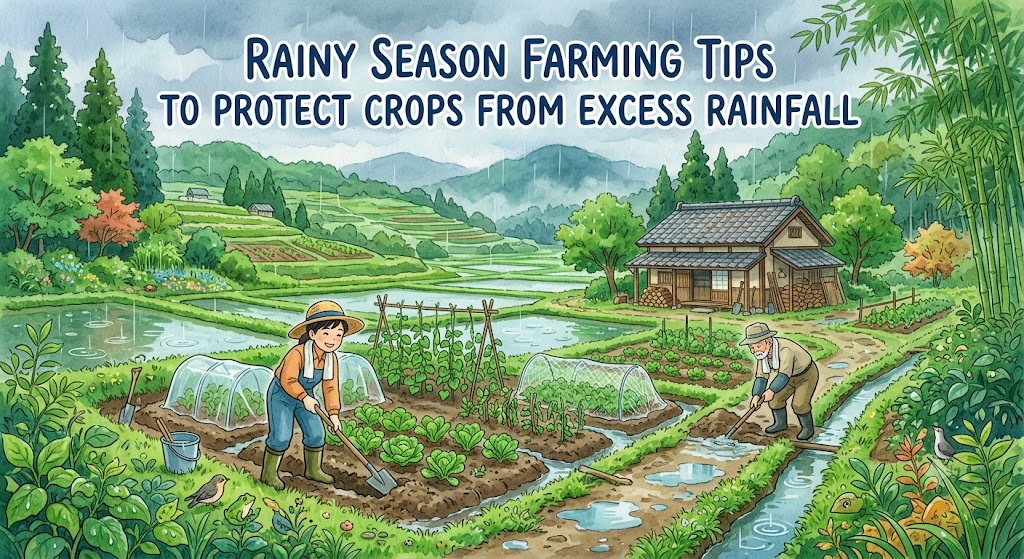
The rainy season is one of the most important periods for agriculture, providing the water needed for healthy crop growth and reducing irrigation costs. However, excessive rainfall can quickly become a major challenge for farmers. Waterlogged fields, soil erosion, nutrient loss, fungal diseases, weed growth, and pest infestations can significantly reduce crop yields if proper precautions are not taken.
Successful rainy-season farming is not just about planting crops at the right time—it also requires careful water management, soil protection, and regular field monitoring. By adopting practical farming techniques, farmers can minimize crop damage, improve plant health, and maintain productivity even during periods of heavy rainfall.
This guide explains effective rainy-season farming tips that help protect crops from excessive rain while ensuring healthy growth and better harvests.
Why Excess Rainfall Can Damage Crops
Although water is essential for crop development, too much rainfall creates several problems that affect plant growth.
Common effects of excessive rainfall include:
- Waterlogged soil
- Root rot
- Nutrient leaching
- Soil erosion
- Poor oxygen availability
- Increased fungal diseases
- Higher weed pressure
- Pest outbreaks
- Delayed field operations
Understanding these risks helps farmers prepare before heavy rains begin.
1. Choose Crops Suitable for the Rainy Season
The first step toward successful rainy-season farming is selecting crops that perform well under local rainfall conditions.
Suitable rainy-season crops include:
- Rice
- Maize
- Soybean
- Groundnut
- Pigeon pea
- Green gram
- Black gram
- Millets
- Okra
- Pumpkin
- Cucumbers
Choose improved varieties that are recommended for your region and have good tolerance to local weather conditions.
2. Prepare the Field Before the Rain Arrives
Field preparation has a major impact on crop performance.
Before planting:
- Remove weeds
- Level the field
- Repair bunds
- Clear drainage channels
- Incorporate organic matter
- Improve soil structure
Proper preparation reduces standing water and improves seed germination.
3. Ensure Proper Drainage
Poor drainage is one of the biggest causes of crop damage during heavy rainfall.
Standing water deprives roots of oxygen and encourages fungal diseases.
Good drainage systems should:
- Remove excess rainwater quickly
- Prevent prolonged waterlogging
- Protect plant roots
- Reduce soil erosion
Clean field drains regularly throughout the rainy season to prevent blockages.
Raised beds are especially useful for vegetable crops because they improve drainage around the root zone.
4. Build Strong Field Bunds
Field bunds help manage rainwater and reduce soil erosion.
Well-maintained bunds:
- Slow water movement
- Reduce topsoil loss
- Improve water distribution
- Protect young plants
Inspect bunds regularly after heavy storms and repair damaged sections immediately.
5. Improve Soil Organic Matter
Healthy soils absorb rainfall more efficiently.
Adding organic matter improves:
- Water infiltration
- Soil structure
- Moisture retention
- Root development
- Microbial activity
Useful organic materials include:
- Compost
- Farmyard manure
- Crop residues
- Vermicompost
- Green manure
Healthy soil drains better while still holding adequate moisture for crops.
6. Use Mulch to Protect the Soil
Mulching provides excellent protection during the rainy season.
Organic mulch materials include:
- Straw
- Dry leaves
- Grass clippings
- Crop residues
- Wood chips
Benefits include:
- Reduced soil erosion
- Better moisture balance
- Lower weed growth
- Improved soil temperature
- Increased organic matter
Mulch also reduces the impact of heavy raindrops on exposed soil.
7. Avoid Overwatering
Some farmers continue irrigation even after receiving adequate rainfall.
This increases the risk of waterlogging and root diseases.
Monitor soil moisture before irrigating.
Apply additional water only when crops actually require it.
Efficient water management reduces plant stress and saves energy.
8. Apply Balanced Fertilizers
Heavy rainfall can wash nutrients away from the root zone.
Nitrogen is particularly vulnerable to leaching.
Instead of applying large fertilizer doses at one time:
- Split fertilizer applications
- Follow soil test recommendations
- Monitor crop growth
- Replace nutrients when necessary
Balanced nutrition helps crops recover more quickly after heavy rain.
9. Monitor Crop Diseases Regularly
Warm and humid conditions encourage fungal and bacterial diseases.
Common rainy-season diseases include:
- Leaf spots
- Mildew
- Root rot
- Stem rot
- Blights
Inspect crops frequently.
Early detection allows farmers to manage diseases before they spread throughout the field.
Remove infected plant material where appropriate and maintain good field sanitation.
10. Control Weeds Early
Rainfall creates ideal conditions for weed growth.
Weeds compete with crops for:
- Nutrients
- Water
- Sunlight
- Growing space
Timely weed management improves crop performance.
Mechanical weeding, mulching, and suitable integrated weed management practices can reduce weed pressure effectively.
11. Protect Soil from Erosion
Heavy rain can wash away valuable topsoil.
Protect soil using:
- Cover crops
- Mulching
- Contour farming
- Terracing
- Vegetative barriers
- Windbreaks where appropriate
Healthy topsoil contains valuable nutrients and beneficial microorganisms that support long-term productivity.
12. Improve Air Circulation
Dense crop canopies remain wet for longer periods after rainfall.
Poor airflow increases fungal disease risk.
Maintain proper plant spacing.
Prune excess vegetation where appropriate.
Good air circulation allows leaves to dry more quickly after rain.
13. Support Tall Crops
Heavy rain accompanied by strong winds may cause lodging.
Provide support for crops that require staking.
Examples include:
- Tomatoes
- Peppers
- Climbing beans
- Certain vegetable vines
Supporting plants reduces stem breakage and improves harvest quality.
14. Monitor Pest Populations
Rainy weather changes pest activity.
Some insects increase rapidly under humid conditions.
Regular scouting allows farmers to identify:
- Caterpillars
- Aphids
- Whiteflies
- Beetles
- Snails
- Slugs
Integrated Pest Management techniques help control pests while protecting beneficial insects.
15. Harvest at the Right Time
Delaying harvest during continuous rainfall can reduce crop quality.
Wet conditions may increase:
- Fruit cracking
- Rotting
- Mold growth
- Grain sprouting
- Quality loss
Harvest mature crops whenever weather conditions allow.
Proper drying and storage are equally important after harvest.
16. Store Seeds and Inputs Safely
Rainwater can damage:
- Seeds
- Fertilizers
- Animal feed
- Farm equipment
Store agricultural supplies in dry, well-ventilated buildings.
Protect fertilizers from moisture because wet fertilizer loses effectiveness and becomes difficult to apply.
17. Keep Farm Records
Weather conditions vary from year to year.
Maintaining records helps farmers improve future planning.
Useful information includes:
- Rainfall
- Planting dates
- Fertilizer applications
- Disease outbreaks
- Pest activity
- Harvest yields
Good records help identify successful management practices.
18. Use Weather Forecasts for Better Planning
Modern weather forecasting allows farmers to prepare for heavy rainfall.
Forecast information helps with decisions about:
- Planting
- Irrigation
- Fertilizer application
- Spraying
- Harvesting
Avoid applying fertilizers or crop protection products immediately before heavy rain because much of the material may be washed away.
Benefits of Good Rainy-Season Crop Management
Following proper rainy-season farming practices provides several advantages:
- Reduced crop losses
- Better drainage
- Improved root health
- Lower disease incidence
- Healthier soil
- Higher yields
- Improved crop quality
- Better nutrient efficiency
- Lower production costs
- Greater farm profitability
Prepared farmers recover more quickly after heavy rainfall events.
Common Mistakes to Avoid
Many crop losses occur because of avoidable management mistakes.
These include:
- Poor drainage
- Planting unsuitable crop varieties
- Overwatering after rainfall
- Ignoring disease symptoms
- Delayed weed control
- Applying excessive fertilizer before heavy rain
- Poor field sanitation
- Neglecting weather forecasts
Correcting these mistakes greatly improves crop survival.
Frequently Asked Questions
Why is drainage important during the rainy season?
Drainage removes excess water from fields, prevents root suffocation, reduces disease pressure, and improves overall plant health.
Which crops tolerate rainy-season conditions best?
Rice, maize, soybean, groundnut, millets, pigeon pea, green gram, and several vegetable crops perform well when managed properly.
How can farmers reduce soil erosion during heavy rainfall?
Using mulch, cover crops, contour farming, field bunds, and maintaining vegetation helps reduce erosion and protect valuable topsoil.
Should fertilizers be applied before heavy rain?
Large fertilizer applications immediately before heavy rainfall should generally be avoided because nutrients may be washed away before crops can absorb them.
How often should fields be inspected during the rainy season?
Fields should be inspected regularly, especially after heavy rainfall, to identify drainage problems, disease outbreaks, pest activity, and crop damage as early as possible.
Conclusion
The rainy season provides excellent growing conditions, but excessive rainfall can threaten crop productivity if farms are not properly prepared. Effective drainage, healthy soil management, balanced fertilization, weed control, disease monitoring, mulching, and timely field inspections are essential for protecting crops during periods of heavy rain. Choosing suitable crop varieties and using weather forecasts to guide farming decisions can further reduce the risks associated with unpredictable rainfall.
By implementing these practical rainy-season farming techniques, farmers can minimize crop losses, improve soil health, increase harvest quality, and maintain profitable agricultural production even under challenging weather conditions. Sustainable preparation and careful management remain the keys to successful rainy-season farming year after year.