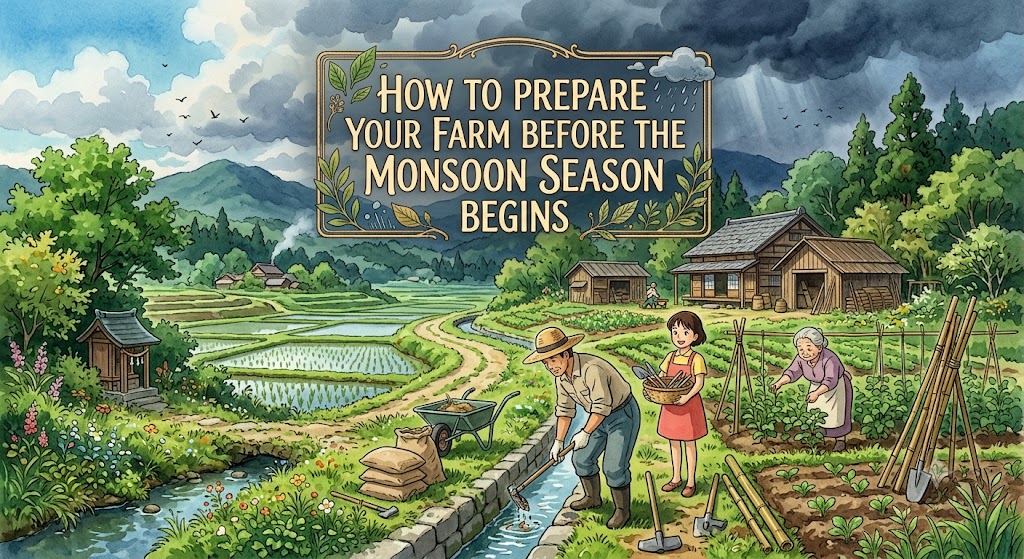
The arrival of the monsoon season is one of the most important periods in the agricultural calendar. Adequate rainfall can improve soil moisture, promote healthy crop growth, and reduce irrigation costs. However, if a farm is not properly prepared before the rains begin, excessive rainfall can lead to waterlogging, soil erosion, nutrient loss, pest outbreaks, and serious crop damage.
Preparing a farm before the monsoon is not only about planting crops. It involves improving drainage, strengthening soil health, inspecting equipment, planning crop selection, and ensuring that every part of the farm is ready to handle changing weather conditions. Farmers who invest time in pre-monsoon preparation often experience healthier crops, higher yields, and fewer unexpected losses during the growing season.
This guide explains the essential steps every farmer should take before the monsoon arrives to protect crops and maximize productivity.
Why Pre-Monsoon Farm Preparation Is Important
Monsoon rains provide the moisture needed for successful crop growth, but they also increase the risk of flooding, disease, weed growth, and soil degradation. Proper preparation allows farmers to take advantage of seasonal rainfall while reducing its negative effects.
Benefits of preparing your farm before the monsoon include:
- Better seed germination
- Improved water management
- Reduced soil erosion
- Healthier root development
- Lower disease risk
- Better fertilizer efficiency
- Higher crop survival
- Improved harvest quality
Planning ahead also helps farmers avoid emergency repairs once heavy rains begin.
1. Inspect the Entire Farm
Begin by walking through every section of your farm.
Carefully inspect:
- Crop fields
- Irrigation systems
- Drainage channels
- Farm roads
- Storage buildings
- Fencing
- Water sources
- Equipment sheds
Identify areas that collect standing water or show signs of erosion from previous rainy seasons.
Repairing these problems before the rains arrive is much easier than dealing with them during heavy storms.
2. Improve Field Drainage
Proper drainage is one of the most important parts of monsoon preparation.
Excess water reduces oxygen around plant roots and encourages root diseases.
To improve drainage:
- Clean existing drainage channels.
- Remove weeds and debris blocking water flow.
- Deepen shallow drains if necessary.
- Repair damaged drainage outlets.
- Create additional channels in low-lying areas.
- Use raised beds for vegetable production.
Good drainage protects crops from prolonged waterlogging while improving root health.
3. Strengthen Field Bunds
Field bunds help manage rainwater and reduce soil erosion.
Before the monsoon:
- Repair damaged bunds.
- Fill cracks.
- Strengthen weak sections.
- Remove burrowing animal holes.
- Compact loose soil where necessary.
Well-maintained bunds slow water movement and reduce nutrient loss during heavy rainfall.
4. Test and Improve Soil Health
Healthy soil absorbs rainfall more effectively and supports stronger crop growth.
Conduct a soil test to determine:
- Soil pH
- Organic matter content
- Nitrogen levels
- Phosphorus availability
- Potassium status
- Micronutrient levels
Based on the results, apply appropriate soil amendments before planting.
Adding compost, farmyard manure, vermicompost, or green manure increases soil organic matter and improves moisture retention.
Healthy soil also supports beneficial microorganisms that help crops absorb nutrients more efficiently.
5. Choose Suitable Crops and Varieties
Crop selection has a major influence on monsoon success.
Choose varieties that are:
- Well adapted to local rainfall
- Resistant to common diseases
- Suitable for local soil conditions
- Appropriate for the growing season
Popular monsoon crops include:
- Rice
- Maize
- Soybean
- Groundnut
- Green gram
- Black gram
- Pigeon pea
- Millets
- Okra
- Pumpkin
Consult local agricultural recommendations for the most suitable varieties in your region.
6. Purchase Quality Seeds Early
Waiting until the last minute to buy seeds may limit your options.
Purchase certified, disease-free seed well before planting begins.
Check:
- Germination percentage
- Production date
- Variety name
- Seed treatment information
- Packaging condition
Store seeds in a cool, dry place until sowing time.
Healthy seeds improve crop establishment and reduce early-season problems.
7. Prepare Farm Equipment
Inspect all farm machinery before the rainy season.
Check equipment such as:
- Tractors
- Seed drills
- Sprayers
- Irrigation pumps
- Harvesting tools
- Power tillers
Replace worn parts, repair damaged equipment, lubricate moving components, and test machines before field operations begin.
Unexpected equipment failure during the monsoon can delay critical farming activities.
8. Store Fertilizers and Chemicals Properly
Rain can damage agricultural inputs if they are not stored correctly.
Keep fertilizers, pesticides, herbicides, and seed treatments inside dry, well-ventilated storage areas.
Store materials:
- Off the floor
- Away from moisture
- In sealed containers
- According to manufacturer recommendations
Proper storage protects product quality and prevents financial losses.
9. Add Organic Matter Before Planting
Applying organic matter before the rainy season improves soil structure and fertility.
Useful materials include:
- Compost
- Farmyard manure
- Crop residues
- Vermicompost
- Green manure
Benefits include:
- Better moisture retention
- Improved nutrient availability
- Increased microbial activity
- Reduced soil erosion
- Stronger root development
Organic matter also helps the soil absorb rainfall more efficiently.
10. Remove Existing Weeds
Weeds compete with crops for nutrients, sunlight, water, and space.
Remove weeds before planting begins.
Early weed control reduces future weed pressure because many weed seeds germinate quickly after the first rains.
Mechanical cultivation, mulching, or integrated weed management methods may all be useful depending on the farming system.
11. Plan Fertilizer Applications
Heavy rainfall can wash nutrients away before crops absorb them.
Develop a fertilizer schedule based on:
- Soil test results
- Crop requirements
- Expected rainfall
- Growth stages
Split fertilizer applications often improve nutrient efficiency compared with applying all nutrients at one time.
Avoid large fertilizer applications immediately before heavy rainfall.
12. Protect Soil from Erosion
Strong rainfall can remove valuable topsoil.
Reduce erosion by:
- Planting cover crops
- Applying mulch
- Maintaining vegetation
- Practicing contour farming
- Building terraces where appropriate
Protecting topsoil preserves nutrients and improves long-term productivity.
13. Prepare Irrigation Systems
Although rainfall provides moisture, irrigation may still be needed during dry intervals.
Inspect:
- Pumps
- Pipes
- Drip lines
- Sprinklers
- Water storage tanks
Repair leaks before the rainy season begins.
A reliable irrigation system provides flexibility if rainfall becomes irregular.
14. Monitor Weather Forecasts
Weather forecasts help farmers make better decisions.
Forecast information supports planning for:
- Planting
- Fertilizer application
- Crop protection
- Harvest scheduling
- Field preparation
Using weather information reduces unnecessary risks during unpredictable rainfall.
15. Prepare for Pest and Disease Management
Warm, humid conditions encourage many crop pests and diseases.
Before planting:
- Clean the farm
- Remove crop residues
- Destroy infected plant material
- Prepare monitoring equipment
- Learn common disease symptoms
Early detection makes pest and disease control much more effective.
Integrated Pest Management practices reduce dependence on unnecessary pesticide applications.
16. Maintain Farm Records
Good planning starts with good records.
Record:
- Previous crop performance
- Rainfall history
- Soil test reports
- Fertilizer use
- Pest outbreaks
- Harvest yields
These records help improve future farming decisions and identify successful management practices.
Benefits of Proper Monsoon Preparation
Preparing your farm before the rainy season offers numerous long-term advantages:
- Faster crop establishment
- Improved soil health
- Better water management
- Lower disease pressure
- Reduced production costs
- Stronger crop growth
- Higher yields
- Better grain and fruit quality
- Increased farm profitability
- Improved resilience to extreme weather
Preparation reduces uncertainty and allows farmers to respond more effectively to changing weather conditions.
Common Mistakes to Avoid
Many farmers experience avoidable losses because of poor preparation.
Common mistakes include:
- Ignoring drainage problems
- Delaying field preparation
- Using poor-quality seed
- Neglecting soil testing
- Applying excessive fertilizer before heavy rain
- Failing to repair farm equipment
- Poor storage of agricultural inputs
- Delayed weed control
Addressing these issues before the monsoon significantly improves crop performance.
Frequently Asked Questions
When should farmers begin preparing for the monsoon?
Preparation should ideally begin several weeks before the expected arrival of seasonal rainfall. Early planning allows enough time to repair drainage systems, prepare fields, purchase quality seed, and organize farm inputs.
Why is drainage important before the monsoon?
Good drainage removes excess water, prevents root suffocation, reduces disease risk, and protects crops from prolonged waterlogging.
Should soil testing be completed before planting?
Yes. Soil testing helps determine nutrient requirements, allowing farmers to apply fertilizers more efficiently while improving crop growth.
Which crops are suitable for the monsoon season?
Rice, maize, soybean, groundnut, green gram, pigeon pea, black gram, millets, and many vegetable crops perform well when matched to local climate and soil conditions.
How can farmers reduce soil erosion during heavy rains?
Using mulch, cover crops, contour farming, strong field bunds, and proper drainage helps protect valuable topsoil from erosion.
Conclusion
Preparing a farm before the monsoon season is one of the most important investments a farmer can make. Proper field inspection, improved drainage, healthy soil management, quality seed selection, equipment maintenance, and timely planning create the foundation for a successful growing season. These preventive measures help reduce crop losses caused by excess rainfall, improve soil fertility, and support stronger plant growth throughout the season.
Rather than reacting to problems after heavy rains begin, farmers who prepare in advance are better equipped to protect their crops, increase productivity, and achieve higher profits. With careful planning and sustainable farming practices, the monsoon can become an opportunity for abundant harvests instead of a source of avoidable challenges.