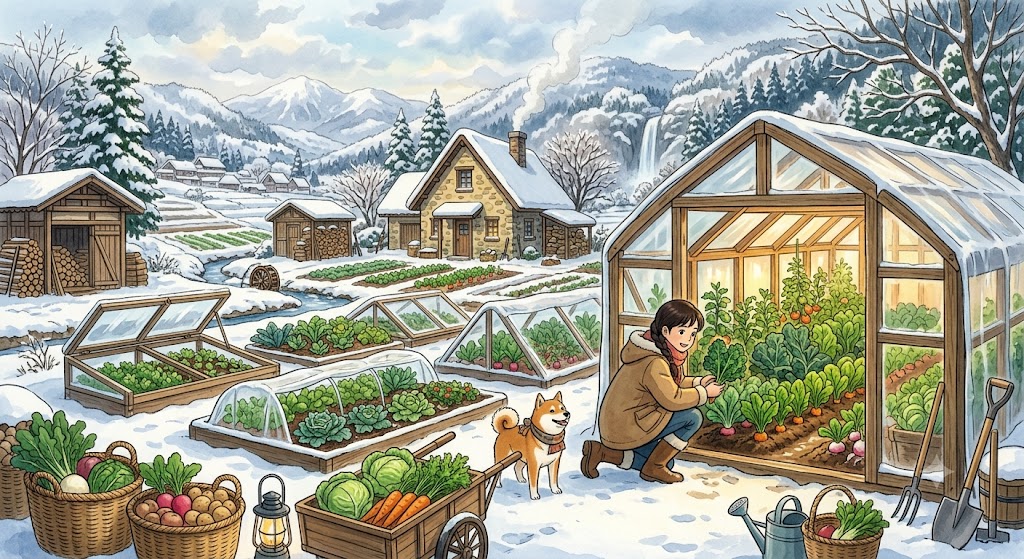
Winter is often viewed as a challenging period for agricultural production, but with proper planning and management, farmers can continue producing high-quality crops even during colder months. Advances in farming techniques, crop selection, and protective growing systems have made cold-season agriculture more productive and profitable than ever before.
Cold-season farming allows growers to extend their production calendar, maintain a consistent supply of fresh produce, and take advantage of market opportunities when fewer crops are available. In many regions, winter-grown vegetables and specialty crops command premium prices due to limited seasonal supply.
By understanding the unique requirements of winter cultivation and implementing effective cold-season farming techniques, farmers can achieve reliable harvests while improving overall farm profitability.
Understanding Winter Farming Challenges
Winter farming presents several environmental challenges that can affect crop growth and productivity.
Common challenges include:
- Low temperatures
- Frost damage
- Reduced daylight hours
- Slower plant growth
- Excess soil moisture
- Strong winds
- Increased weather variability
Without proper management, these conditions can significantly reduce yields and crop quality.
Successful winter farming focuses on minimizing these risks while creating favorable growing conditions for crops.
Benefits of Cold-Season Farming
Despite its challenges, winter cultivation offers several advantages.
Benefits include:
- Extended production seasons
- Additional income opportunities
- Reduced pest pressure
- Better land utilization
- Improved market access
- Premium seasonal pricing
Farmers who continue producing during colder months often gain a competitive advantage by supplying markets when fewer competitors are active.
Selecting Suitable Winter Crops
Choosing crops adapted to cool conditions is one of the most important decisions for winter farming success.
Cold-tolerant crops generally perform better during low temperatures and shorter days.
Popular winter vegetables include:
Spinach
Highly cold-hardy and capable of producing quality harvests throughout winter.
Kale
Known for excellent frost tolerance and improved flavor after exposure to cold temperatures.
Lettuce
Many varieties perform well under cool growing conditions.
Carrots
Can tolerate low temperatures and maintain good quality during winter production.
Cabbage
A reliable cold-season crop with strong market demand.
Broccoli
Performs well during cool weather and often produces high-quality heads.
Selecting appropriate crop varieties significantly improves winter production outcomes.
Choose Cold-Tolerant Varieties
Within each crop category, certain varieties are specifically bred for cold-weather performance.
Cold-tolerant varieties often provide:
- Better frost resistance
- Improved winter growth
- Enhanced disease tolerance
- Greater yield stability
Farmers should select varieties recommended for local winter growing conditions whenever possible.
Proper variety selection is one of the simplest ways to improve winter harvest reliability.
Improve Soil Health Before Winter
Healthy soil supports stronger crops and improves resilience against environmental stress.
Soil preparation should include:
- Compost incorporation
- Organic matter additions
- Proper drainage improvements
- Balanced nutrient management
Benefits include:
- Better root development
- Improved moisture retention
- Enhanced nutrient availability
- Increased biological activity
Healthy soil provides an important foundation for successful winter cultivation.
Utilize Raised Beds
Raised beds offer several advantages for winter farming.
Benefits include:
- Improved drainage
- Faster soil warming
- Better root development
- Reduced waterlogging
During winter, excess moisture can become a major problem.
Raised beds help maintain favorable soil conditions and improve crop performance.
Protect Crops with Row Covers
Row covers are among the most effective tools for winter crop protection.
These lightweight materials provide:
- Frost protection
- Wind reduction
- Temperature moderation
- Extended growing seasons
Row covers create a protective microclimate around crops while still allowing sunlight and moisture to reach plants.
They are widely used in both commercial and small-scale winter farming operations.
Use High Tunnels and Greenhouses
Protected growing structures significantly improve winter production potential.
Examples include:
High Tunnels
Provide protection from cold temperatures, wind, and precipitation.
Greenhouses
Allow greater environmental control and year-round production opportunities.
Benefits include:
- Extended growing seasons
- Improved crop quality
- Reduced weather risks
- Higher yields
Protected cultivation systems are valuable investments for winter vegetable production.
Apply Mulch for Temperature Regulation
Mulching helps maintain stable soil conditions during winter.
Suitable mulch materials include:
- Straw
- Leaves
- Compost
- Crop residues
Benefits include:
- Soil temperature moderation
- Moisture conservation
- Weed suppression
- Reduced erosion
Mulch protects plant roots from extreme temperature fluctuations and improves overall crop health.
Manage Irrigation Carefully
Although winter crops generally require less water than summer crops, proper irrigation remains important.
Winter irrigation strategies include:
- Monitoring soil moisture regularly
- Avoiding overwatering
- Ensuring proper drainage
- Watering during warmer periods of the day
Excess moisture can increase disease risks and reduce plant performance.
Balanced irrigation supports healthy crop development.
Maximize Sunlight Exposure
Reduced daylight is one of the primary limitations of winter farming.
Farmers should:
- Orient rows to maximize sunlight interception
- Remove shading obstacles
- Keep protective structures clean
Optimal sunlight exposure helps maintain plant growth during shorter winter days.
Every available hour of sunlight becomes valuable during cold-season production.
Implement Wind Protection Measures
Cold winter winds can damage crops and increase moisture loss.
Effective wind protection strategies include:
- Windbreaks
- Fencing
- Hedgerows
- Protective structures
Reducing wind exposure helps maintain more stable growing conditions and improves crop survival.
Monitor Frost Risks
Frost can severely damage sensitive crops.
Farmers should:
- Track weather forecasts regularly
- Use protective coverings when necessary
- Select frost-resistant crops
- Maintain emergency protection plans
Early preparation reduces the risk of unexpected crop losses.
Reliable weather monitoring is an important part of winter farm management.
Manage Winter Pests and Diseases
Although pest pressure is often lower during winter, certain issues may still occur.
Potential concerns include:
- Fungal diseases
- Aphids
- Slugs
- Greenhouse pests
Integrated Pest Management (IPM) strategies help maintain crop health while minimizing chemical use.
Regular monitoring allows early detection and effective control.
Plan Successive Plantings
Staggered planting schedules help ensure continuous harvests throughout the season.
Benefits include:
- Consistent market supply
- Better labor management
- Reduced harvest bottlenecks
- Improved cash flow
Successive planting is particularly useful for leafy greens and other quick-growing winter crops.
Use Cover Crops During Off-Periods
Cover crops help maintain soil quality when production areas are temporarily idle.
Benefits include:
- Erosion control
- Organic matter improvement
- Nutrient retention
- Soil protection
Popular winter cover crops include:
- Rye
- Clover
- Vetch
- Oats
Cover crops support long-term soil health and sustainability.
Build a Winter Production Calendar
A structured production plan improves winter farming efficiency.
A winter calendar may include:
Early Winter
- Soil preparation
- Cold-season planting
- Frost protection setup
Mid-Winter
- Crop monitoring
- Irrigation management
- Pest control
Late Winter
- Harvest planning
- Market preparation
- Spring transition activities
Organized planning supports reliable production and better farm management.
Economic Advantages of Winter Harvests
Winter-grown crops often benefit from:
- Reduced market competition
- Higher selling prices
- Strong demand for fresh produce
- Improved annual revenue
By extending production into colder months, farmers can improve overall farm profitability and make better use of available resources.
Conclusion
Cold-season farming provides valuable opportunities for farmers to extend production, increase income, and maintain market presence throughout the year. Through careful crop selection, soil preparation, frost protection, efficient irrigation, and the use of protective growing structures, growers can achieve reliable winter harvests even under challenging conditions.
As agricultural systems continue to evolve, winter farming will play an increasingly important role in supporting year-round food production and farm profitability. Farmers who adopt effective cold-season cultivation techniques can build more resilient operations while taking advantage of unique market opportunities during the winter months.