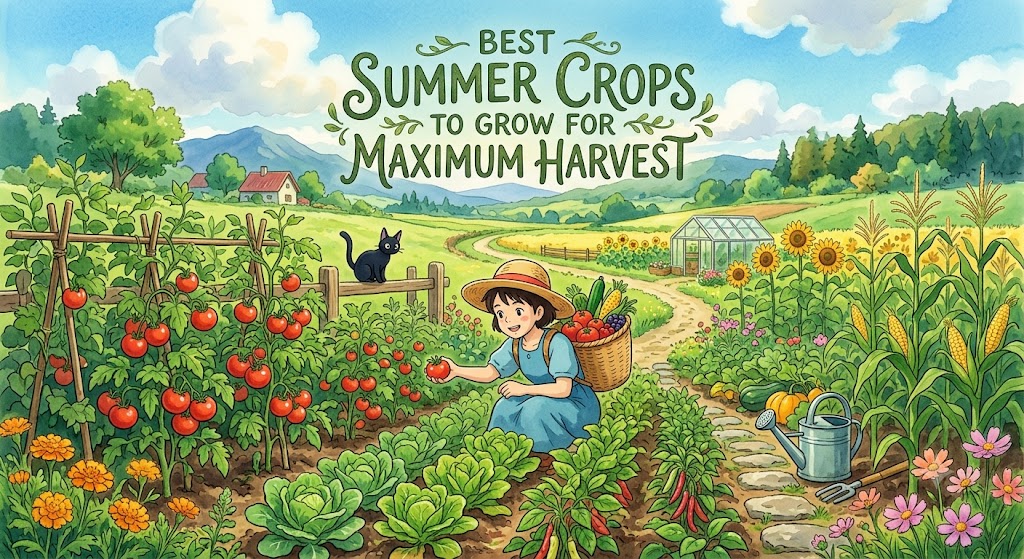
Summer is one of the most productive seasons for agriculture when farmers choose crops that are well suited to warm temperatures and longer daylight hours. High temperatures, abundant sunlight, and proper irrigation create favorable conditions for many vegetables, cereals, legumes, and cash crops. However, successful summer farming requires careful planning because heat stress, moisture loss, pests, and water shortages can affect crop performance if not managed properly.
Selecting the right summer crops can significantly increase yields, improve farm income, and make better use of available land and resources. Some crops thrive in hot weather, while others require additional irrigation and heat protection. Understanding local climate conditions, soil type, market demand, and crop requirements is essential for maximizing productivity.
This guide explains the best crops to grow during the summer season and provides practical farming tips to achieve higher yields and better profitability.
Why Summer Farming Can Be Highly Productive
Summer provides several advantages for crop cultivation when proper management practices are followed.
Benefits include:
- Longer daylight hours
- Faster plant growth
- Better photosynthesis
- Multiple harvesting opportunities
- High market demand for fresh vegetables
- Better crop maturity
- Increased income potential
With efficient irrigation and proper soil management, summer farming can become one of the most profitable growing seasons.
1. Maize (Corn)
Maize is one of the most widely grown summer crops due to its adaptability and strong market demand.
It performs well under warm temperatures and grows rapidly when supplied with sufficient moisture and nutrients.
Benefits
- High grain yield
- Strong demand for food and livestock feed
- Suitable for mechanized farming
- Multiple hybrid varieties available
- Good commercial value
Proper irrigation during flowering and grain filling is essential for achieving maximum production.
2. Sunflower
Sunflower is an excellent summer oilseed crop that tolerates heat remarkably well.
Its deep root system allows it to access moisture from deeper soil layers.
Advantages
- High oil content
- Good drought tolerance
- Strong market demand
- Attracts pollinators
- Suitable for crop rotation
Well-drained soil and adequate sunlight support healthy flower development.
3. Sorghum
Sorghum is highly valued in regions experiencing high temperatures and limited rainfall.
It is commonly grown for grain, animal feed, and forage.
Benefits
- Excellent heat tolerance
- Drought resistance
- Lower water requirements
- Multiple commercial uses
- Reliable yields
Sorghum is an excellent alternative where water resources are limited.
4. Pearl Millet
Pearl millet is one of the most climate-resilient cereal crops.
It performs well in hot and dry environments where other cereals may struggle.
Advantages
- Short growing season
- Heat resistance
- Low irrigation requirements
- Nutritious grain
- Suitable for marginal soils
Millet is becoming increasingly important as climate conditions become more unpredictable.
5. Groundnut (Peanut)
Groundnut grows successfully during summer when irrigation is available.
Loose, well-drained soil encourages healthy pod development.
Benefits
- High-value oilseed crop
- Strong domestic demand
- Nitrogen-fixing legume
- Suitable for crop rotation
- Good profitability
Avoid waterlogging because excessive moisture can reduce yields.
6. Soybean
Soybean is another profitable summer crop that improves soil fertility through nitrogen fixation.
Its protein-rich seeds are widely used in food processing, animal feed, and edible oil production.
Advantages
- High market value
- Soil improvement
- Export opportunities
- Strong industrial demand
Balanced fertilization and timely weed control support better yields.
7. Tomato
Tomatoes remain one of the most profitable vegetable crops when managed properly during summer.
Heat-tolerant varieties perform especially well.
Benefits
- Continuous harvesting
- High consumer demand
- Strong commercial value
- Suitable for protected cultivation
Proper irrigation, mulching, and staking help maintain fruit quality during hot weather.
8. Chili Peppers
Chili peppers thrive in warm temperatures and produce high-value harvests.
Both fresh and dried peppers have strong market demand.
Advantages
- Excellent income potential
- Export opportunities
- Long harvesting period
- Suitable for small farms
Regular pest monitoring improves crop performance.
9. Okra
Okra is one of the easiest vegetables to cultivate during summer.
Warm weather encourages rapid growth and continuous fruit production.
Benefits
- Fast growth
- Multiple harvests
- Good market demand
- Heat tolerance
Harvest pods regularly to encourage continued production.
10. Cucumbers
Cucumbers grow quickly during summer when supplied with adequate water.
They perform well in open fields and protected cultivation systems.
Advantages
- Short production cycle
- Strong market demand
- High productivity
- Continuous harvesting
Mulching helps conserve soil moisture while reducing weed growth.
11. Watermelon
Watermelon is among the most profitable fruit crops grown during summer.
Consumers prefer fresh watermelons because of their high water content during hot weather.
Benefits
- High seasonal demand
- Good commercial value
- Suitable for sandy soils
- Excellent market prices
Proper irrigation during fruit development improves size and sweetness.
12. Muskmelon
Muskmelon performs exceptionally well under warm growing conditions.
Its sweet fruits attract strong consumer demand throughout the summer.
Advantages
- Premium market prices
- Heat-loving crop
- Good export potential
- High profitability
Healthy vines and balanced nutrition improve fruit quality.
13. Pumpkin
Pumpkin is a vigorous summer crop capable of producing large yields.
Its long storage life makes marketing easier.
Benefits
- Good shelf life
- Low maintenance
- High yield potential
- Strong market demand
Adequate spacing improves airflow and reduces disease problems.
14. Sweet Potato
Sweet potatoes tolerate warm temperatures while producing nutritious tubers.
Advantages
- Good drought tolerance
- Multiple food uses
- Nutritious crop
- Suitable for diverse soils
Healthy vine growth supports better tuber development.
15. Cowpea
Cowpea performs well during hot weather and provides both vegetables and grain depending on the variety.
Benefits
- Nitrogen fixation
- Heat tolerance
- Multiple harvest options
- Improved soil fertility
It fits well into crop rotation systems.
Tips to Achieve Maximum Summer Harvest
Growing suitable crops is only one part of successful summer farming.
Several management practices significantly improve productivity.
Prepare the Soil Properly
Healthy soil supports strong root growth.
Apply:
- Compost
- Farmyard manure
- Vermicompost
- Balanced fertilizers
Good soil preparation improves moisture retention and nutrient availability.
Install Efficient Irrigation
Water management is critical during summer.
Efficient irrigation methods include:
- Drip irrigation
- Sprinkler systems
- Mulching
- Scheduled watering
- Soil moisture monitoring
Avoid unnecessary water loss through evaporation.
Apply Mulch
Mulching protects crops from excessive heat.
Benefits include:
- Reduced evaporation
- Cooler soil temperatures
- Better moisture conservation
- Weed suppression
- Improved soil health
Organic mulch gradually enriches the soil as it decomposes.
Use Heat-Tolerant Varieties
Modern crop varieties are often bred for improved heat tolerance.
These varieties maintain better productivity under high summer temperatures.
Consult local agricultural recommendations when selecting seed.
Monitor Pests and Diseases
Warm conditions encourage many insect pests.
Inspect fields regularly for:
- Aphids
- Whiteflies
- Caterpillars
- Mites
- Leaf diseases
Integrated Pest Management helps reduce crop losses while minimizing pesticide use.
Apply Balanced Fertilization
Do not rely only on nitrogen.
Healthy crop development also requires:
- Phosphorus
- Potassium
- Sulfur
- Calcium
- Magnesium
- Micronutrients
Soil testing provides the most accurate fertilizer recommendations.
Harvest Regularly
Many vegetable crops continue producing when harvested frequently.
Timely harvesting:
- Improves quality
- Encourages additional fruit production
- Reduces pest problems
- Increases total yield
Harvest during cooler parts of the day whenever possible.
Common Summer Farming Mistakes
Many farmers reduce yields through avoidable errors.
Common mistakes include:
- Choosing unsuitable crop varieties
- Poor irrigation management
- Delayed planting
- Overcrowding plants
- Ignoring soil testing
- Poor weed control
- Excessive fertilizer use
- Delayed pest management
Correcting these issues greatly improves crop performance.
Frequently Asked Questions
Which crop gives the highest yield during summer?
Maize, sunflower, watermelon, tomatoes, and pumpkins are among the highest-yielding summer crops when grown under suitable conditions.
Which vegetables grow best in hot weather?
Okra, cucumbers, tomatoes, chili peppers, pumpkins, bottle gourds, ridge gourds, and cowpeas perform well in warm temperatures.
How can farmers protect crops from extreme summer heat?
Mulching, efficient irrigation, proper plant spacing, organic matter addition, and selecting heat-tolerant varieties help reduce heat stress.
Why is drip irrigation recommended during summer?
Drip irrigation delivers water directly to plant roots, reducing evaporation, conserving water, and improving irrigation efficiency.
Can legumes improve summer farming?
Yes. Crops such as soybean, cowpea, and groundnut fix atmospheric nitrogen, improve soil fertility, and support sustainable farming systems.
Conclusion
Summer farming offers excellent opportunities for farmers to achieve high yields and strong profits by selecting crops that thrive in warm conditions. Crops such as maize, sunflower, sorghum, millet, soybean, groundnut, tomatoes, chili peppers, okra, cucumbers, watermelon, muskmelon, pumpkin, sweet potato, and cowpea perform exceptionally well when supported by proper irrigation, healthy soil, balanced nutrition, and effective pest management.
Combining the right crop selection with sustainable farming practices such as mulching, soil improvement, efficient irrigation, and regular field monitoring helps farmers maximize productivity while conserving valuable resources. With careful planning and timely management, the summer season can become one of the most rewarding periods for agricultural production.